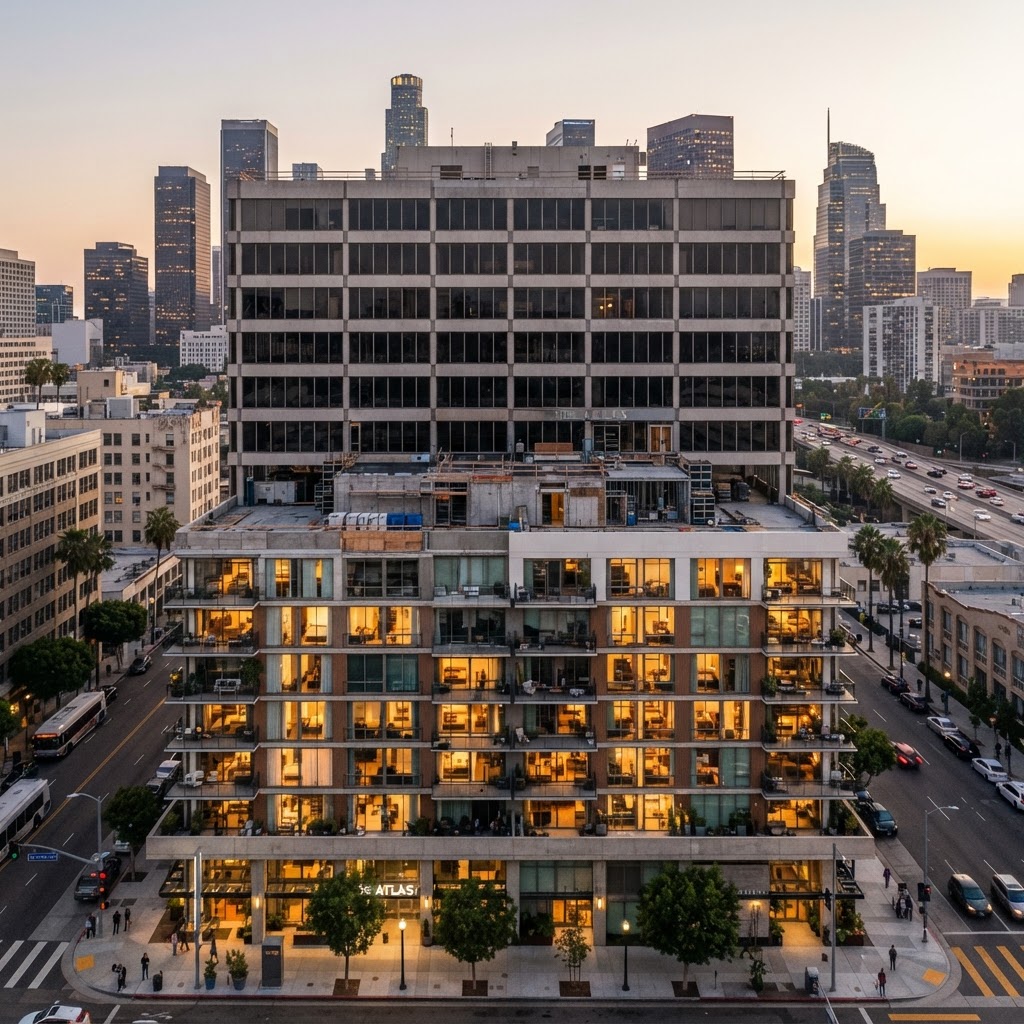
In late 2026, California’s commercial real estate distress and housing crisis have converged to accelerate an unprecedented urban transformation: adaptive reuse. Commercial core vacancies remain deeply elevated across major metros—exemplified by CBRE data showing San Francisco's office vacancy hovering around 32.8% and Greater Los Angeles near 25.1%. Simultaneously, the state faces an acute structural housing shortage, with active residential inventory standing tight at just 3.4 months of supply, as tracked by Allied Schools real estate market metrics. This structural disconnect has moved commercial-to-residential conversions from an architectural novelty into a core investment strategy.
The Policy Catalyst: Citywide Ordinances and Legislative Streamlining
Municipalities are cutting the red tape that historically crippled conversion economics. The City of Los Angeles expanded its landmark Adaptive Reuse Ordinance (ARO) citywide, allowing commercial buildings at least 15 years old located across commercial, parking, and multifamily zones to bypass discretionary entitlements for conversions into five or more residential units. Similar measures are advancing across the Bay Area and San Diego, complementing statewide frameworks such as Assembly Bill 2011 and Senate Bill 6.
For developers and institutional funds, these policies eliminate years of entitlement risk. By allowing obsolete parking structures and vacant Class B and C office corridors to be rezoned by right, developers can bypass lengthy environmental reviews and zoning variance hearings that historically eroded project margins.
The Underwriting Reality: Basis Compression vs. Floorplate Friction
Despite municipal incentives, office-to-housing conversions are far from simple arithmetic. Conversion underwriting in 2026 demands rigorous site-level selection criteria:
- Acquisition Basis Discounts: Viable conversions require acquired properties to clear at steep discounts to replacement cost. Distressed commercial notes in downtown nodes are trading 40% to 65% below peak valuations, creating an entry basis that absorbs heavy capital expenditures.
- Floorplate and Fenestration Constraints: Pre-1980 mid-rise buildings with shallow floorplates (typically under 60 feet from core to glass) remain the prime candidates. Modern post-1990 high-rises feature massive, deep floorplates that result in unrentable dark interior spaces, requiring costly light-well excavation or elevator-core reconfigurations.
- Plumbing and Structural Retrofits: Converting central wet stacks into individualized plumbing, ventilation, and decentralized electrical infrastructure frequently drives adaptive construction costs between $250 and $400 per interior square foot, narrowing returns unless offset by state grants or density bonuses.
Investor and Developer Takeaways
For private equity sponsors, regional builders, and commercial debt funds, navigating California's conversion boom requires targeted risk management:
- Target Smaller-Scale Mid-Rises: Focus acquisition efforts on 4- to 10-story commercial assets in secondary urban infill pockets rather than landmark downtown towers. Smaller footprints mitigate structural modification expenses and shorten construction timelines.
- Layer Density and Subsidies: Utilize state density bonuses alongside local incentives to maximize total unit counts, allocating a qualifying percentage of workforce units to offset local linkage fees and tap affordable housing credit syndication.
- Audit Physical Infrastructure Upfront: Conduct comprehensive architectural feasibility studies prior to debt assumption, specifically assessing window-to-core ratios, column spans, and HVAC adaptability before clearing purchase contingencies.


