The Electrification Mandate: How Retrofit Costs Are Reshaping CA Asset Value
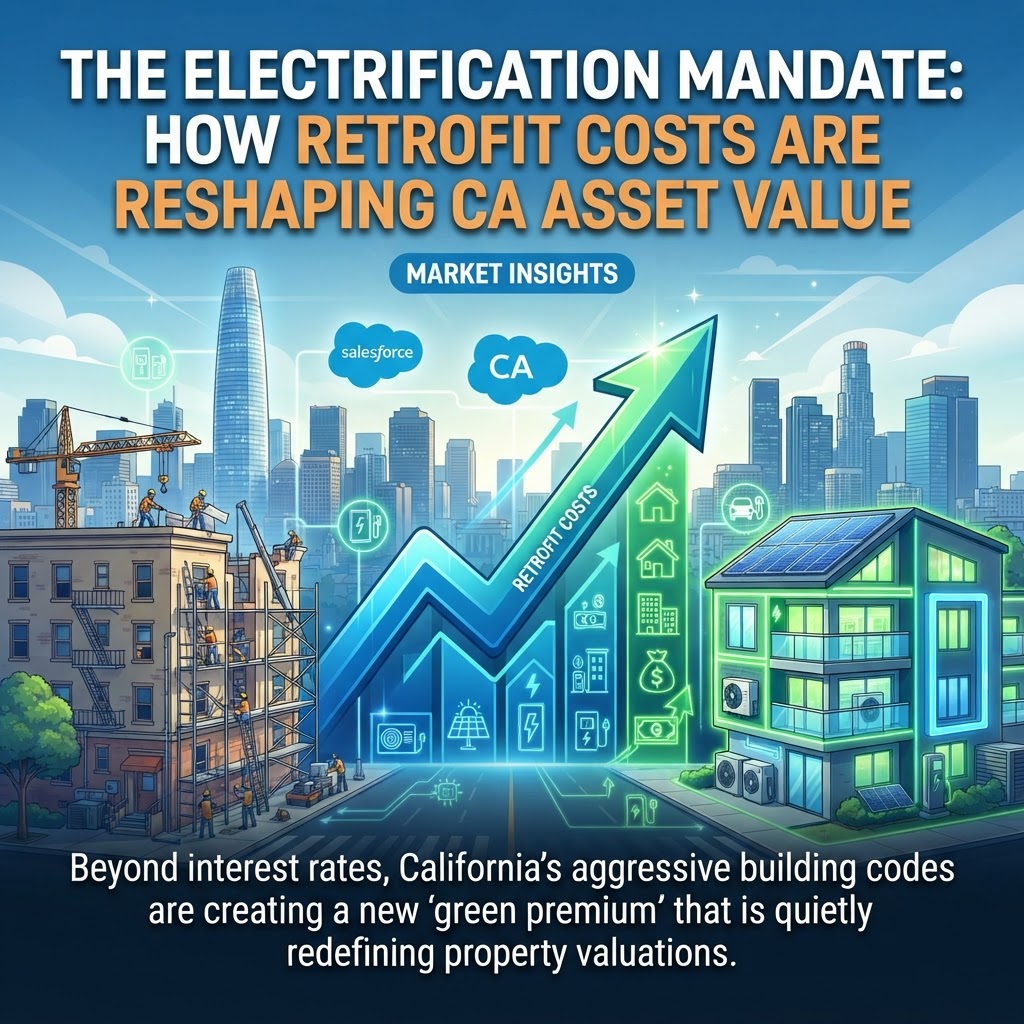
While the California real estate market in 2026 is often analyzed through the lens of interest rates and inventory shortages, a more structural shift is occurring beneath the surface. The state's aggressive push toward electrification—mandating heat pumps, EV chargers, and solar integration—is creating a new "green premium" that is fundamentally altering how investors and homeowners value residential and commercial assets.
The Hidden Cost of Compliance
As of mid-2026, the transition away from gas-powered infrastructure is no longer a future projection; it is a current operational reality. Data from building permit trends indicates that while solar installations have faced headwinds due to recent policy shifts, the adoption of heat pumps and EV charging infrastructure has become a standard requirement for new developments and major renovations. For property owners, this represents a significant capital expenditure (CapEx) cycle that is not always reflected in traditional market comps.
The Valuation Bifurcation
We are witnessing a growing valuation gap between "future-proofed" properties and those requiring significant retrofitting. Properties that have already transitioned to high-efficiency electric systems are seeing higher retention rates and lower long-term operating costs. Conversely, older Class B and C assets that rely on aging gas infrastructure are facing a "compliance discount." Investors are increasingly factoring in the cost of these mandatory upgrades when calculating the internal rate of return (IRR) for acquisition targets.
Practical Takeaways for Market Participants
- For Investors: Conduct a "compliance audit" before acquisition. The cost to replace a gas furnace with a heat pump or to upgrade electrical panels for EV charging can range from $15,000 to $50,000 per unit. These costs should be treated as immediate liabilities in your underwriting.
- For Sellers: Highlight your property's energy efficiency. In a market where buyers are wary of hidden maintenance costs, a home that is already "electrification-ready" serves as a powerful selling point that can justify a premium price.
- For Property Managers: Focus on operational efficiency. As utility costs fluctuate, properties with modern, efficient systems offer a competitive advantage in tenant retention, as they provide a hedge against rising energy prices.
The Path Forward
The California housing market is currently in a state of "thawing," where structural constraints remain, but the nature of the assets themselves is evolving. The 2026 market is not just about the price of the dirt; it is about the efficiency of the machine built upon it. As the state continues to enforce its climate-resilient building codes, the ability to navigate these technical requirements will be the defining skill for successful real estate stakeholders in the coming years.