The Content Capital’s Tech Transformation
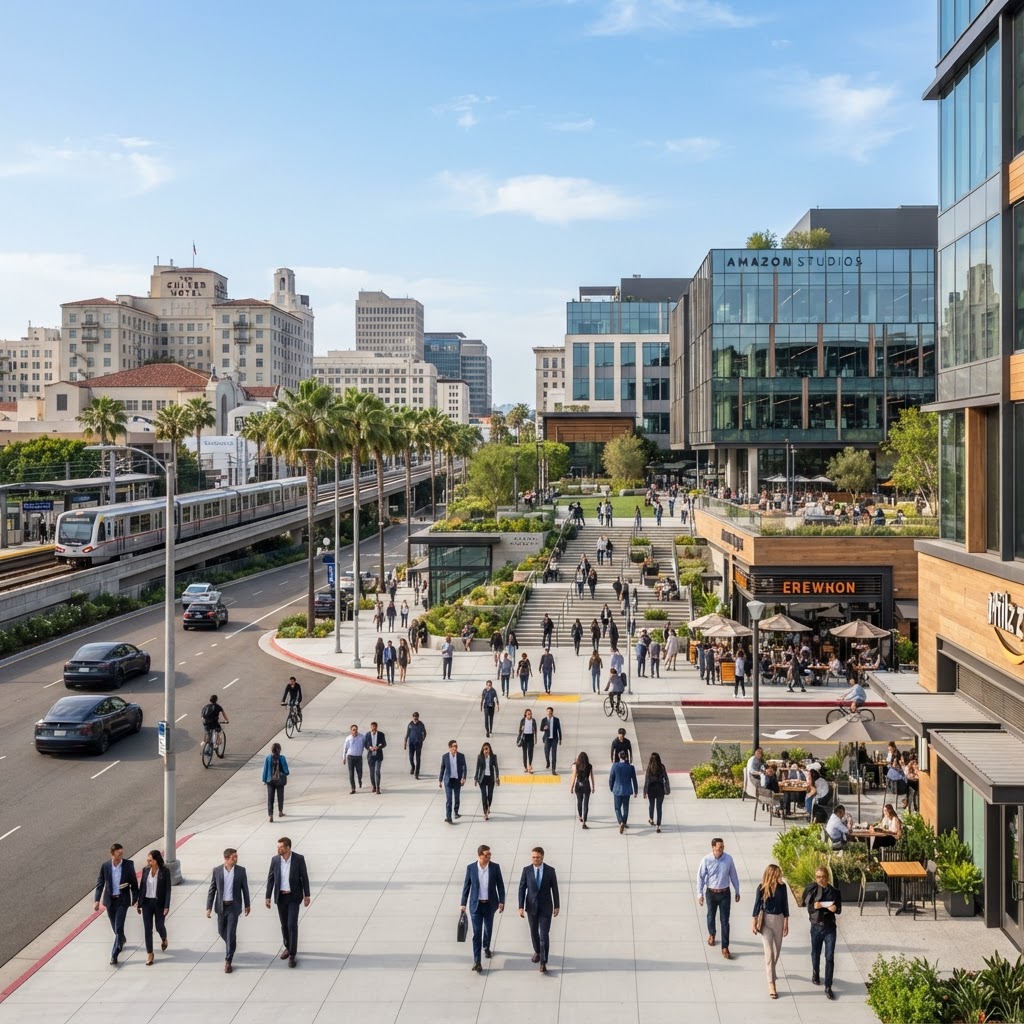
As Culver City celebrates the 75th anniversary of Fiesta La Ballona this August 2026, the city has transitioned from a historic film hub into a dominant tech-media synergy center. Unlike neighboring Westside markets that have faced volatility, Culver City has maintained a unique "Halo Effect," where residential properties within a two-mile radius of major tech campuses—including Apple, Amazon, and Sony—see higher occupancy rates and aggressive bidding, according to Ray Lyon Realty.
The ‘Halo Effect’ of Major HQs
The concentration of high-income earners in the "Content Capital" has created a resilient sub-market. While the broader CBRE 2026 U.S. Real Estate Market Outlook suggests a slowing national GDP growth to 2%, Culver City’s localized demand remains insulated by its prestigious tenant base. The city’s evolution into a premier office campus for transformative companies has shifted the market from speculative appreciation toward sustained wealth building. Data from Zillow indicates a typical home value of $1,301,741 as of mid-2026, reflecting a stable floor despite broader regional corrections.
Education and Infrastructure as Value Anchors
A primary driver for the city’s 101.7% sale-to-list ratio is the Culver City Unified School District (CCUSD). As noted by Ray Lyon Realty, families often pay a significant premium to secure homes within the district boundaries, which acts as a moat protecting property values. Furthermore, the city’s Transit-Oriented Development (TOD) strategies have successfully integrated the E Line (Expo) with walkable commercial corridors, reducing the average one-way commute to 28 minutes, according to AreaVibes.
Market Data and 2026 Outlook
Current market metrics highlight a disciplined environment for buyers and sellers:
- Median Home Value: $1,301,741, a slight 1% year-over-year adjustment that signals a healthy stabilization (Zillow).
- Inventory: 86 active listings as of late 2026, with new listings averaging 29 per month, indicating a tight but functional market.
- Remote Work: 12.7% of the workforce operates from home, significantly higher than the California average of 5.4%, driving demand for larger residential layouts (U.S. Census Bureau ACS).
- Days to Pending: Homes are moving in approximately 22 days, reflecting high liquidity for well-priced assets.
Practical Takeaways for 2026
For Buyers, the current stabilization offers a window to enter a market that previously saw double-digit annual spikes. Focus on neighborhoods like Studio Village, which offers a residential feel while remaining walking distance to major studios. For Sellers, the 101.7% sale-to-list ratio suggests that properties with modern, luxury finishes still command a premium. Investors should look toward older assets near the Cumulus District for strategic upgrades; the influx of high-income renters seeking proximity to tech HQs has created a prime opportunity for value-add plays in the multifamily sector.