The Stability Paradox in the Heart of Tech
As of August 2026, the Silicon Valley real estate narrative has shifted from frantic speculation to a calculated maturity pivot. While San Francisco has seen median prices surge 26% year-over-year due to a chronic listing crisis, Mountain View presents a different profile. According to recent San José Spotlight reports, Mountain View has recorded the slowest property value growth in Santa Clara County this year. Far from a sign of weakness, this trend signals a market reaching a high-plateau equilibrium, offering a rare window of predictability for buyers in an otherwise volatile region.
Market Dynamics: Low Inventory Meets High Equity
Despite the cooling growth rate, Mountain View remains a definitive seller’s market. Data from Houzeo indicates a lean 1.6-month supply of homes, with properties spending an average of just 9 days on the market. The average home value currently sits at $1,972,669, representing a modest 0.9% increase over the past year (Zillow).
For investors, the most compelling data point lies in the neighborhood's financial health. Property Focus reports that over 14,000 properties in the city hold more than 50% equity, with 5,234 homes fully paid off. This high-equity environment provides a buffer against broader economic shifts, making the area an "institutional hedge" for those looking to park capital near the world's most influential tech campuses.
The Institutional Anchor: More Than Just Google
Mountain View’s appeal is inextricably linked to its status as the global headquarters for Google, LinkedIn, and Intuit (Silicon Valley Real Estate Team). However, in 2026, the city is diversifying its economic base. The Mayor’s recent annual speech highlighted major new tech leases and expanded aid for small businesses to ensure the downtown Castro Street corridor remains vibrant (Mountain View Voice).
Amenities and Connectivity
The neighborhood’s lifestyle is defined by a blend of urban density and ecological preservation. Key features include:
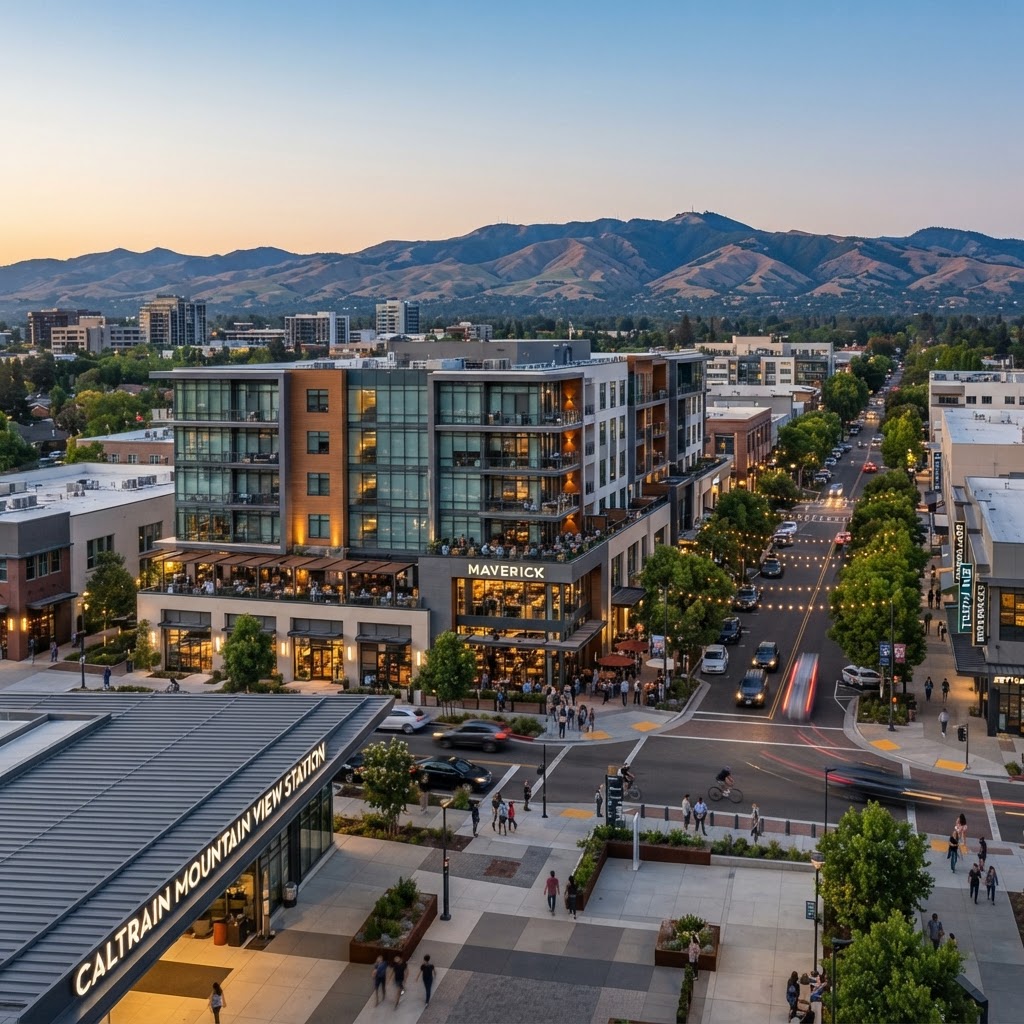
- Transit-Oriented Living: The VTA light rail and Caltrain provide seamless access to San Francisco and San Jose, a critical factor as California advances transit-oriented housing reforms.
- Shoreline Park: A massive wildlife refuge and recreation area that serves as the city's "green lung," offering sailing, golf, and miles of trails.
- Downtown Castro Street: One of the most walkable and diverse dining districts in the Bay Area, which continues to see high demand for mixed-use developments like Novo Apartments (Novo Mountain View).
Education and Schools
Education remains a primary driver for the local real estate premium. The Mountain View Whisman School District and the Los Altos High School District consistently rank among the top in the state. However, capacity remains a challenge; for the 2026-2027 school year, bus pass applications are being processed on a first-come, first-served basis due to high demand (Santa Clara USD).
Practical Takeaways
- For Buyers: With a sale-to-list price ratio of 104.6% (Redfin), expect to pay a premium. However, the slowing growth rate means you are less likely to be caught in a "bidding war bubble" compared to 2024-2025.
- For Sellers: The 9-day average time-on-market suggests that pricing at the median AVM of $2,098,000 (Property Focus) will yield a quick sale, but aggressive overpricing is no longer being rewarded by the market.
- For Investors: Focus on properties with ADU potential. Mountain View’s high equity and transit-adjacent zoning make it an ideal candidate for density-based value-add plays.