The 6.8% Reality: A New Baseline for California
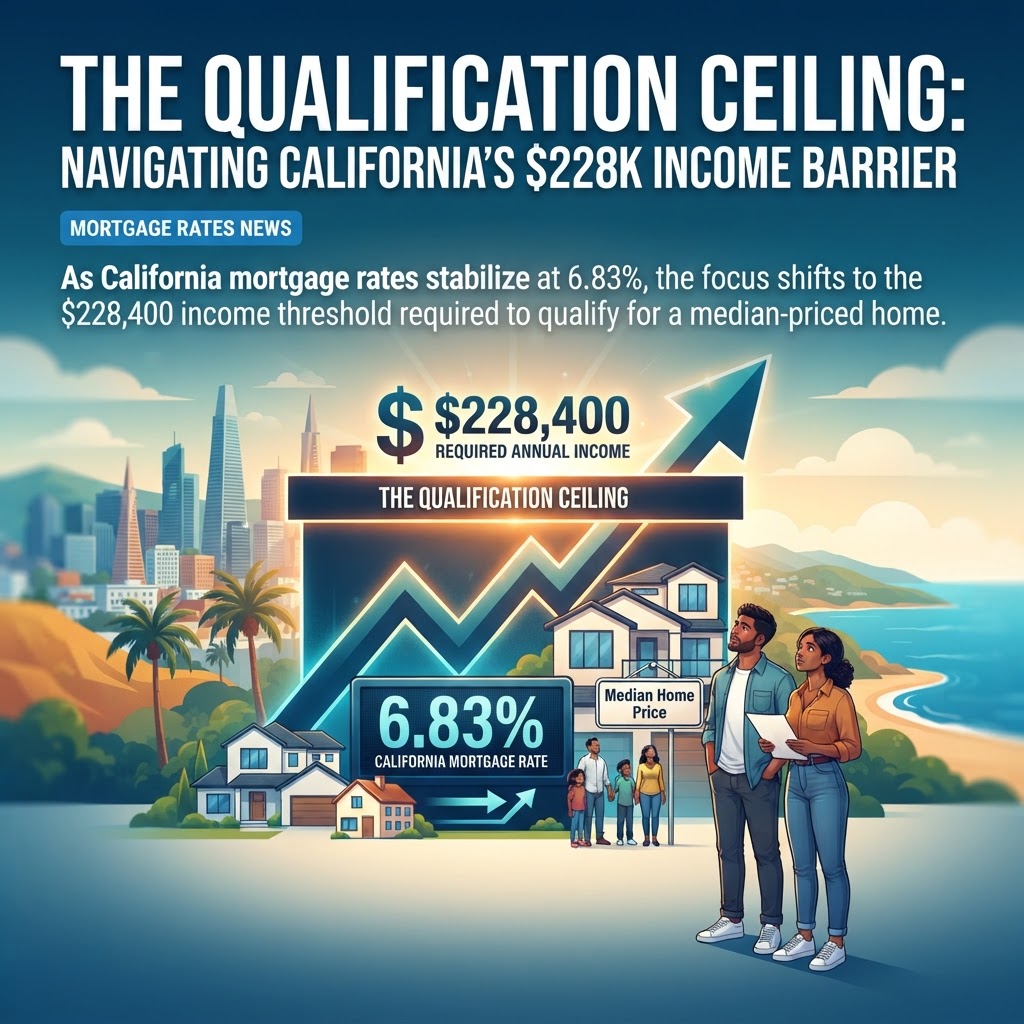
As of August 27, 2026, the California mortgage landscape has reached a period of tense stabilization. While national 30-year fixed rates have averaged 6.65% according to Freddie Mac, California borrowers are facing a steeper climb. Local data from Bankrate indicates that the average 30-year fixed mortgage rate in the Golden State currently sits at 6.83%, with 15-year fixed options hovering near 6.23%.
This rate environment is significantly higher than the 6.0% forecast many analysts predicted for the summer of 2026. Instead of a downward slide, the market has been buffeted by economic volatility and geopolitical tensions, keeping rates stubbornly above the mid-6% range. For California buyers, this isn't just a number—it represents a formidable "qualification ceiling" that is reshaping who can enter the market this fall.
The September Risk: Why Waiting May Cost More
The primary concern for buyers today is the upcoming Federal Reserve meeting. While the Fed held rates steady for the fifth time in 2026, the CME FedWatch tool now indicates a high probability of a federal-funds rate increase in September. This potential hike is a response to persistent inflation and a stable job market, signaling that the era of rate cuts seen in late 2025 has concluded.
For California buyers, the risk of waiting for a "better rate" is becoming increasingly expensive. With the state's median home price holding at approximately $905,000, even a 25-basis-point increase in mortgage rates can add hundreds of dollars to a monthly payment, potentially pushing buyers out of their desired loan-to-value brackets.
The $228,400 Threshold: Underwriting in a High-Rate Climate
The most significant barrier in the current market is the rising income requirement for mortgage qualification. According to data cited by the California Association of Realtors (C.A.R.), the qualifying annual income for a median-priced home has reached a staggering $228,400. This calculation assumes a standard PITI (Principal, Interest, Taxes, and Insurance) payment of roughly $5,710 per month.
Lenders are also tightening underwriting standards due to the "Insurance Wildcard." As major carriers continue to limit new policies in fire-prone counties, more owners are being pushed onto the FAIR Plan. These higher premiums are now being factored more aggressively into debt-to-income (DTI) ratios, further lowering the maximum loan amount for which a buyer can qualify.
Strategic Pivots for Fall 2026
Despite these challenges, the market is not at a standstill. Savvy buyers are shifting their focus toward new construction and alternative financing structures to bypass the resale inventory crunch. Recent Census data shows that California authorized 8,623 privately owned housing units in June 2026, a 4.1% increase year-over-year. Builders, who respond to rate shifts faster than individual sellers, are increasingly offering internal rate buy-downs to keep their pipelines moving.
Practical Takeaways for Buyers:
- Lock-In Early: Given the high probability of a September Fed hike, securing a rate lock now may protect against a move toward 7% in the fourth quarter.
- Audit Your DTI: With the $228k income threshold in play, reducing revolving debt is more critical than ever to maximize borrowing power.
- Explore New Construction: Look for "builder-forward" commitments where developers have pre-purchased lower interest rate blocks, often 1% to 1.5% below the current market average.
- Factor in Insurance Early: Obtain an insurance quote during the pre-approval process, not during escrow, to ensure the premium doesn't disqualify your DTI at the last minute.