The New Bottleneck: Why Insurability Precedes the Appraisal
As of late August 2026, the California real estate landscape has undergone a fundamental shift. While interest rate stabilization has brought buyers back to the table, a new hurdle has emerged as the primary deal-killer: insurance underwriting. According to recent data from the California Association of Realtors (CAR), nearly 18% of failed escrows in the first half of 2026 were attributed to the buyer's inability to secure affordable fire or comprehensive homeowners insurance during the contingency period.
For sellers, the strategy is no longer just about staging and pricing—it is about insurability verification. To maximize home value in today's market, you must prove to a buyer that your property is not a liability to their lender.
1. The Pre-Listing Insurability Packet
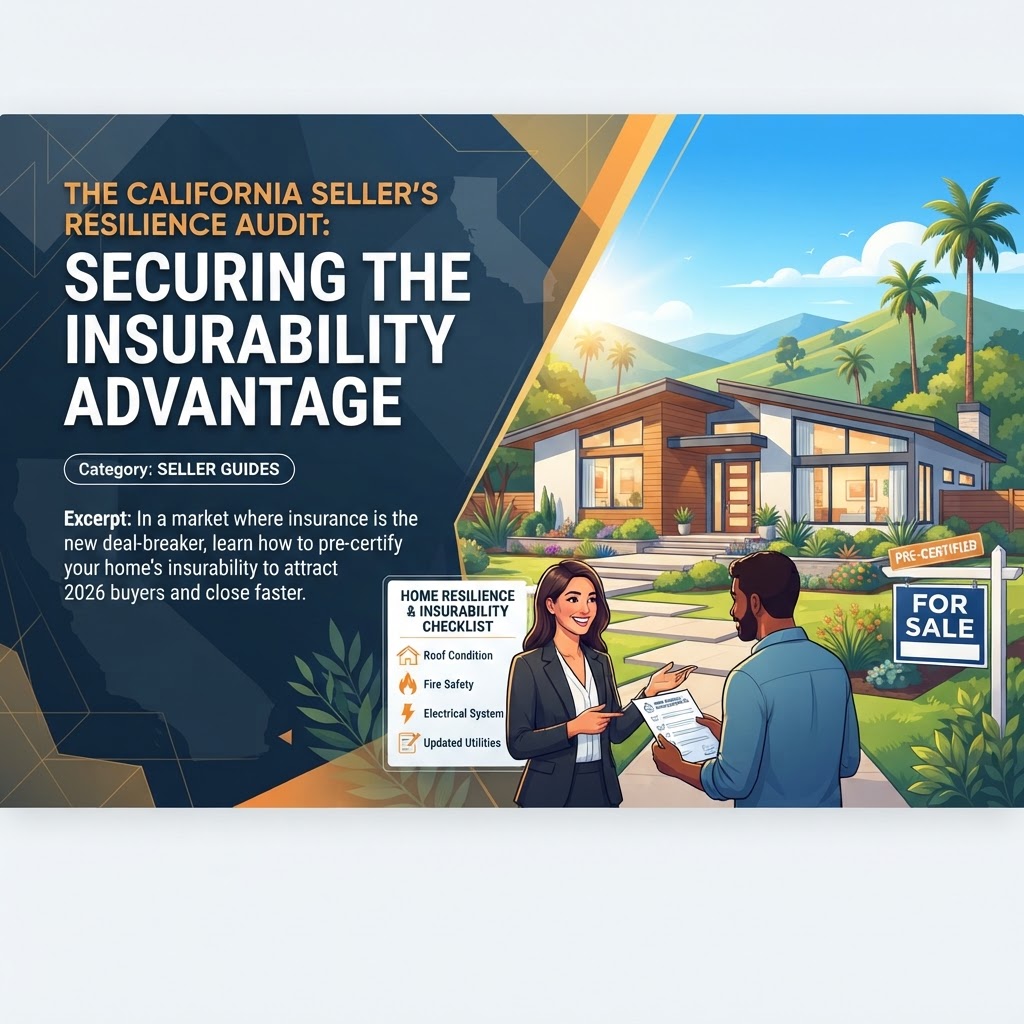
In previous cycles, insurance was the buyer’s post-offer problem. In 2026, the savvy seller treats insurance as a marketing asset. Before hitting the MLS, compile an "Insurability Packet" to be included in your disclosure vault. This should include:
- A Current CLUE Report: A Comprehensive Loss Underwriting Exchange report shows the last seven years of claims history. Providing a "clean" report builds immediate trust.
- A Preliminary Quote Portfolio: Work with an independent broker to identify at least two carriers (potentially including the California FAIR Plan) currently writing policies for your specific ZIP code and construction type.
- Proof of Recent System Upgrades: Modernized electrical panels (specifically the removal of Zinsco or Federal Pacific breakers) and copper plumbing are now non-negotiables for tier-one insurers.
2. Hardening the Asset: ROI on Resilience
California Assembly Bill 38 requirements have matured, and 2026 buyers are hyper-aware of "defensible space" compliance. However, going beyond the legal minimum can significantly increase your home’s pool of eligible lenders and buyers. High-ROI resilience upgrades include:
- Ember-Resistant Venting: Replacing standard attic and crawlspace vents with WUI-compliant (Wildland-Urban Interface) ember-resistant mesh is a low-cost, high-impact upgrade that insurers look for during inspections.
- Class A Fire-Rated Roofing: If your roof is nearing the end of its life, replacing it with Class A materials isn't just a maintenance item—it's a requirement for many preferred insurance providers in 2026.
- Secondary Water Shut-off Valves: With water damage claims rising, installing smart leak-detection systems can sometimes trigger premium discounts that you can highlight in your listing.
3. Navigating the FAIR Plan Transition
If your property is located in a high-fire-risk zone where the California FAIR Plan is the only option, don't hide it. Instead, position the home as "FAIR-Ready." This means ensuring the property meets all the specific brush clearance requirements (typically 100 feet of defensible space) before the buyer’s inspector arrives. According to MLS data, homes that provide a pre-certified Defensible Space Inspection (DSI) from Cal Fire or local agencies close an average of 12 days faster than those that wait for the buyer to initiate the process.
4. Strategy: The "Insurance Contingency" Buy-Down
In the current August 2026 market shift, we are seeing a rise in seller-funded insurance buy-downs. Similar to a mortgage rate buy-down, a seller can offer a credit specifically designated to offset the buyer's first two years of high-premium insurance. This can be more effective than a price cut, as it directly solves the DTI (Debt-to-Income) ratio issues that high insurance premiums create for buyers during the qualification process.
Practical Seller Action Plan:
- Audit Early: Request your own CLUE report 30 days before listing to dispute any inaccuracies.
- Certify Space: Secure your AB 38 defensible space certificate before the first open house.
- Broker Collaboration: Ask your listing agent to partner with an insurance broker who can provide a "spec sheet" for your home’s insurance costs to eliminate buyer uncertainty.
- Focus on WUI Compliance: Even in suburban areas, checking for ember-resistant upgrades can be the difference between a 30-day close and a fallen deal.
By shifting the focus from mere aesthetics to structural and financial resilience, California sellers can navigate the complexities of the 2026 market, ensuring that their home remains a desirable, bankable asset in any economic climate.