The Return of the Real Estate Chain
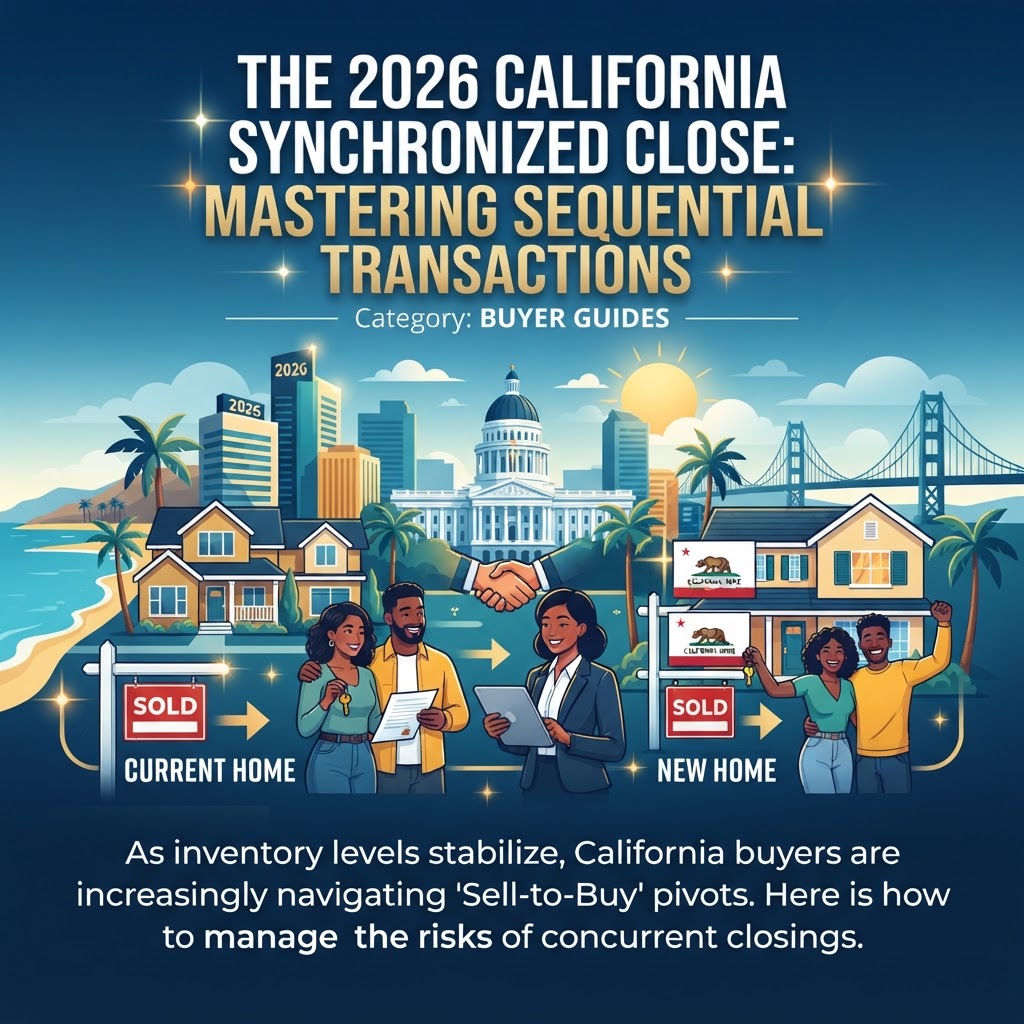
Following the 'inventory thaw' of early 2026, the California real estate market has transitioned into a high-velocity phase where the majority of buyers are also sellers. According to the California Association of Realtors (CAR) Mid-Year 2026 Report, approximately 42% of active buyers are currently attempting to synchronize the sale of a primary residence with their new acquisition. This creates a 'chain' of transactions that requires precise contractual timing and financial bridging.
In a market where the median home price in California has stabilized near $860,000, the stakes for a failed synchronization are high. Buyers must move beyond simple offer letters and master the mechanics of the sequential close to remain competitive without risking homelessness or dual-mortgage exposure.
Leveraging the CAR Form COP (Contingency for Sale)
The cornerstone of the sequential move in California is the Contingency for Sale of Buyer’s Property (Form COP). In the 2026 environment, sellers are more amenable to these contingencies than they were during the post-pandemic frenzy, but they often include a '72-hour kick-out clause.'
- The Kick-Out Clause: If a seller receives a secondary, non-contingent offer, they can notify you to remove your sale contingency within a set timeframe (usually 72 hours).
- Strategic Positioning: To make a contingent offer attractive, buyers should ideally have their current home already 'In Escrow.' Data from MLS platforms indicates that contingent offers where the buyer's home is already under contract are 60% more likely to be accepted than those where the home is not yet listed.
The 2026 Bridge Strategy: Capitalizing on Trapped Equity
With California homeowners holding record levels of home equity—averaging over $500,000 in coastal metros—the 2026 market has seen a resurgence in 'Bridge-to-Close' financing. Unlike traditional HELOCs, which can be difficult to secure once a home is listed, specialized bridge loans allow buyers to access their equity to make non-contingent offers on their next home.
Current 2026 lending trends show a shift toward cross-collateralization, where a lender secures the loan against both the departing residence and the new acquisition. While interest rates for these products remain 1.5% to 2% higher than standard 30-year fixed mortgages, they eliminate the need for Form COP, placing the buyer in a superior negotiation position.
Navigating Post-Closing Possession (The SIP Agreement)
A critical component of a synchronized close is the Seller in Possession (SIP) form for stays under 30 days, or the Residential Lease After Sale (RLAS) for longer durations. In 2026, the 'rent-back' has become a standard negotiation tool.
However, California’s evolving tenant protection laws require buyers to be cautious. Even a short-term SIP should include a significant security deposit held in escrow and a daily 'holdover' rate to ensure the seller vacates on time. Buyers should ensure the SIP agreement explicitly states that the arrangement does not create a formal landlord-tenant relationship to avoid the lengthy eviction processes required under the California Tenant Protection Act.
Practical Takeaways for the Synchronized Buyer
Actionable Strategy for 2026:
- Audit Your Equity: Before shopping, obtain a certified appraisal of your current home to determine exactly how much liquidity is available for a bridge loan or down payment.
- The 'Escrow Buffer': Aim for a 3-to-5-day overlap between the closing of your sale and the closing of your purchase. This provides a window for cleaning, minor repairs, and unexpected wire transfer delays.
- Shorten the Inspection Window: In a sequential close, speed is your currency. Use the 'Due Diligence' era tools previously discussed to conduct pre-inspections so you can remove contingencies faster than the standard 17 days.
- Insurance Continuity: Ensure your new homeowners policy is set to trigger 48 hours before the scheduled close, as 2026 underwriting delays in high-fire-risk zones can derail a synchronized timeline.
Market Outlook: The Fluidity Mandate
As we head toward 2027, the California market rewards fluidity. Buyers who attempt to time the market perfectly often fail; those who focus on timing the transaction mechanics succeed. By utilizing modern bridge products and the latest CAR contractual protections, buyers can navigate the complexity of a dual-transaction move without sacrificing their competitive edge.