The Resilience of the 'Secondary Core'
As the San Francisco Bay Area navigates the complexities of a post-AI-boom economy, Walnut Creek has emerged not just as a bedroom community, but as a self-sustaining 'secondary core.' While other Silicon Valley enclaves grapple with extreme inventory shortages, Walnut Creek has achieved a rare equilibrium. According to Redfin market data for April 2026, the city maintained a sale-to-list price ratio of 101.5%, a 1.1-point increase year-over-year, signaling that demand remains aggressive even as broader market values show signs of stabilization.
Market Dynamics: Stability Over Volatility
Recent data from Zillow indicates the average home value in Walnut Creek sits at approximately $1,029,738. While this represents a marginal 0.2% dip from the previous year, the figure belies the intense competition for single-family homes. The market is currently bifurcated: high-density transit-oriented developments (TODs) near the BART stations offer entry points for professionals, while the sprawling estates in neighborhoods like Northgate command significant premiums.
The city’s economic foundation is bolstered by a median household income of $130,432, as reported by the U.S. Census Bureau. This financial stability, paired with a median age of 46.8, creates a demographic profile of established professionals and families who are less susceptible to the volatility of the tech sector's venture capital cycles.
The 'BART-to-Broadway' Lifestyle
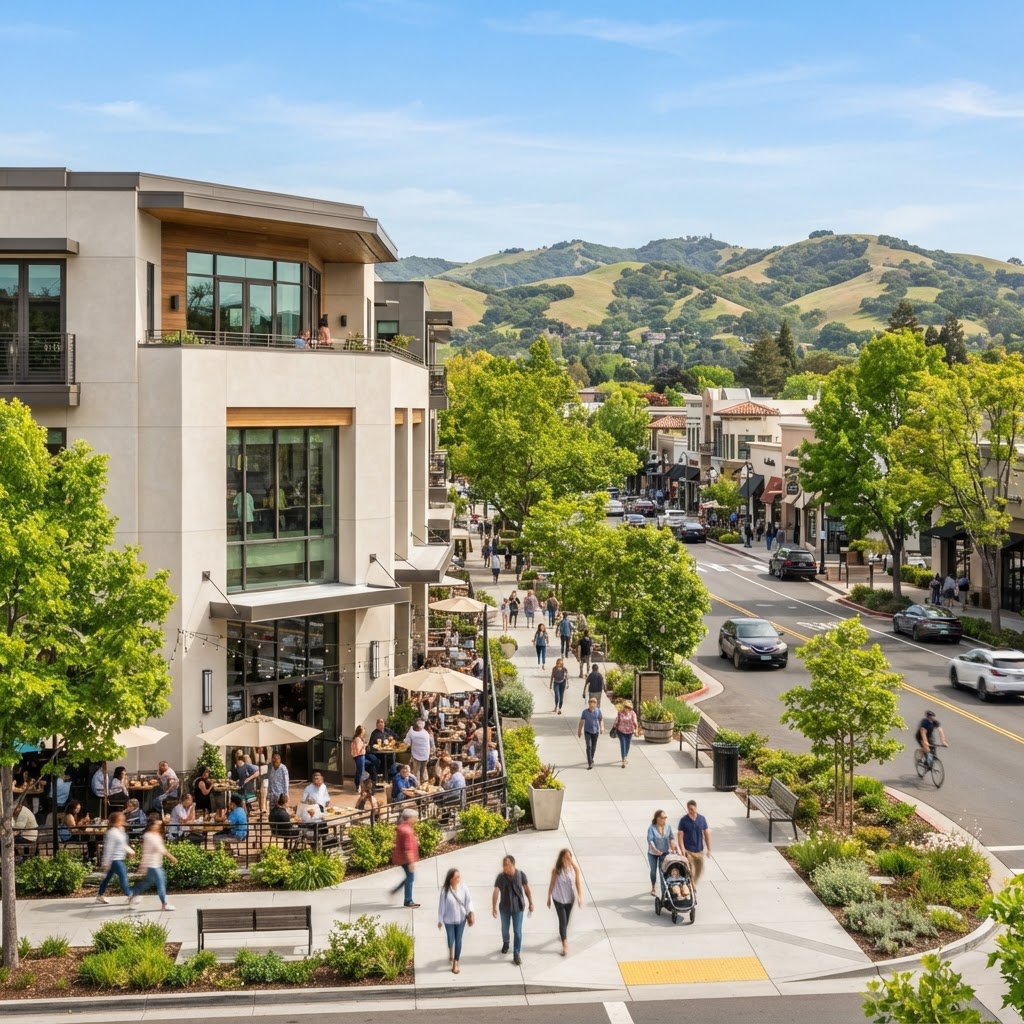
Walnut Creek’s primary appeal in 2026 lies in its '15-minute city' infrastructure. The city successfully bridges the gap between urban utility and suburban comfort:
- Transportation: The Walnut Creek and Pleasant Hill/Contra Costa Centre BART stations provide direct access to San Francisco and Oakland. This transit connectivity is a major driver for the 75% of residents who choose to stay within the metro area when relocating, according to migration trends.
- Amenities: Broadway Plaza remains the crown jewel of East Bay retail, offering high-end shopping and dining that rivals San Francisco’s Union Square. The city also boasts over 260 days of sunshine annually, supporting an outdoor culture centered around Mount Diablo State Park and the Iron Horse Regional Trail.
- Education: The Walnut Creek School District and Acalanes Union High School District continue to be top-tier draws for families, often cited as a primary reason for the area's high property retention rates.
Commercial and Office Resilience
Unlike the struggling office markets in major metropolitan cores, Walnut Creek’s commercial sector shows signs of strategic growth. Colliers Q1 2026 reports show Class A office rents in the North I-680 corridor ranging from $3.25 to $4.25 per square foot. The stability of the local office market is supported by a shift toward regional hubs, where firms are leasing smaller, high-quality spaces closer to where their executive workforce lives.
Practical Takeaways for 2026
For Buyers:
Expect to pay above asking price for turnkey single-family homes. With a 101.5% sale-to-list ratio, the 'list price' is often a floor, not a ceiling. Focus on the 'BART-adjacent' condo market for better value-per-square-foot, as these units are seeing slightly less upward pressure than detached homes.
For Sellers:
Inventory remains the primary constraint. Sellers in 2026 are in a position of strength, but buyers are increasingly discerning regarding 'wildfire retrofitting' and energy efficiency. Homes with updated HVAC systems and fire-resistant landscaping are seeing the fastest closing times.
For Investors:
The rental market remains robust, with median rents rising 2.65% month-over-month in early 2026. The most consistent returns are found in multi-family units near the downtown core, where the 'walkability premium' continues to outpace general market appreciation.