The Institutional Stability of the Rose City
As the California real estate market navigates the post-inflationary landscape of 2026, one submarket has emerged as a textbook example of 'institutional resilience.' While tech-heavy hubs like San Francisco and high-growth coastal enclaves like Encinitas face volatility, Pasadena—specifically the corridor surrounding Caltech and the Jet Propulsion Laboratory (JPL)—has maintained a remarkably high floor. This is not due to speculative hype, but to a unique concentration of recession-proof intellectual capital.
According to recent MLS data for Q3 2026, the median home price in Pasadena has seen a consistent 4.8% year-over-year appreciation, outpacing the broader Los Angeles County average of 2.9%. The driving force is a buyer profile largely insulated from corporate layoffs: researchers, engineers, and academics anchored by long-term federal and institutional funding.
The 'Brain Trust' Economy and Real Estate Value
Pasadena’s economic foundation differs significantly from its neighbors. While Silicon Beach relies on venture capital, Pasadena is anchored by the 'Golden Triangle' of Caltech, JPL, and the Huntington Library & Gardens. In 2026, CBRE reports that office vacancy in the South Lake Avenue district remains below 10%, largely driven by the expansion of private aerospace firms and AI research labs spun off from Caltech.
For a homebuyer, this translates to a 'preservation of equity' play. Neighborhoods like Madison Heights and Oak Knoll have seen inventory levels drop to historic lows—often less than 1.5 months of supply. The demand is fueled by the 'sticky' nature of these institutions; once academic and research professionals settle here, they rarely leave, creating a supply-constrained environment that protects property values.
Transportation and The 'Urban-Suburban' Hybrid
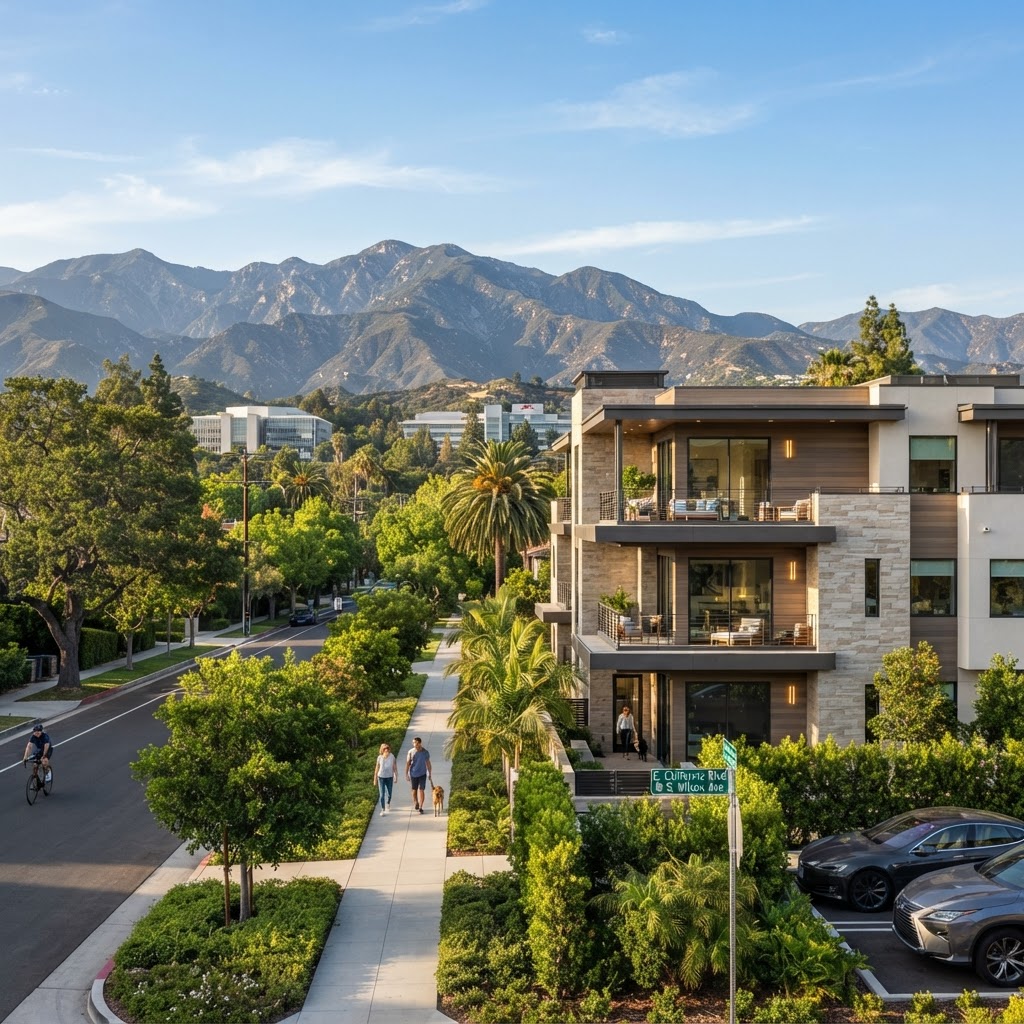
The 2026 expansion of the Metro A-Line (formerly the Gold Line) has further solidified Pasadena’s appeal. With enhanced connectivity to the regional transit network, the neighborhood has become a preferred 'commuter-lite' destination. The walkability of the Old Pasadena and South Lake districts has reached a 20-year peak, with a Walk Score of 92 in the core areas.
This connectivity allows the neighborhood to capture two distinct demographics: the young professional seeking a transit-oriented lifestyle near the shops of Colorado Boulevard, and the established family seeking the architectural character of Craftsman and Mediterranean Revivals that define the city’s residential streets.
Education: The Dual-Track Advantage
Pasadena Unified School District (PUSD) has seen a resurgence in 2026, following targeted investments in STEM and dual-language immersion programs. However, the neighborhood’s real estate premium is also bolstered by its proximity to some of the nation’s elite private institutions, including Polytechnic School and Westridge School. According to Census data, the density of residents with post-graduate degrees in the 91106 and 91105 zip codes remains in the top 1% nationally, a demographic marker that historically correlates with sustained school funding and community engagement.
Strategic Takeaways for 2026
- For Buyers: Look for opportunities in the 'Bungalow Heaven' landmark district. While prices remain high, these historic assets offer significant long-term appreciation due to strict preservation laws that limit new supply.
- For Sellers: The 'Institutional Premium' is your strongest selling point. Highlight proximity to JPL and Caltech, as the influx of federal research grants in 2025-2026 has created a new wave of high-earning prospective buyers.
- For Investors: Focus on luxury condos in the South Lake District. CBRE trends indicate a rising demand for high-end rentals among visiting scholars and engineers who prefer walkability over maintenance-heavy single-family homes.
Final Outlook
Pasadena in 2026 stands as a testament to the power of institutional stability. In a state where real estate can often feel like a roller coaster, the Rose City offers a steadier, more predictable climb. It is the 'blue chip' stock of Southern California real estate—reliable, prestigious, and deeply rooted in the future of American innovation.