The New Normal: Price Discovery Reaches Equilibrium
For the first time in years, the California real estate market has entered a phase of remarkable transactional stability. According to June 2026 data from Realtor.com, the state has achieved a Sale-to-List price ratio of 100%, signaling a balanced market where homes are selling for exactly their asking price on average. This equilibrium marks the end of the frantic over-bidding era and introduces a period of 'price discovery' that rewards precision over speed.
The Data Behind the Balance
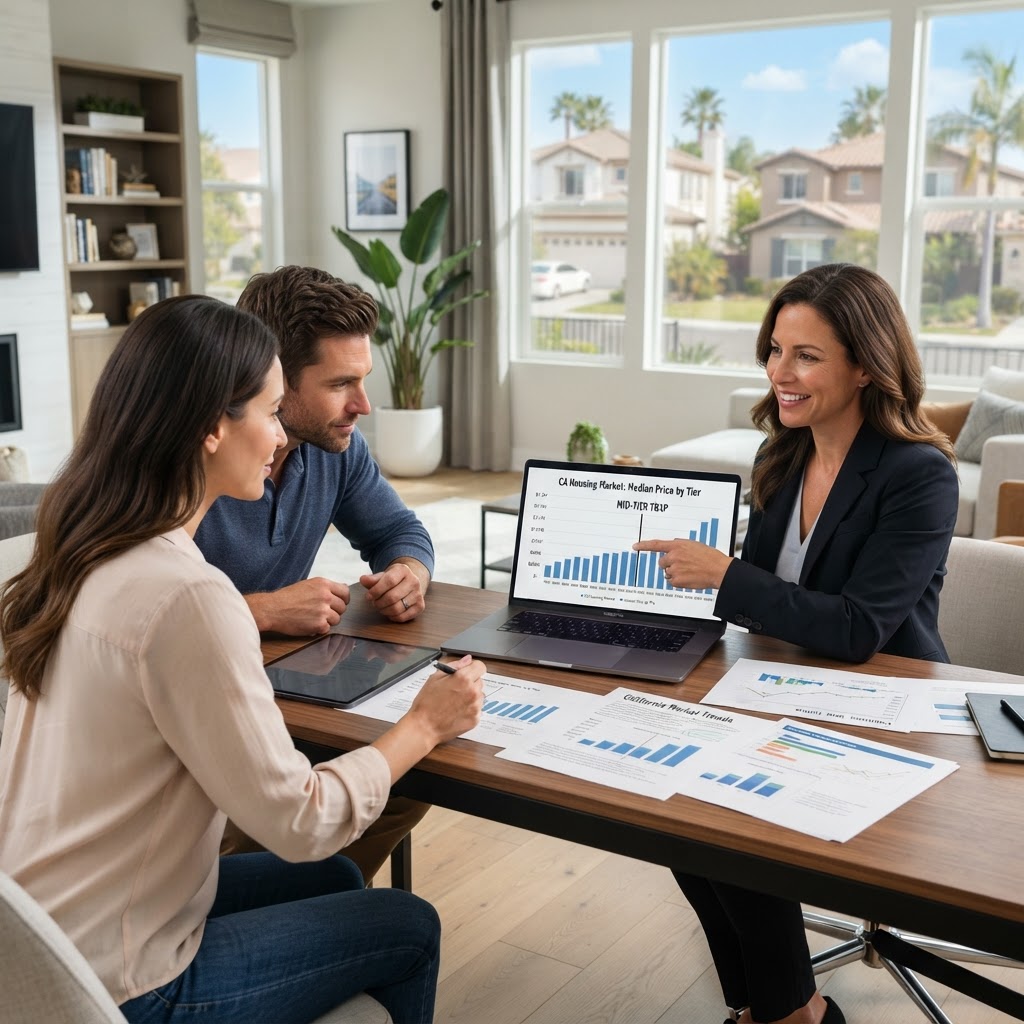
Current indicators reflect a market that has cooled from the post-pandemic surge but remains resilient. The median listing price statewide stands at $750,000, while the median sold price has stabilized at $785,000, representing a modest 1.95% year-over-year increase. Homes are now spending a median of 45 days on the market, a 'warm' pace that allows for measured searches and thorough due diligence. This shift is further supported by CBRE’s 2026 Outlook, which forecasts a slowing U.S. GDP growth of 2.0%, leading to a more tempered labor market and stabilized interest rates that anchor buyer purchasing power.
The Rent-to-Own Friction Point
Despite the stabilization in sales prices, the structural divide between renting and owning remains a primary driver of market behavior. The California Legislative Analyst’s Office (LAO) reports that ownership costs are currently 62% higher than renting a comparable two-bedroom home. This gap is sustaining high rental demand even as the for-sale market balances. For investors, this creates a unique environment: while capital appreciation has slowed to a 'gradual improvement' phase, rental yields remain protected by the high barrier to entry for first-time buyers.
Commercial Divergence: Prime Scarcity vs. Secondary Surplus
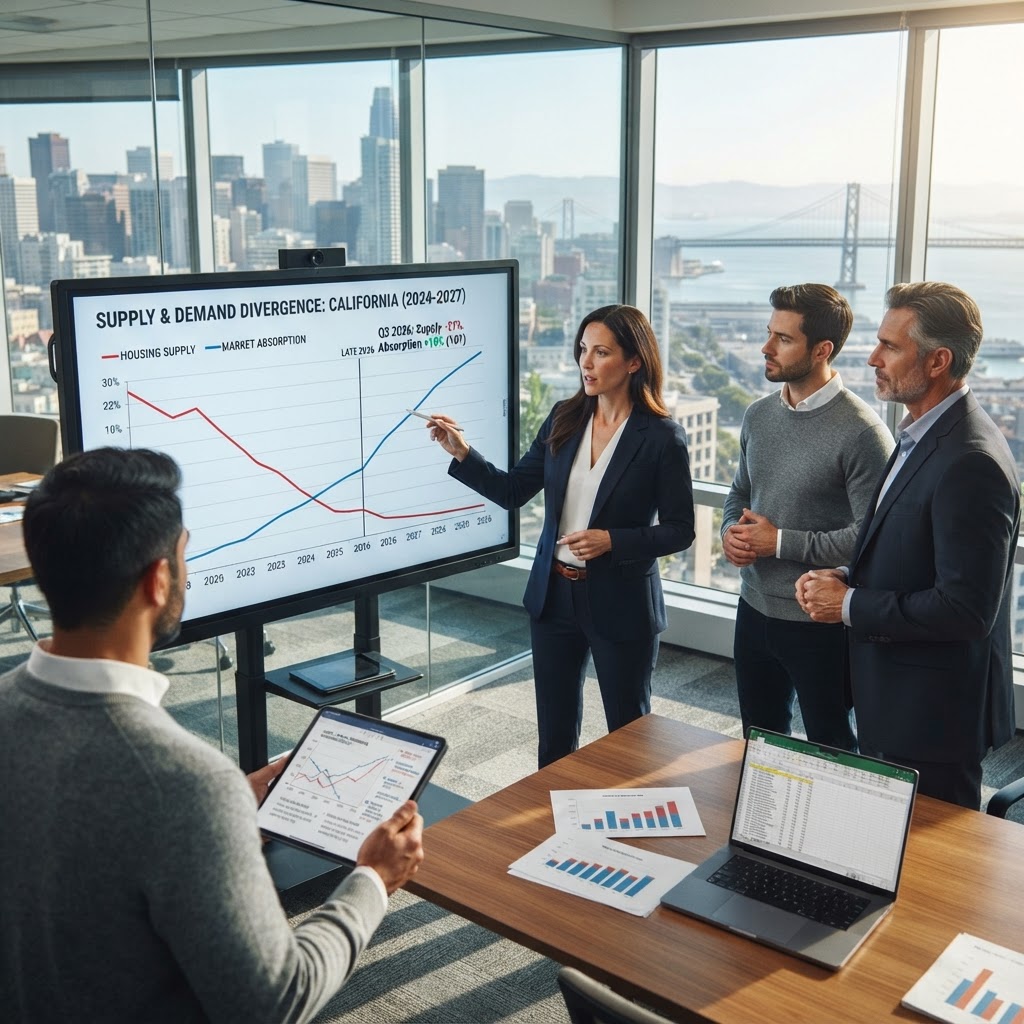
In the commercial sector, the 2026 market is defined by a 'flight to quality.' CBRE highlights that prime office space is facing extreme scarcity, with leasing activity expected to surpass 2019 levels by year-end. Conversely, older secondary spaces are struggling, creating a widening valuation gap. In the industrial sector, the focus has shifted toward 'infill' and 'last-mile' facilities to support reshoring manufacturing operations, providing a hedge against global supply chain volatility.
Strategic Takeaways for 2026
- For Buyers: The 100% sale-to-list ratio means the 'bidding war' premium has evaporated. Focus on properties that have sat for 30+ days; market data suggests these sellers are increasingly willing to negotiate on closing costs and repairs.
- For Sellers: Accurate pricing is now the only path to a timely sale. Overpricing by even 2-3% can lead to stagnation, as the current 45-day median time-on-market indicates buyers are willing to wait for fair value.
- For Investors: With the AB 1482 rent cap likely hitting its higher end (5% + CPI) due to inflationary pressures, focus on assets with high 'quality premiums' in prime tech hubs where vacancy remains low.