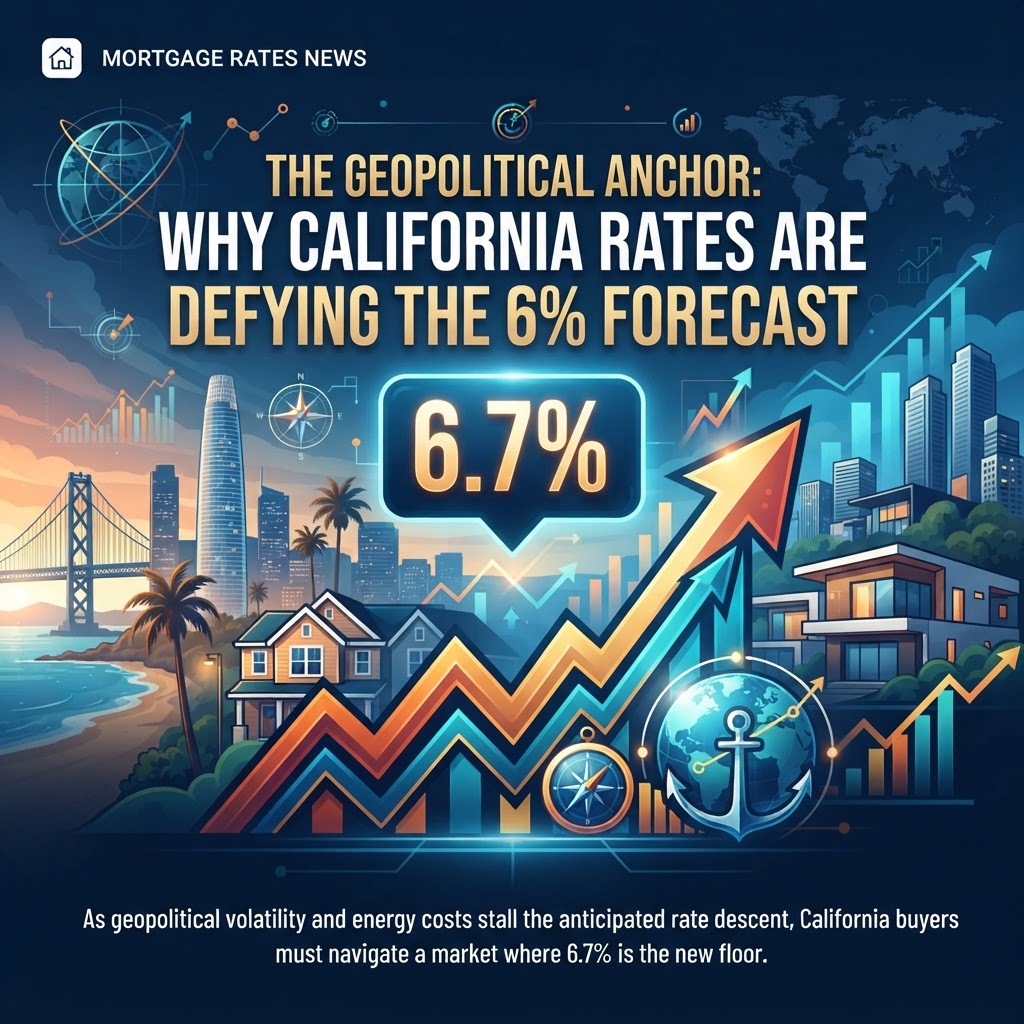
The Stalled Descent: August 2026 Rate Reality
As of August 20, 2026, the California mortgage landscape is characterized by a stubborn stability that few analysts predicted at the start of the year. According to Bankrate, the average 30-year fixed mortgage rate in California sits at 6.74%, while the national average reported by Freddie Mac holds at 6.67%. This represents a significant departure from earlier forecasts that suggested a move toward the 6.0% mark by late summer.
The Geopolitical Risk Premium
The primary driver behind this rate plateau is a "one-two punch" of domestic economic resilience and international volatility. Recent Wall Street Journal reports indicate that mortgage rates reached a one-year high in late July, fueled by rising energy costs stemming from renewed conflict between the U.S. and Iran. This geopolitical friction has created an inflationary floor that prevents long-term bond yields from moving decisively lower.
Dr. Anthony O. Kellum, President of Kellum Mortgage, notes that while inflation data has shown moderation, it has not been "strong enough to create a significant or sustained move lower just yet," as the market awaits a definitive resolution to the energy price spikes (Bankrate).
California’s Affordability Standoff
For California home buyers, this rate environment exacerbates an already strained market. Data from ManageCasa shows the median home price in the Golden State hovering at $905,000 as of mid-2026. With housing affordability currently estimated at just 18% by the Legislative Analyst's Office, the failure of rates to drop below 6.5% has effectively sidelined a new wave of prospective buyers who were waiting for a "September Pivot."
Inventory trends offer a mixed signal. While active listings in California reached approximately 108,753 in recent months, this remains a 5.6% year-over-year decline (Redfin/ManageCasa). The result is a market where prices remain resilient despite higher borrowing costs, as limited supply continues to support valuations.
Lending News: The Retail Sales Disconnect
In a surprising turn for the lending industry, recent Mortgage News Daily tracking showed that rates ended the week of August 14 slightly higher despite a Retail Sales report that came in much weaker than expected. Typically, weak economic data triggers a flight to bonds, lowering yields and mortgage rates. However, the current market is prioritizing inflation and geopolitical risk over consumer spending data, suggesting that the "bad news is good news" correlation for mortgage rates has temporarily broken down.
Practical Takeaways for California Buyers
- Recalibrate the "Wait-and-See" Strategy: With experts now predicting rates will hover in the mid-6% range for the remainder of 2026 (Forbes Advisor), waiting for a 5% handle may result in lost equity gains if home prices continue their 1.5% annual acceleration.
- Evaluate ARM Options: As the spread between fixed and adjustable rates persists, 7/1 ARMs in California are currently averaging 5.92% (Bankrate), providing a temporary affordability bridge for buyers planning to refinance within the next decade.
- Monitor Energy Benchmarks: Because current mortgage rates are highly sensitive to the U.S.-Iran conflict's impact on oil, buyers should watch energy price trends as a leading indicator for the next window of rate volatility.