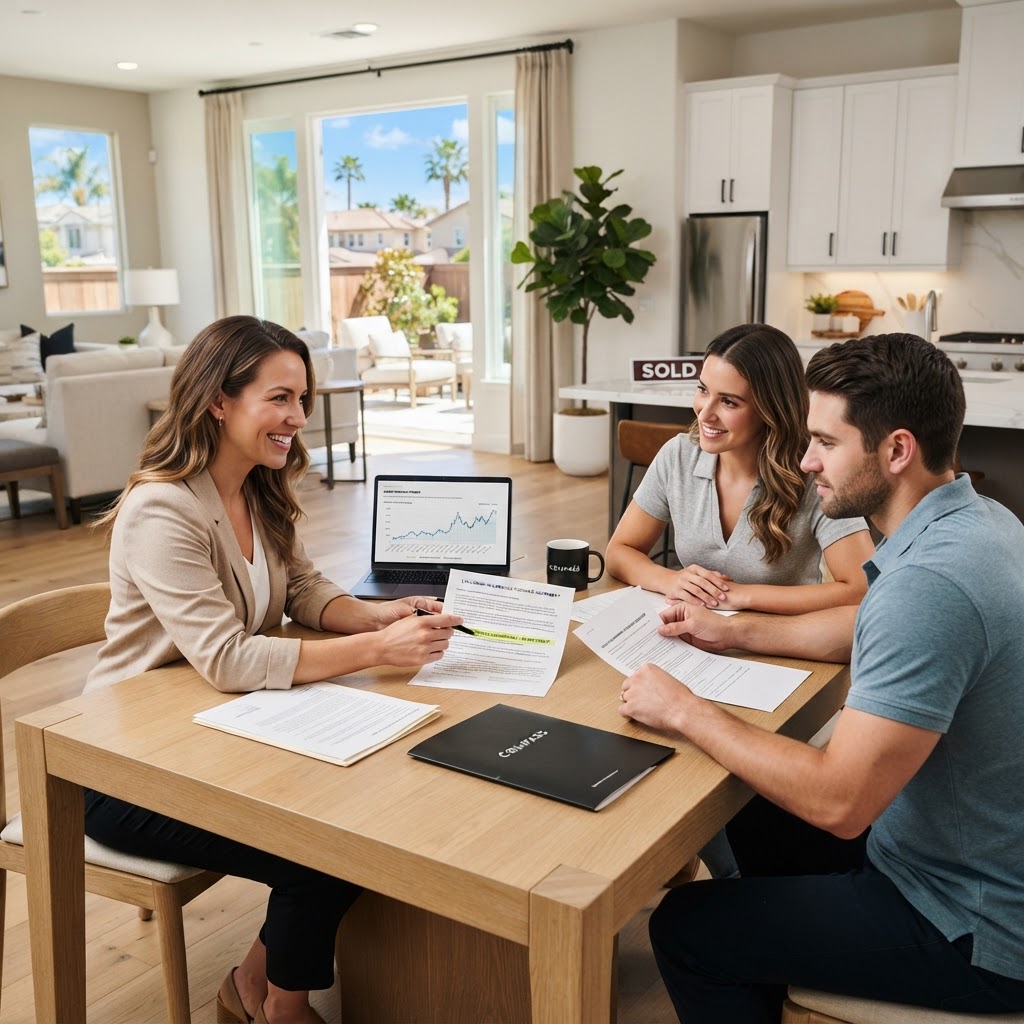
The Challenge of the Mid-2026 Transition
As of August 2026, the California real estate market has entered a phase of "predictable fluidity." The severe inventory lockdowns of the early 2020s have eased, but for the modern California seller, a new challenge has emerged: Transactional Synchronicity. With the median home price in California hovering near $920,000 (according to California Association of Realtors projections) and mortgage rates stabilizing in the high 5% range, most sellers are also buyers who must unlock equity instantly to compete.
This guide explores the practical mechanics of the "Pivot"—selling your primary residence while simultaneously securing your next home in a market where sellers rarely accept traditional sale contingencies.
1. The Liquidity Bridge: Beyond the Traditional Contingency
In 2026, the "contingent on the sale of buyer's property" offer is often dead on arrival in high-demand hubs like San Jose, Orange County, and San Diego. To maximize your home’s value and your purchasing power, you must decoupling the two transactions.
- The Modern Bridge Loan: Unlike the clunky products of a decade ago, 2026 bridge lending focuses on "cross-collateralization." Sellers are leveraging their existing equity (often 40-60% for long-term CA owners) to make non-contingent offers on their next home.
- Buy-Before-You-Sell (BBYS) Platforms: Institutional liquidity providers have become mainstream in California. These services allow you to unlock up to 70% of your current home's value to buy your next home in cash, then sell your old home on the open market for a higher price than a traditional iBuyer would offer.
- The HELOC Buffer: Data from the Federal Reserve indicates that California homeowners hold record-high tappable equity. Establishing a Home Equity Line of Credit (HELOC) before listing your home remains the most cost-effective way to fund a down payment on a new property without a fire sale.
2. The Strategic Rent-Back: The SIP and RLAS Forms
To maximize value, you need time. In a balanced market, the Seller License to Remain in Possession (C.A.R. Form SIP) is your strongest negotiating tool. For periods longer than 30 days, the Residential Lease After Sale (C.A.R. Form RLAS) is required.
Practical Takeaway: In 2026, successful sellers are offering a "Price-Per-Day" credit to buyers in exchange for a 60-day rent-back. This allows you to close on your sale, receive your funds, and move into your new home without the stress of a double-move. According to MLS data, homes sold with a pre-negotiated rent-back period of at least 30 days saw a 4% decrease in transaction fall-through rates.
3. Maximizing Value via 2026 Compliance
Preparation in 2026 requires more than just curb appeal; it requires "Data Readiness." Buyers are increasingly scrutinizing long-term carry costs.
- The Energy Audit: With California’s Title 24 requirements becoming stricter, providing a pre-sale energy audit or a history of low utility costs via electrification can add a 2-3% premium to your asking price.
- WUI Disclosures: If your property is in a Wildland-Urban Interface (WUI) zone, have your Defensible Space Inspection (AB 38) completed before the first showing. In 2026, savvy buyers walk away if insurance eligibility isn't pre-verified.
4. Market Strategy: The "Thursday-Tuesday" Cycle
The 2026 market moves at a digital-first pace. The most effective listing strategy currently utilized by top California producers is the 5-day exposure cycle:
- Thursday: Go live on the MLS with professional 3D spatial mapping.
- Friday: Targeted social media pushes to "lookalike" audiences (renters in a 10-mile radius with high-income profiles).
- Saturday/Sunday: High-touch open houses.
- Monday: Final vetting of buyer lender pre-approvals (specifically looking for "Underwritten Pre-Approvals" rather than simple "Pre-Qualifications").
- Tuesday: Offer review and selection.
Final Action Plan for Sellers
- Secure Your Exit: Don't list until you have a bridge loan or BBYS approval in hand.
- Pre-Inspect: Conduct your own General Home Inspection and Pest Inspection. In California’s transparent 2026 market, hiding defects only leads to aggressive credits during the escrow period.
- Price for Velocity: NAR data shows that homes priced within 1% of fair market value in 2026 generate 3.5x more multi-offer scenarios than those priced 5% over "to see what happens."