The Post-Industrial Pivot: Why Dogpatch Leads SF’s Recovery
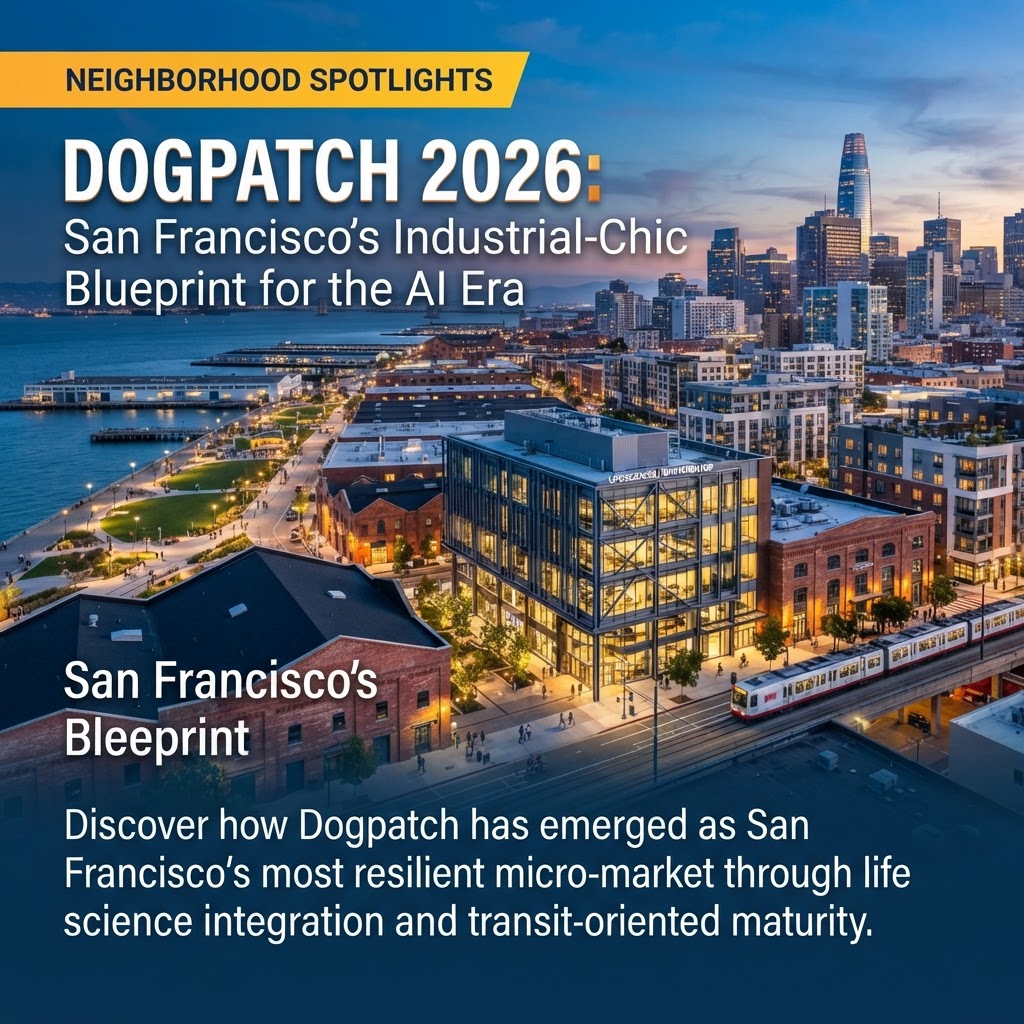
As of August 2026, San Francisco’s real estate narrative has shifted from "doom loop" anxieties to a targeted recovery led by specific micro-neighborhoods. Standing at the forefront of this resurgence is Dogpatch. Once a gritty maritime industrial zone, Dogpatch has successfully transitioned into a premier high-density residential hub that serves as the residential anchor for the adjacent UCSF Mission Bay life science cluster and the burgeoning AI corridor in SoMa.
According to recent MLS data for Q2 2026, while the broader San Francisco condo market has stabilized with a modest 3.2% year-over-year growth, Dogpatch has outperformed the city average with a 5.8% appreciation rate. This resilience is driven by a unique zoning alchemy: the preservation of historic PDR (Production, Distribution, and Repair) spaces alongside ultra-modern LEED-certified residential developments.
The Infrastructure Play: Electrification and Connectivity
One of the primary catalysts for the neighborhood’s 2026 valuation surge is the maturation of the regional transit infrastructure. With the Caltrain Electrification Project now fully integrated, the 22nd Street Station has become a high-frequency portal for hybrid workers commuting to Silicon Valley. Transit times to Palo Alto have been slashed, making Dogpatch a viable "reverse commute" base for tech executives.
Furthermore, the T-Third Street light rail line and the Central Subway extension have reached peak ridership efficiency, connecting Dogpatch residents to Union Square and Chinatown in under 15 minutes. For investors, this "transit-oriented development" (TOD) status is a safeguard against the volatility seen in more car-dependent Bay Area suburbs.
Education and Lifestyle: The "Urban Village" Concept Realized
Dogpatch’s appeal in 2026 extends beyond young professionals to growing families who are choosing to stay in the city. The neighborhood is anchored by La Scuola International School and is within the catchment area for high-performing public options, benefiting from the city’s recent efforts to stabilize school assignments near high-growth hubs.
Amenities that were once blueprints are now thriving community pillars:
- Crane Cove Park: This seven-acre waterfront park has become a regional draw, offering kayaking and beach access that rivals the recreation options of the North Beach or Marina districts.
- The Institute of Contemporary Art (ICA) San Francisco: Its presence on Minnesota Street has solidified the neighborhood's reputation as the city’s new "Arts District."
- Retail Density: The historic warehouses along 22nd and 3rd Streets now boast 94% occupancy, featuring a mix of craft breweries, artisan bakeries, and high-end fitness studios like Third.Space.
Market Dynamics: Data-Driven Insights
Data from CBRE’s mid-2026 report indicates that the Mission Bay/Dogpatch submarket maintains one of the lowest commercial vacancy rates in the city (under 12%), largely due to the demand for lab space. This commercial stability provides a direct tailwind for residential rentals. In Dogpatch, average rents for one-bedroom apartments have reached $3,950, a 4.5% increase since August 2025, driven by the influx of biotech researchers and AI engineers who prioritize proximity to work.
Practical Takeaways for Stakeholders
For Buyers:
Focus on historic conversion lofts in the 20th Street corridor. These units offer architectural scarcity that modern builds cannot replicate, ensuring better long-term value retention as the neighborhood reaches total build-out.
For Investors:
The "Life Science Spillover" is real. Properties within a 10-minute walk of the UCSF Mission Bay campus command a 15% rental premium. Look for multi-unit buildings (2-4 units) that can be optimized for high-income professional roommates.
For Sellers:
Highlight the neighborhood’s "15-minute city" credentials. In 2026, proximity to water, transit, and high-wage employers is the most significant driver of multiple-offer scenarios. Ensure your marketing emphasizes the Caltrain Electrification benefits for the Peninsula commute.
Dogpatch represents a localized victory for San Francisco. By blending its industrial heritage with the needs of the 2026 innovation economy, it has created a self-sustaining ecosystem that offers a blueprint for urban recovery nationwide.