The Intersection of Heritage and High-Density Living
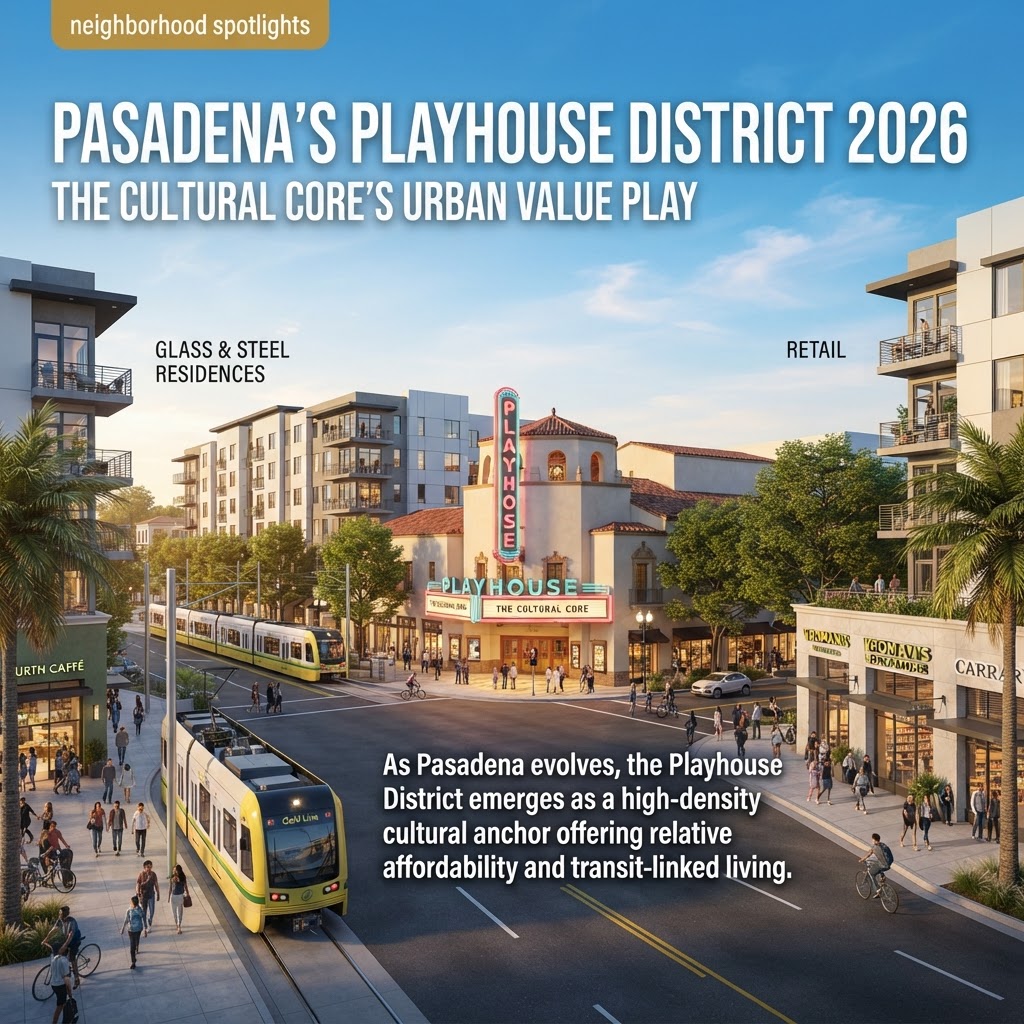
As of August 2026, the Playhouse District in Pasadena has solidified its reputation as the premier cultural and transit-oriented hub of the San Gabriel Valley. While other California enclaves have pivoted toward tech-centric rebrands, the Playhouse District has leaned into its identity as the 'Official State Theater' anchor, blending historic architecture with modern, high-density residential development. According to NeighborhoodScout, the district is characterized as a densely urban neighborhood, primarily composed of small to medium-sized apartment complexes and townhomes, many of which were constructed after 2000.
Market Dynamics: A Relative Value Proposition
For buyers and investors navigating the 2026 market, the Playhouse District offers a unique entry point. Data from NeighborhoodScout indicates a median real estate price of $648,337. This figure is particularly striking as it is less expensive than 70.2% of California neighborhoods, providing a stark contrast to the broader Pasadena market where single-family homes often exceed $1.5 million. However, the rental market remains robust; the average rental price sits at $4,386, higher than 81.2% of California neighborhoods, signaling strong demand for the district’s urban lifestyle.
Community Features and Cultural Amenities
The neighborhood’s namesake, the Pasadena Playhouse, continues to serve as the district's heartbeat. The 2026-2027 season, featuring productions like Passing Strange and Real Women Have Curves: The Musical, draws significant foot traffic that supports local retail and dining. Beyond the arts, the district is home to major commercial assets like Playhouse Plaza, a 155,000-square-foot office building that anchors the professional community on Colorado Boulevard.
Transportation and Transit-Oriented Development (TOD)
The district is a model for California’s transit-oriented future. The City of Pasadena has implemented specific TOD standards within its zoning code to encourage walkable, compact development near transit lines. This focus on walkability is a primary draw for the 86% of Pasadena homebuyers who, according to Redfin, prefer to stay within the metropolitan area rather than relocate. The neighborhood’s 11.4% vacancy rate—higher than 69.9% of U.S. neighborhoods—suggests a recent influx of new housing supply that has yet to be fully absorbed, offering a window of opportunity for prospective tenants and buyers to negotiate.
Practical Takeaways for 2026
- For Buyers: The district offers a lower barrier to entry for the Pasadena market, with median prices significantly below the state average for urban centers. Focus on newer condo builds (post-2000) to minimize maintenance costs.
- For Investors: With rents averaging over $4,300 and a high concentration of renter-occupied units, the district remains a strong cash-flow play, despite the current vacancy buffer.
- For Residents: The proximity to the Metro and the concentration of cultural events make this one of the few 'car-optional' neighborhoods in the region.
As mortgage rates stabilize in the 6.0% to 6.4% range through late 2026, the Playhouse District’s blend of cultural prestige and relative affordability makes it a standout for those seeking an urban California lifestyle without the price tag of West LA or Silicon Valley.