The Silicon Beach Anchor
Culver City, once known primarily as the 'Heart of Screenland' for its storied film history, has fully transitioned into a premier tech and media hub in 2026. Unlike its larger neighbor, Los Angeles, Culver City has maintained a distinct identity through its independent school district and a proactive approach to housing development that has seen it outperform much of the Southern California market. According to Culver City Housing Market Trends Redfin, the median sale price reached $1.4 million in mid-2026, representing a staggering 26.8% year-over-year increase.
The Economic Engine: Tech and Media Giants
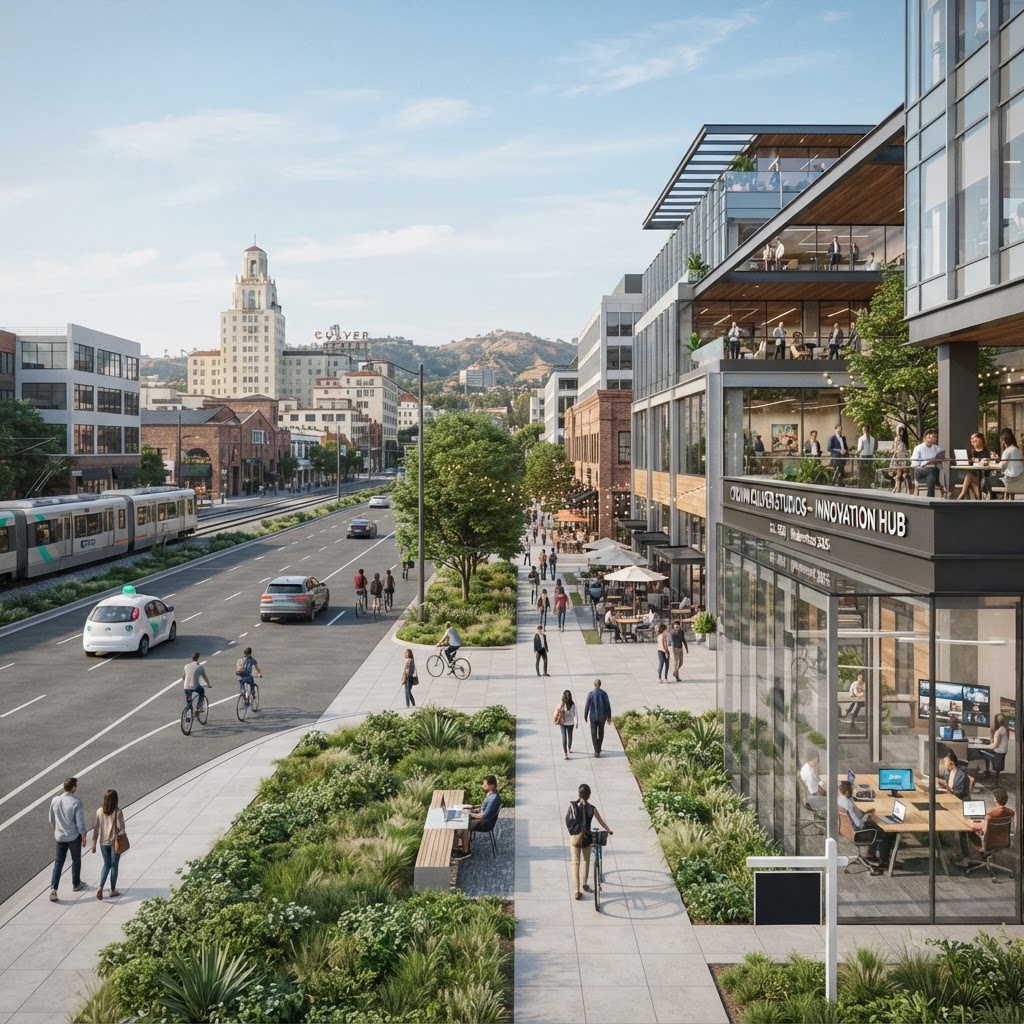
The primary driver of this growth is the continued expansion of the 'Silicon Beach' corridor. The presence of Apple, Amazon, and Sony continues to be the primary engine for the local real estate market, as noted in the Culver City Real Estate Market Forecast 2026. Apple’s expansion at Culver Crossings has specifically driven demand in adjacent residential pockets, attracting tech executives from Santa Monica and Venice who seek a more community-oriented, 'block-to-block' feel. This influx of high-earning professionals has pushed the average sold price per square foot for single-family homes to $1,089, the highest in the southwest LA corridor, according to Danielle Edney Homes.
Market Dynamics: Inventory and Competition
The 2026 market is characterized by a severe inventory crunch. With only 27 active single-family listings reported citywide in recent months, competition remains fierce. Homes are selling for a median of 102.2% of their list price, with high-demand properties often reaching 106% or more through multiple-offer situations. The median days on market has plummeted to just 15 days, signaling a strong seller's market where buyers must be financially prepared and strategically positioned to compete effectively.
Neighborhood Pockets: From Lindberg Park to Fox Hills
Culver City’s appeal is segmented into distinct micro-markets. Lindberg Park remains the 'Family Gold Standard,' where inventory is so tight that roughly 65% of transactions occur off-market through pocket listings and neighborhood networking. For those seeking entry-level opportunities, Fox Hills offers condos and townhomes in the $950,000 range, providing access to the coveted Culver City Unified School District (CCUSD) at a lower price point. Meanwhile, Culver Crest continues to attract luxury buyers with its hillside views of the Los Angeles basin, though these properties face unique 2026 market realities regarding insurance and hillside maintenance.
Infrastructure and Connectivity
Culver City’s commitment to transit-oriented development is evident in projects like the Connect Culver Blvd bikeway, which aims to create a continuous active transportation network. The Culver City E Line (Expo) Station serves as a central transit hub, with new mixed-use developments like Ivy Station and Cumulus driving residential values within a one-mile radius up by 9.2% over the last 18 months. The city has also embraced state housing mandates more aggressively than Los Angeles, streamlining approvals for projects like the 190-unit luxury development on Washington Boulevard, which features amenities such as pickleball courts and outdoor kitchens.
Practical Takeaways for the 2026 Market
- For Buyers: Focus on the Fox Hills area for the most accessible entry into the CCUSD. Given the 15-day median DOM, having a fully underwritten pre-approval is mandatory to compete.
- For Sellers: With sale-to-list ratios exceeding 102%, strategic pricing and professional preparation (staging and 'lipstick' renovations) are yielding significant premiums above asking price.
- For Investors: The spillover from the Hayden Tract and the completion of high-density hubs near the E Line station offer long-term appreciation potential as tech talent continues to prioritize walkability to major offices.