Curtis Park 2026: Sacramento’s Vintage Enclave and Modern Urban Pivot
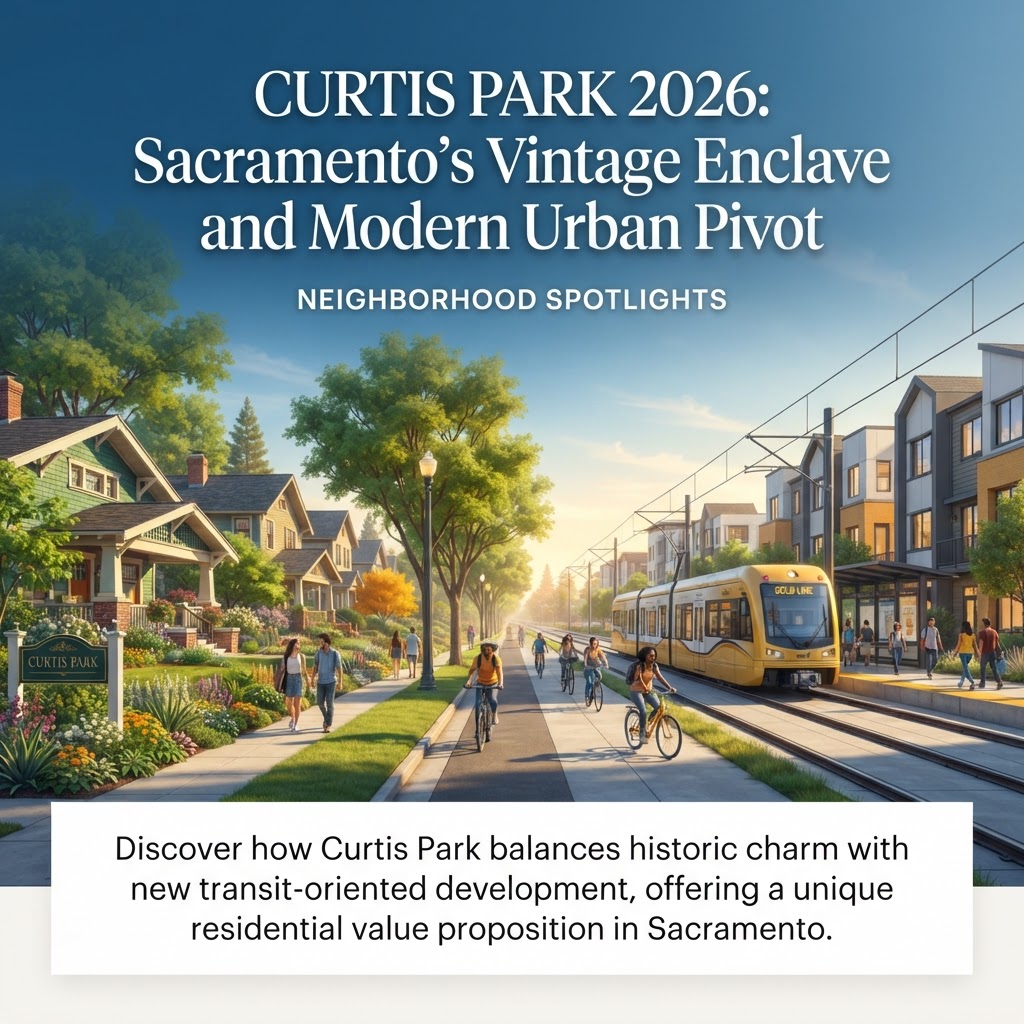
Nestled in the heart of Sacramento, Curtis Park remains one of the city’s most enduring residential treasures. Defined by its boundaries of Broadway to the north, Sutterville Road to the south, Freeport Boulevard to the west, and Highway 99 to the east, the neighborhood offers a distinct architectural identity characterized by 1920s revival, bungalow, and Victorian-style homes.
A Neighborhood in Transition
While Curtis Park is celebrated for its historic aesthetic, it is currently undergoing a significant evolution. The development of Crocker Village, situated on a former Union Pacific railyard, has transformed a once-vacant brownfield into a modern residential and retail hub. This project includes the Curtis Park Court development, which provides 91 units of senior housing, demonstrating a commitment to multi-generational living within the historic fabric of the area.
Connectivity and Amenities
The neighborhood’s appeal is bolstered by its exceptional walkability and transit access. Residents benefit from a dedicated Sacramento Regional Transit light rail station and a new pedestrian and bike bridge. This infrastructure allows for seamless connectivity to Sacramento City College, the Sacramento Zoo, and the expansive green spaces of Land Park. For those who prioritize an active lifestyle, the namesake Curtis Park provides a central green anchor for community gatherings and outdoor recreation.
Market Insights for 2026
The Curtis Park real estate market remains competitive, reflecting its status as a premier Sacramento address. Recent data indicates a median listing price of approximately $864,500, with average home values showing steady appreciation. For investors and buyers, the neighborhood represents a stable asset class, balancing the scarcity of historic inventory with the influx of new, modern housing stock in the Crocker Village corridor.
Practical Takeaways for Stakeholders
- For Buyers: Focus on the transition zones near Crocker Village, where new construction offers modern energy efficiency alongside the established character of the older neighborhood.
- For Sellers: Highlight the proximity to the light rail and the pedestrian bridge, as transit-oriented accessibility is increasingly driving value for younger professionals and retirees alike.
- For Investors: Monitor the ongoing retail integration in the railyard redevelopment, as increased local amenities are expected to further support property value growth in the coming years.
Curtis Park continues to prove that a neighborhood can honor its past while strategically integrating the infrastructure required for a modern, connected urban lifestyle.