The Structural Shift in California’s 2026 Housing Supply
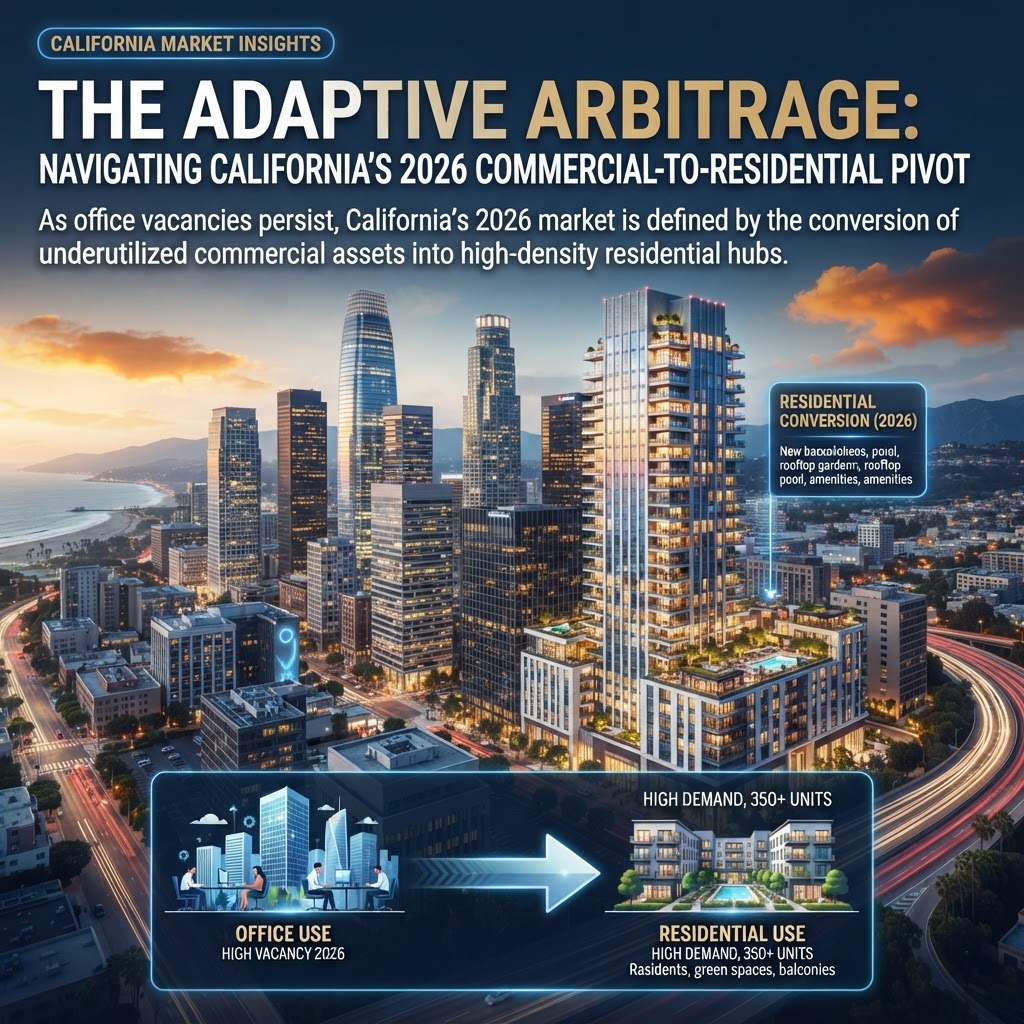
As of August 5, 2026, the California real estate market is navigating a complex transition. While the statewide median home price reached a record high earlier this spring, according to Norada Real Estate Investments, a new structural trend is emerging: the "Adaptive Arbitrage." This involves the large-scale conversion of underutilized commercial and office spaces into residential units to combat the state's persistent housing shortage.
The Economic Driver: The 62% Affordability Gap
The primary catalyst for this shift is the widening chasm between the costs of renting and owning. Data from the Legislative Analyst’s Office (LAO) indicates that the monthly cost premium of homeownership over renting in California has hit approximately 62%. With 30-year fixed mortgage rates hovering around 6.80% as of August 2026, as reported by Bankrate, many prospective buyers remain sidelined, driving unprecedented demand for high-quality rental inventory.
This demand is meeting a unique supply-side solution. Institutional investors, who are "rekindling their ambitions for private real estate" in 2026 according to PERE, are increasingly targeting distressed office assets in urban cores like Los Angeles and San Francisco for residential conversion.
Market Analysis: Inventory and Pricing Dynamics
Despite the high-rate environment, the market is not stagnant. Redfin data shows that California had 108,753 homes for sale in May 2026, a 5.6% decrease year-over-year, which continues to put upward pressure on prices. The median sale price currently sits near $751,667, per Zillow.
However, the "Adaptive Arbitrage" is beginning to thaw the inventory freeze. By repurposing commercial footprints, developers are introducing "Class A" rental and condo units into supply-constrained coastal markets where traditional ground-up development is often stalled by zoning hurdles. Milrose Consultants notes that these conversions are gaining significant traction as the state streamlines the regulatory path for such projects.
Investment Perspectives: The New Value-Add Play
For the 2026 investor, the focus has shifted from suburban fix-and-flips to urban adaptive reuse. Key trends include:
- Institutional Re-entry: Private equity firms are leveraging data-driven strategies, such as those employed by Two Sigma Real Estate, to identify commercial assets where the residential conversion yield exceeds traditional office cap rates.
- The Luxury Resilience: The high-end segment remains insulated by cash buyers. California luxury market reports indicate that while entry-level buyers struggle, the top tier is defined by selectivity and enduring global demand.
- Yield Compression in Multi-Family: As more commercial assets convert, the competition for well-located multi-family units is intensifying, leading to stronger pricing power for landlords in biotech and tech-adjacent hubs.
Practical Takeaways for 2026 Stakeholders
For Investors:
Focus on "Class B" office assets in transit-adjacent zones. The cost-basis for these acquisitions, combined with state-level conversion incentives, offers a higher risk-adjusted return than traditional residential development in the current high-interest-rate climate.
For Buyers:
Look toward the emerging "Conversion Corridors" in downtown districts. These units often offer modern amenities and central locations at a price point that, while high, may be more accessible than traditional single-family homes in the same zip codes.
For Sellers:
If you own commercial property or land in an urban core, your value is no longer tied strictly to commercial lease rates. The "residential highest-and-best-use" valuation is currently the dominant driver of land value in California’s major metros.
Conclusion
The California real estate market in late 2026 is defined by a pivot toward efficiency. By bridging the gap between vacant commercial space and the desperate need for housing, the market is creating a new asset class that balances the state's economic output with its residential requirements. While affordability remains a challenge, the "Adaptive Arbitrage" represents a vital evolution in the Golden State’s property landscape.