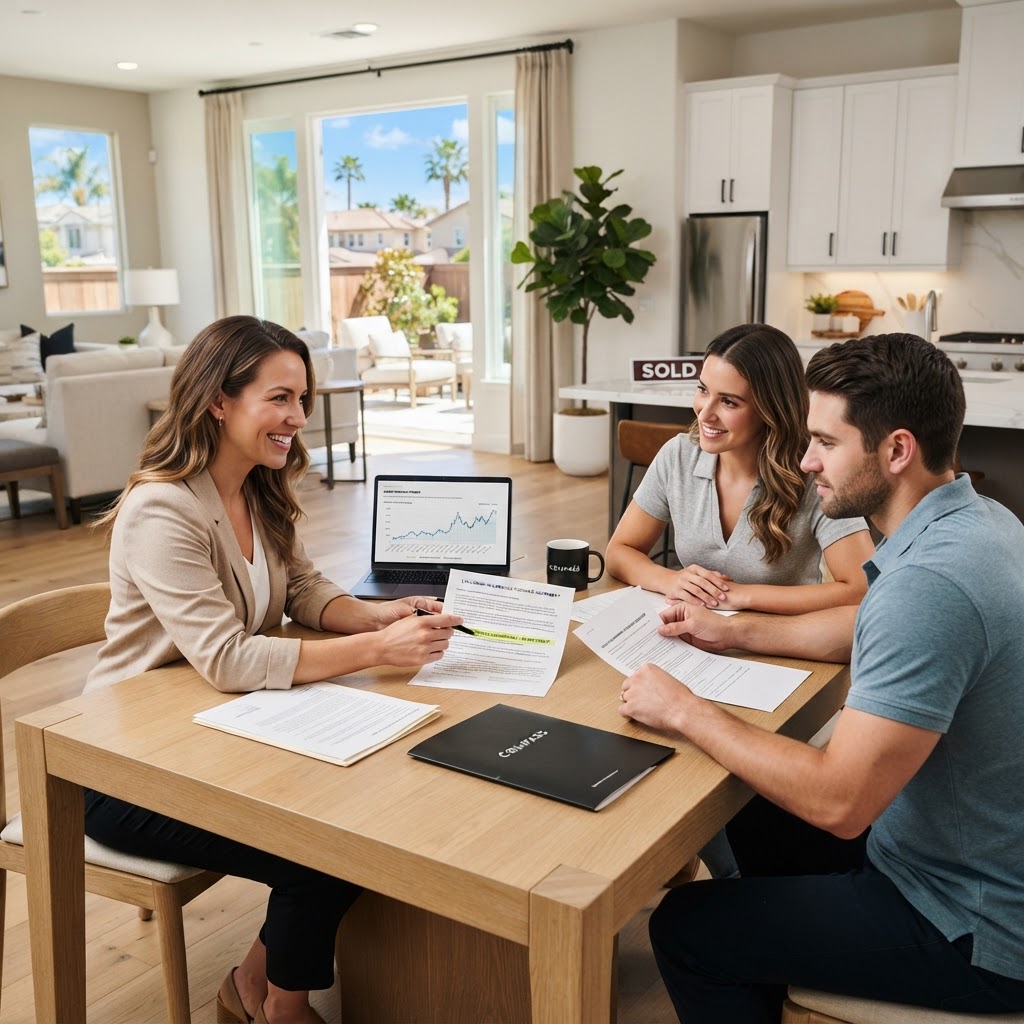
The 2026 California Financial Landscape
As of August 2026, the California real estate market has shifted from the frantic appreciation of the early 2020s into a period of 'Calculated Liquidity.' With the California Association of Realtors (C.A.R.) reporting a steadying of median home prices near $900,000 statewide, the challenge for sellers is no longer just finding a buyer, but protecting equity against rising transaction costs and localized tax mandates. To succeed in today's market, sellers must move beyond aesthetic prep and focus on the financial architecture of the deal.
1. Navigating the 'Tiered' Transfer Tax Reality
In 2026, the 'Mansion Tax' trend has expanded beyond Los Angeles (Measure ULA). Several Northern California municipalities and coastal enclaves have adopted tiered documentary transfer taxes that trigger at specific price points. For example, sellers in Los Angeles moving assets above the $5.1 million threshold face a 4% tax, while those over $10.2 million face 5.5%. Sellers must audit their local municipality’s current rates early in the process. Practical Takeaway: Request a 'Preliminary Net Sheet' from your escrow officer that specifically breaks down city vs. county transfer taxes before finalizing your listing price.
2. The New Commission Math: Strategic Concessions
Two years after the landmark NAR settlement, the 2026 market has standardized a new approach to buyer-agent compensation. While commissions are no longer pre-populated in the MLS, California sellers are finding that offering a 'Buyer Service Credit' is often the most effective way to attract the largest pool of qualified buyers—many of whom are cash-constrained due to high down-payment requirements. According to recent 2026 MLS data, listings offering a transparent 2% to 2.5% buyer-side concession are spending 18% less time on market than those offering zero.
3. Bridging the 'Appraisal Gap'
With prices remaining high but inventory slowly increasing, 2026 buyers are more cautious. Appraisal gaps—where the bank’s valuation comes in lower than the contract price—have become a common hurdle. To maximize value, sellers should provide an 'Appraisal Package' to the appraiser, including:
- A line-item list of all capital improvements (with dates and costs) made over the last five years.
- Verification of all permits for added square footage or ADUs.
- A curated list of 'Hyper-Local' comps that account for specific neighborhood boundaries or school districts that broad algorithms might miss.
4. The 'Soft Prep' High-ROI Strategy
In the 2026 market, high-cost structural renovations often fail to return 1:1 value. Instead, focus on 'High-Perception' updates. C.A.R. surveys indicate that 2026 buyers prioritize 'Smart Security' and 'Air Quality' over luxury kitchen finishes. Practical Takeaway: Spend your prep budget on professional staging (proven to increase sale price by 1-3%), a whole-home air filtration audit, and ensuring 'Zero-Day' curb appeal with drought-tolerant, high-design landscaping.
5. Leveraging the Portability Factor
If you are a seller aged 55 or older, your strategy should revolve around Prop 19. By highlighting that you are moving your low property tax base to a new California residence, you can often afford to be more flexible on your sale price if it secures a faster close on your replacement property. Work with a tax professional to ensure the 'Value Test' is met, allowing you to carry your 1990s or 2000s-era tax basis to a home of any value.
The 2026 Seller’s Checklist
- T-Minus 30 Days: Order a preliminary title report to clear any unexpected liens.
- T-Minus 20 Days: Complete a 'Pre-Listing' home inspection to eliminate buyer negotiation leverage.
- T-Minus 10 Days: Finalize the 'Buyer Credit' strategy with your listing agent to ensure maximum visibility in the new compensation landscape.