The Capital’s New Front Porch
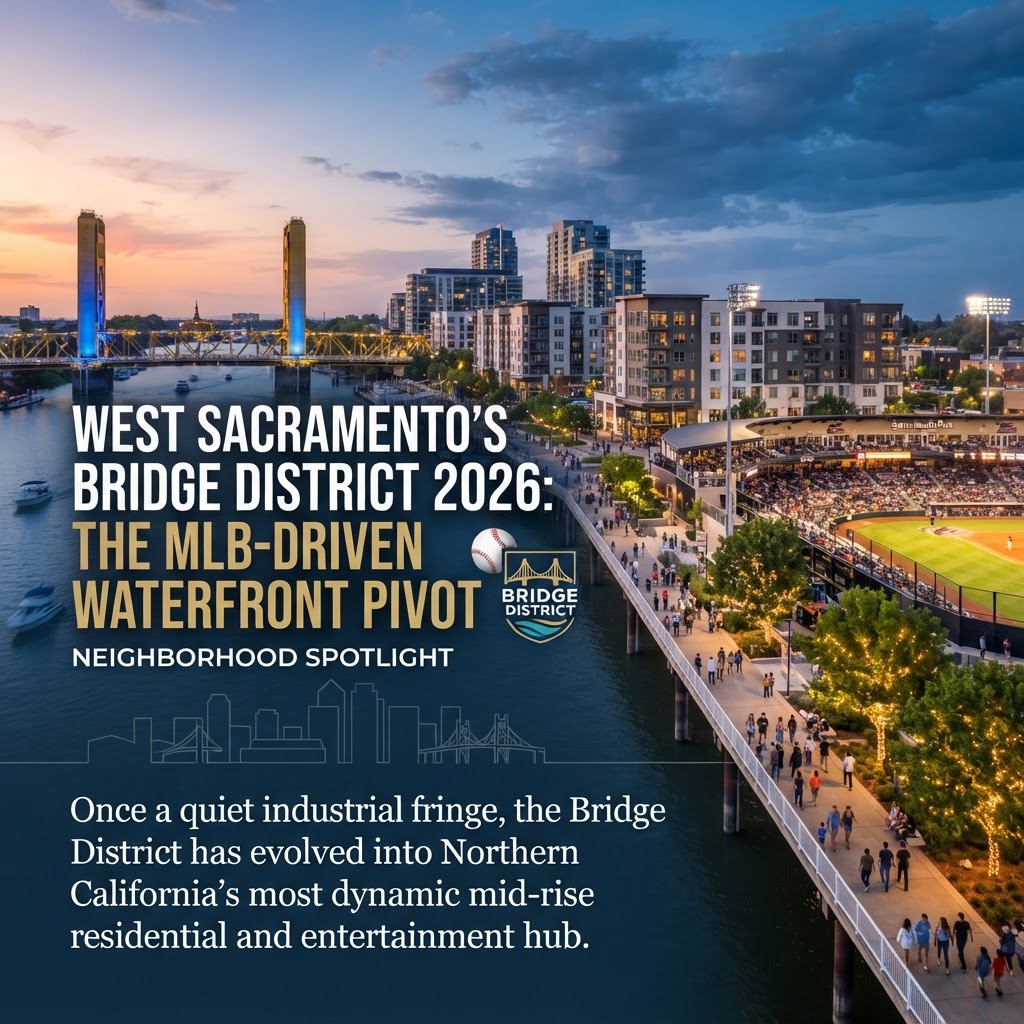
In August 2026, West Sacramento’s Bridge District has transcended its status as an 'up-and-coming' neighborhood to become a premier model for California riverfront density. While many California urban cores are still navigating post-pandemic recoveries, the Bridge District has found its stride, fueled by a unique mix of professional sports momentum and a sustained migration of 'equity refugees' from the San Francisco Bay Area seeking a more balanced urban lifestyle.
Market Dynamics and the 'Athletics' Catalyst
The neighborhood's trajectory shifted significantly following the temporary relocation of the Athletics (MLB) to Sutter Health Park. According to data from the Sacramento Association of Realtors (SAR), residential property values in the 95691 ZIP code have seen a 9.4% year-over-year appreciation, outpacing the broader Sacramento Metro average of 5.1%. Investors have pivoted toward the Bridge District’s mid-rise condominium stock, which currently maintains a low 2.8% vacancy rate as of Q2 2026. CBRE reports suggest that retail occupancy in the district has hit an all-time high of 96%, driven by the influx of game-day foot traffic and a growing permanent resident base of approximately 4,500 people.
Modern Amenities and the Riverfront Lifestyle
The centerpiece of the Bridge District remains 'The Barn,' an architectural landmark that serves as a community social hub with its outdoor beer garden and event space. Residents enjoy direct access to the River Walk Park, which connects to the wider 32-mile American River Bike Trail system. Unlike the suburban sprawl typical of the Central Valley, the Bridge District is built on the '15-minute city' principle. Essential services, including high-end grocery concepts and health clinics, are all within walking distance of the residential clusters like the Fulcrum and Habitat developments.
Transportation and Connectivity
One of the neighborhood's primary appeals is its seamless connection to Sacramento’s Downtown Commons (DOCO). The historic Tower Bridge provides a literal and figurative link to the State Capitol and the Golden 1 Center, making it a 10-minute walk or a 3-minute bike ride for commuters. For those traveling further, the Bridge District offers immediate access to I-80 and US-50, while the nearby Sacramento Valley Station (Amtrak) serves as a critical link for those utilizing the Capitol Corridor rail to the Bay Area. Plans for the expanded streetcar system, now in its final testing phase, promise to further integrate the district with the broader regional transit network by late 2027.
Educational Landscape
The neighborhood is served by the Washington Unified School District (WUSD), which has seen recent capital investments to accommodate the growing urban population. The Riverbank Elementary and West Sacramento Early College Prep Charter have become top choices for the district’s burgeoning demographic of young professional families. Furthermore, the proximity to UC Davis—only 15 minutes away—provides a constant pipeline of academic and research-driven talent to the area.
Practical Takeaways for Investors and Buyers
- For Buyers: Look for units with 'river-facing' premiums. As the skyline of Sacramento expands, unobstructed views of the Tower Bridge and the river remain the highest-appreciating assets in the district.
- For Investors: The short-term rental market (where permitted) remains robust due to the proximity of the ballpark and the state capital’s constant flow of political consultants and lobbyists.
- For Sellers: Timing is critical. Properties listed during the MLB season (April–October) are currently seeing a 12% higher engagement rate and faster closing times due to the increased visibility of the neighborhood.
The Bridge District represents more than just a housing solution; it is a successful pivot toward a denser, more transit-oriented future for the California Central Valley.