The San Fernando Valley’s Urban Pivot
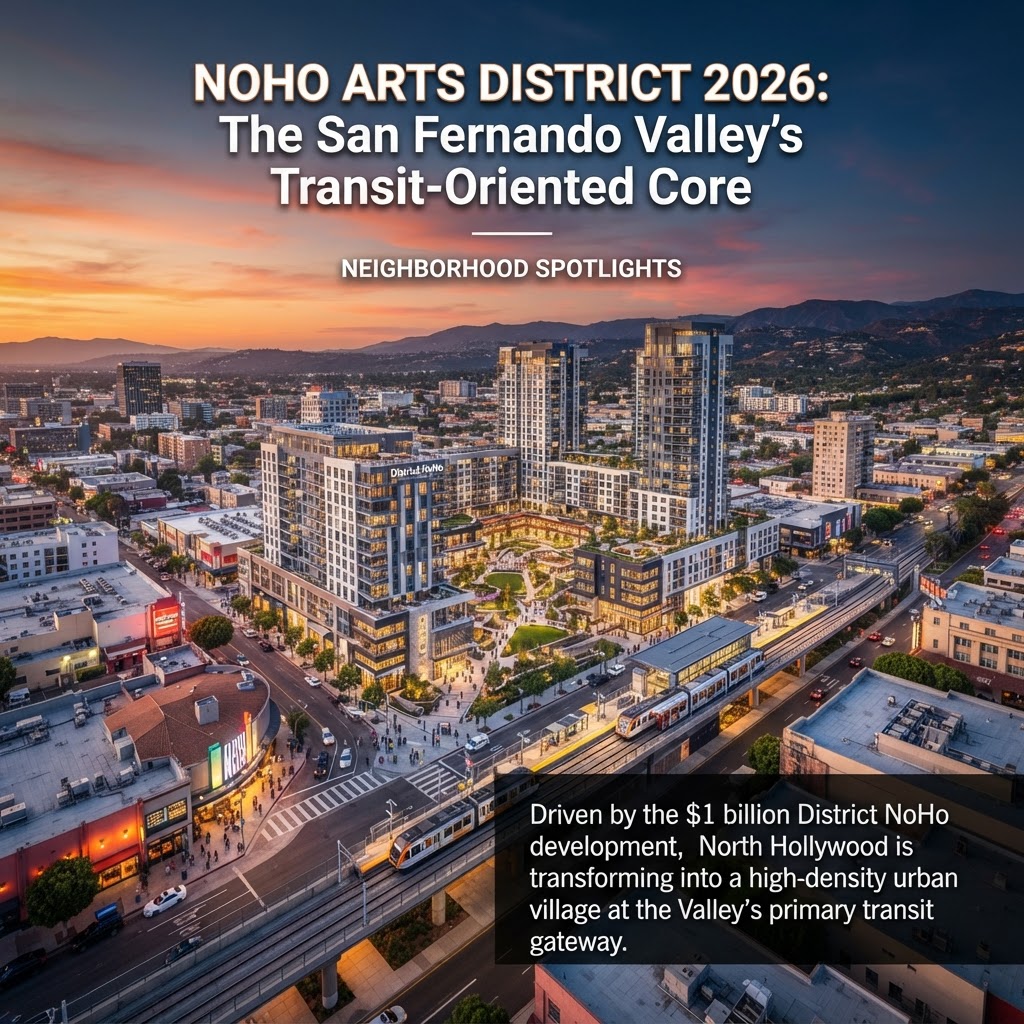
As of August 2026, the narrative of the San Fernando Valley as a mere bedroom community has been definitively replaced by the rise of the NoHo Arts District. Once a quiet enclave for experimental theater and dance studios, NoHo has matured into a high-density urban core that serves as the northern anchor of Los Angeles’ transit network. This evolution is driven by the 'District NoHo' project, a 20-acre joint venture between Metro and Trammell Crow Company that has successfully integrated housing, retail, and transit into a cohesive $1.2 billion ecosystem.
The District NoHo Catalyst and Housing Supply
The centerpiece of the neighborhood is the massive mixed-use development surrounding the North Hollywood B Line (Red) and G Line (Orange) stations. According to 2025 MLS data and recent 2026 city planning reports, the project has introduced over 1,500 residential units to the market, with 20% of those designated as affordable housing under the Transit Oriented Communities (TOC) guidelines. This surge in supply has not lowered prices but has instead stabilized the market, with median condo prices in the NoHo Arts District rising 4.8% year-over-year, outperforming the broader San Fernando Valley’s 3.2% growth rate.
Transportation and Connectivity
The neighborhood’s primary appeal remains its unparalleled connectivity. The North Hollywood station acts as a multi-modal hub, where the B Line subway offers a 20-minute commute to Hollywood and a 35-minute commute to Downtown LA. Meanwhile, the G Line Bus Rapid Transit (BRT) serves as the Valley’s east-west spine. The completion of the 'NoHo to Pasadena' BRT line in late 2025 has further expanded the talent pool, allowing professionals from the San Gabriel Valley to access NoHo’s creative offices without relying on the 134 Freeway.
Education and Community Amenities
Beyond its transit credentials, NoHo’s cultural infrastructure has seen a significant upgrade. The historic Academy of Television Arts & Sciences remains a cornerstone, but the addition of a new 2-acre public plaza and 100,000 square feet of lifestyle retail has revitalized the streetscape. The area is served by the Los Angeles Unified School District (LAUSD), notably the highly-regarded North Hollywood Senior High, which houses highly competitive Magnet programs in Zoo Science and Biological Sciences, attracting families who prioritize academic rigor alongside urban living.
Practical Takeaways for Buyers and Investors
- For Investors: Look for older rent-stabilized multi-family assets within a half-mile radius of the Metro station. The city’s TOC Tier 4 incentives allow for significant density bonuses, making these prime candidates for long-term redevelopment as older leases expire.
- For Buyers: Focus on the 'NoHo West' perimeter. While the core is dominated by rentals, the outskirts are seeing a rise in townhome developments that offer more square footage for remote workers while maintaining proximity to the Arts District’s amenities.
- For Sellers: Highlight the 2026 completion of the G Line improvements. Faster transit times and improved station security are currently the top-rated priorities for buyers entering the Valley market from higher-priced Westside neighborhoods.