The Urban Convergence: Redefining the Silicon Valley Core
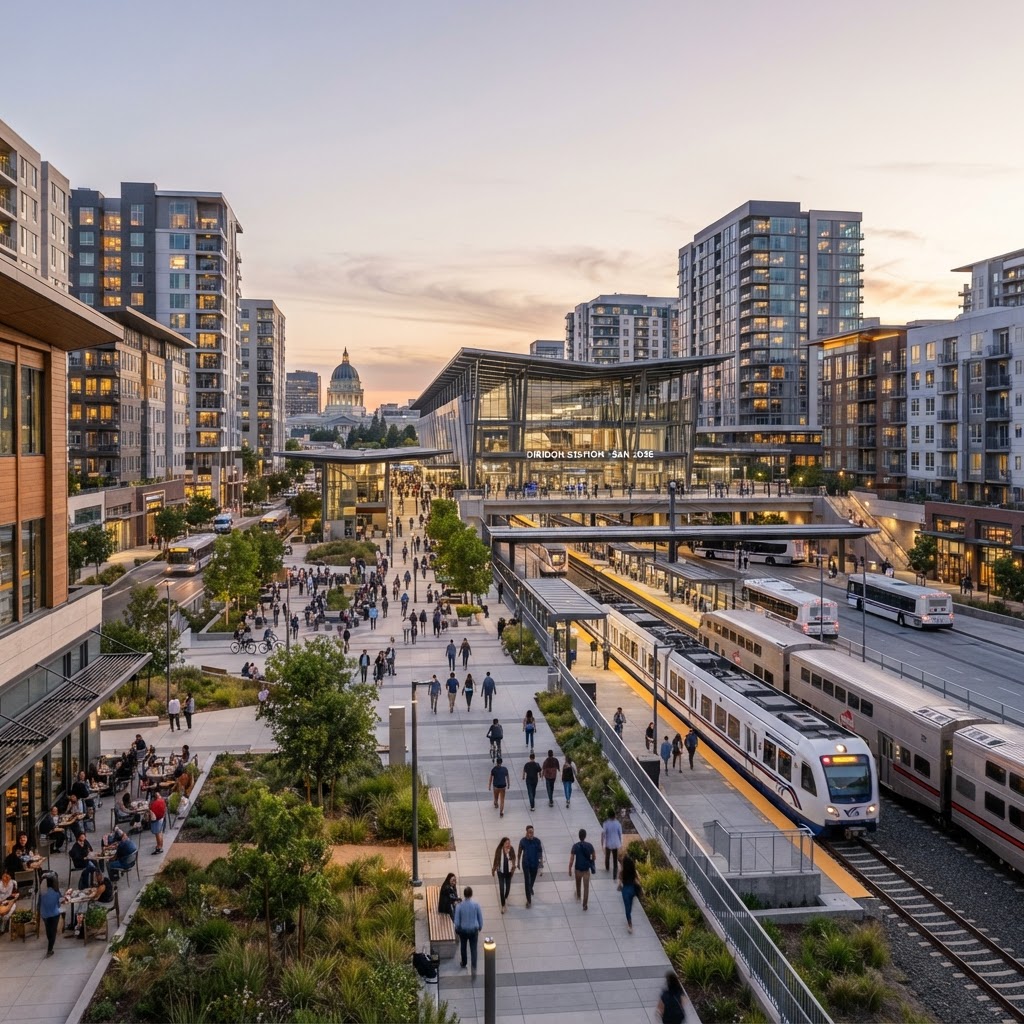
In mid-2026, the long-anticipated transformation of San Jose’s Diridon Station area—often dubbed the 'Grand Central of the West'—has reached a critical mass. Unlike the suburban office parks that defined the region for decades, the Diridon Nexus represents a pivot toward verticality, mixed-use density, and aggressive transit integration. Anchored by the 80-acre 'Downtown West' development, this neighborhood has evolved into a 24/7 urban ecosystem that defies the traditional commute-out-of-the-city logic.
The Transit Multiplier and Infrastructure Milestones
The primary driver of value in the Diridon area is its unmatched connectivity. As of July 2026, the neighborhood serves as the intersection for Caltrain’s fully electrified fleet, the VTA light rail, and the ongoing tunneling for the BART Silicon Valley Phase II extension. According to data from the San Jose Department of Transportation, ridership at Diridon has surged 22% year-over-year as the first residential towers in the zone opened their doors.
For residents, this means a car-light lifestyle that was previously unthinkable in the South Bay. The proximity to the SAP Center and the newly completed Los Gatos Creek riparian corridor provides a blend of high-tier entertainment and natural respite, making it a magnet for the 'high-earner-not-rich-yet' (HENRY) demographic.
The Real Estate Landscape: High Density and Appreciation
Real estate market data from the MLS and CBRE indicates that the Diridon/Delmas Park submarket has outperformed the broader Santa Clara County average by 4.2% in price-per-square-foot appreciation over the last 18 months. Currently, luxury condos in the area are trading at an average of $1,250 per square foot, driven by a scarcity of supply and a surge in demand from tech professionals who value proximity over square footage.
The inventory shift is notable: 2026 marks the delivery of over 1,500 new units, including the first 'work-live' industrial conversions near the historic North Montgomery Street. The National Association of Realtors (NAR) notes that the 'stickiness' of this neighborhood is bolstered by a 25% affordable housing requirement integrated into the master plan, preventing the total displacement often seen in rapid urban renewals.
Amenities and Education
The neighborhood is served by the San Jose Unified School District, with nearby Gardner Elementary and River Glen School offering specialized bilingual and magnet programs that are increasingly popular with young families choosing urban living. Local amenities have shifted toward high-utility retail: organic grocers, bouldering gyms, and co-working social clubs have replaced the surface parking lots of the 2010s.
Practical Takeaways for Market Participants
- For Buyers: Focus on the Delmas Park fringe. While the core of Downtown West commands a premium, the periphery offers single-family bungalows that are benefiting from 'neighborhood creep' and rezoning possibilities under California's Senate Bill 9 and 10.
- For Investors: The rental market remains tight with a 3.8% vacancy rate. Multi-family units within a 10-minute walk of Diridon Station are seeing the highest rent growth, specifically for studio and one-bedroom configurations designed for transient tech consultants.
- For Sellers: The 'halo effect' of Google's construction milestones is palpable. Timing a sale to coincide with the opening of major public plazas or the next BART tunneling update is proven to drive competitive bidding wars in this submarket.
As San Jose cements its status as the 'Capital of Silicon Valley,' the Diridon Nexus stands as the state’s most ambitious experiment in transit-led revitalization. For those looking to capture the future of California urbanism, the window of early-stage entry is rapidly closing.