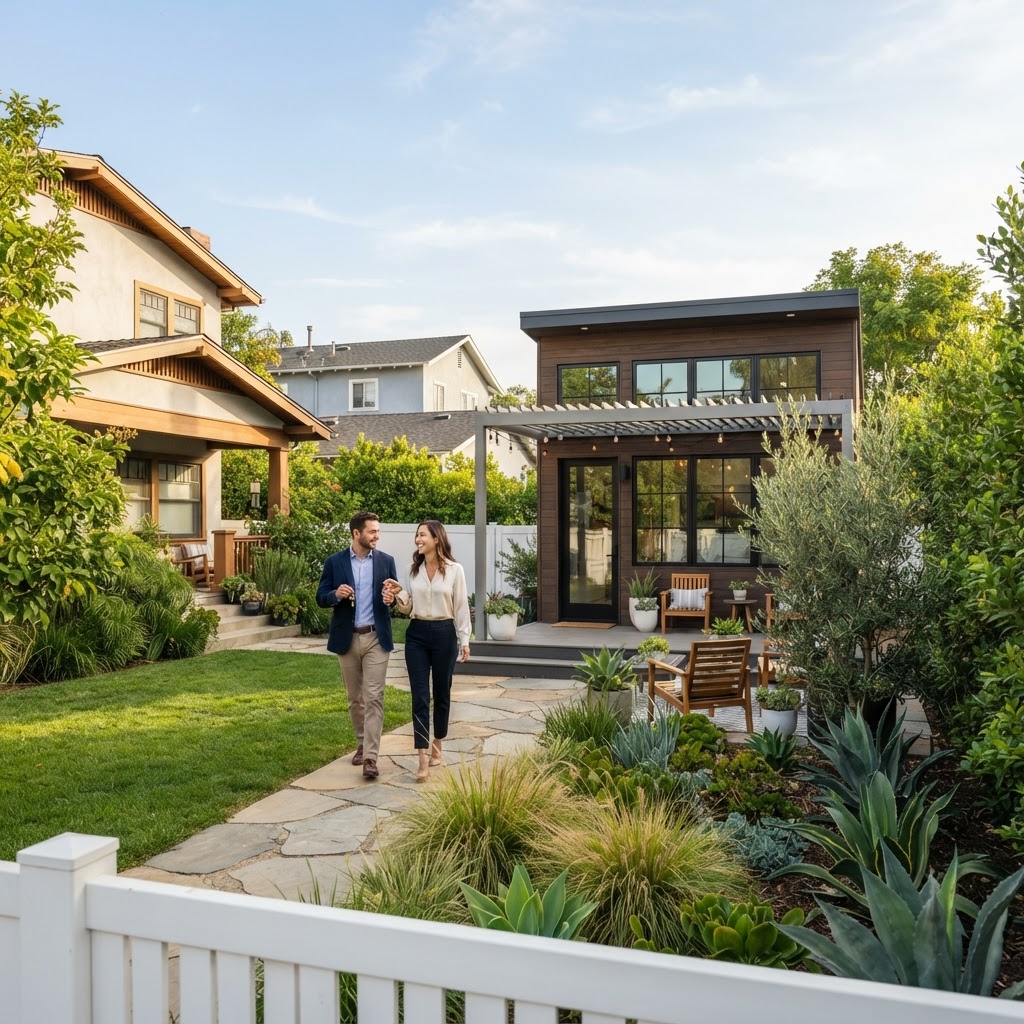
Mastering the California Density Market in 2026
As of mid-2026, the California real estate landscape has shifted from a search for the 'perfect yard' to a search for 'maximum yield.' Following the full implementation of Senate Bill 9 and Assembly Bill 1033, which allows for the separate sale of Accessory Dwelling Units (ADUs) as condos in participating jurisdictions, the practical home buyer must view property through the lens of density. With the California Association of Realtors (CAR) reporting a June 2026 median home price of $842,000, the ability to offset a mortgage with rental income or future lot splits has become the primary driver of affordability.
Phase 1: Qualifying with 'Pro-Forma' Income
In 2026, sophisticated California buyers are no longer just qualifying on their W-2 income. Many lenders have now standardized 'ADU-inclusive financing.' If you are purchasing a property with an existing, permitted ADU, or one that meets the specific lot-size requirements for a fast-track build, certain portfolio lenders will allow you to count up to 75% of the projected fair-market rent toward your debt-to-income (DTI) ratio. This shift effectively increases buyer purchasing power by $100,000 to $150,000 in high-cost counties like Santa Clara and San Diego.
Phase 2: Identifying 'Split-Ready' Parcels
Market conditions in July 2026 favor the 'Density Hunter.' When touring properties, your checklist must evolve beyond traditional aesthetics:
- Easement Clarity: Check for utility easements that could block a secondary foundation. California’s 2026 digital mapping tools (available via most county assessors) now provide clear overlays of where an ADU can legally sit.
- Power Capacity: Ensure the main panel is 200-amp minimum. Upgrading a panel for a dual-unit setup in 2026 can cost upwards of $6,000, factoring in new state safety mandates.
- AB 1033 Opt-ins: Check if the municipality (e.g., Los Angeles, San Jose, or Berkeley) has opted into the ADU-condo conversion laws. Buying in an 'opt-in' zone significantly increases the long-term resale value of the backyard unit.
Phase 3: The 2026 Inspection Standard
While previous years focused on general habitability, the 2026 California buyer must prioritize the 'Certificate of Occupancy Audit.' Data from the 2025 Census Bureau's housing survey suggests that 14% of California ADUs built during the 'garage conversion craze' of 2020-2023 were never fully permitted for occupancy. Buying a non-compliant unit in today’s stricter regulatory environment can lead to immediate code enforcement actions or the loss of insurance coverage.
The Market Outlook: July 2026 and Beyond
According to recent MLS data, homes with 'ADU Potential' or existing secondary units are currently spending 12% less time on the market than single-unit peers. While interest rates have stabilized near 5.8%, the inventory squeeze remains a reality. Buyers should expect a 'Two-Tier Market': stagnant prices for traditional single-family homes with restrictive CC&Rs, and competitive bidding for properties that allow for creative density.
Practical Takeaways for the 2026 Buyer
- Run the Dual Numbers: Always request two appraisals—one for the property as a single-family residence and one as a dual-income property.
- Consult a Land-Use Consultant: Before waiving any inspection contingencies, hire a consultant to verify that the lot meets the 2026 'Objective Zoning Standards' for a lot split or ADU addition.
- Verify Separate Metering: Properties with separate electric and water meters for secondary units command a 5-7% premium in 2026 because they simplify tenant management and billing.