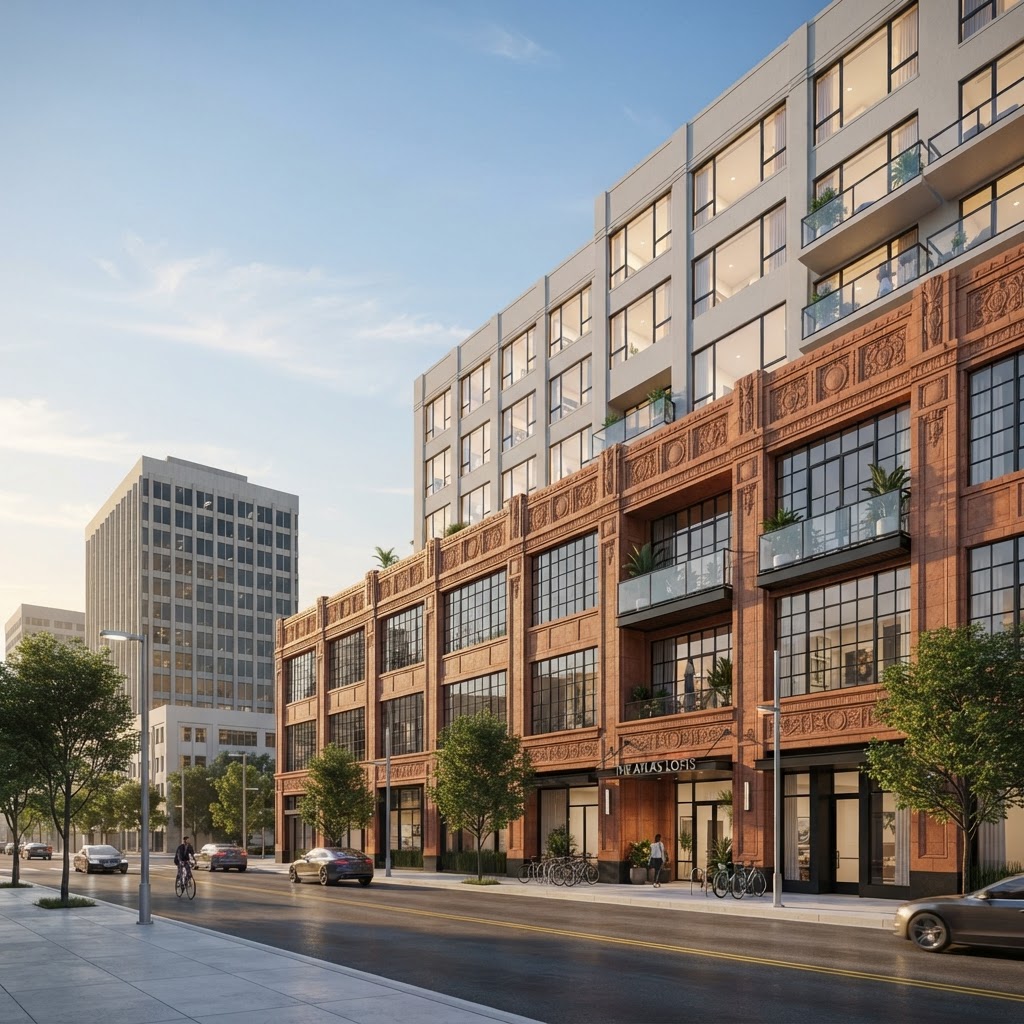
The Great Conversion: Reclaiming the Urban Core
As of July 30, 2026, the California real estate landscape is witnessing its most significant structural shift since the pandemic. While the 'Great Corporate Exit' of early 2026 left millions of square feet of Class B and C office space vacant, a new legislative catalyst, Assembly Bill 2012 (The Urban Vitality Act), is turning those liabilities into residential assets. Data from the California Department of Housing and Community Development (HCD) shows a 42% month-over-month increase in conversion permit applications in Los Angeles and San Diego counties.
The AB 2012 Advantage
The primary driver is a state-funded $2.2 billion tax credit pool specifically for 'Adaptive Reuse in High-Density Employment Zones.' Unlike previous programs, AB 2012 bypasses local height limits and parking requirements for any project that converts non-residential space into at least 20% affordable housing. This has lowered the average conversion cost to approximately $380 per square foot, compared to the $700+ per square foot required for new ground-up construction in coastal metros.
Market Movement: Los Angeles and San Diego Lead
In Los Angeles, the Downtown (DTLA) and Wilshire corridors are the primary beneficiaries. CBRE reports that nearly 4.2 million square feet of underutilized office space is currently under contract for residential redevelopment. Similarly, in San Diego, the 'Innovation District' near the harbor is seeing a surge in 'Live-Work' loft conversions. These projects are expected to deliver over 12,000 units to the market by Q3 2027, potentially easing the supply constraints that have kept California’s median home price near the $900,000 mark.
Practical Takeaways for Investors and Residents
- For Commercial Investors: Class B office buildings with 'Good Bones' (rectangular floor plates and central plumbing stacks) are now high-demand assets. Look for properties within 0.5 miles of major transit hubs to maximize state tax credit eligibility.
- For Prospective Renters: These conversions often result in 'Luxury-Lite' units—offering high ceilings and industrial aesthetics—at price points 10-15% lower than new-build luxury towers. Expect a surge in available inventory in late 2027.
- For Urban Sellers: Residential property values in areas undergoing heavy conversion are seeing a 'Neighborhood Stabilization' effect. The replacement of vacant offices with 24/7 residential occupancy is projected to boost local retail and service-sector property values.
A New Era for California’s Skyline
The shift represents a departure from the suburban sprawl that defined 20th-century California. By incentivizing the repurposing of existing structures, the state is addressing both the housing crisis and the environmental impact of new construction. As these 35,000 units move from planning to occupancy, the 'dead' zones of the 9-to-5 era are being replaced by vibrant, mixed-use neighborhoods, fundamentally revaluing the California urban core.


