The Evolution of an Urban Core
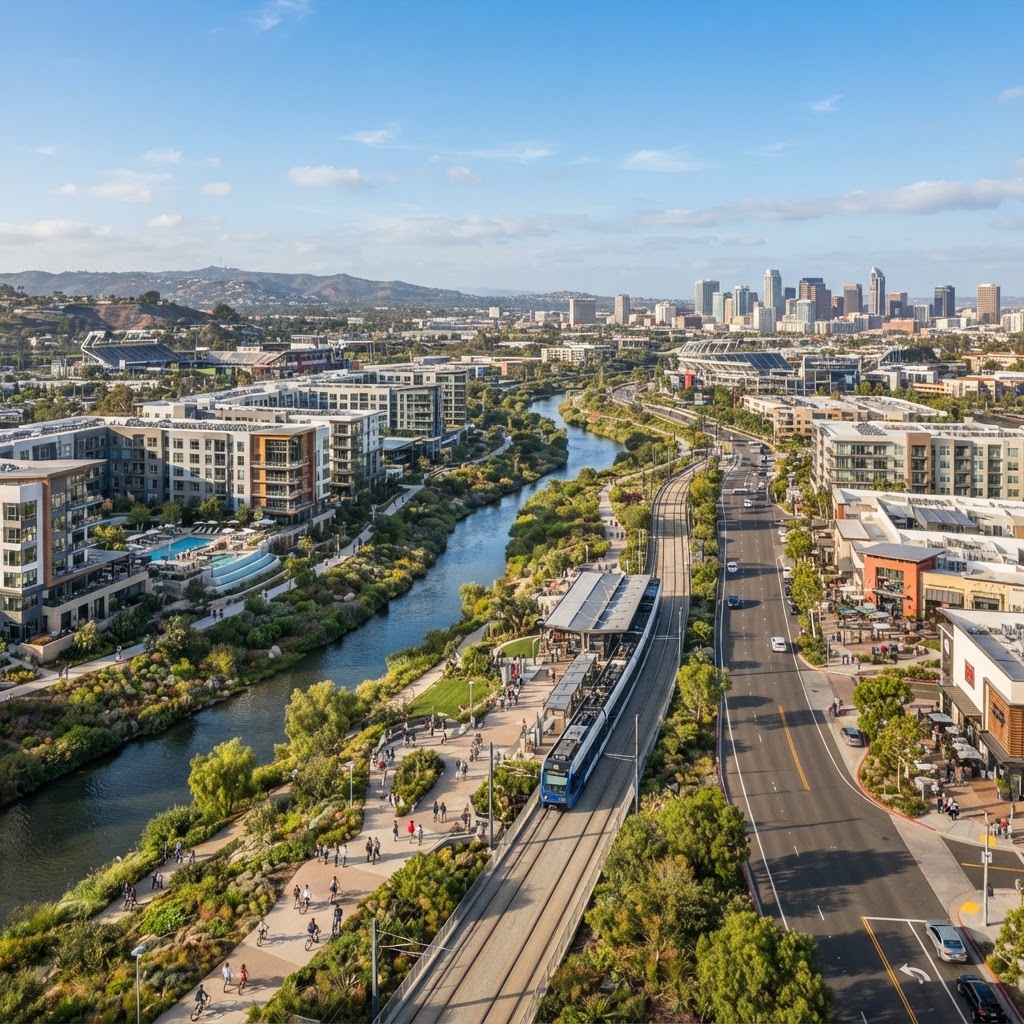
For decades, Mission Valley was defined by sprawling shopping malls and a concrete stadium. As of July 2026, the neighborhood has completed a radical pivot toward high-density, transit-integrated living. The primary engine of this change is the SDSU Mission Valley development, a $3.5 billion project that has successfully repurposed the former SDCCU Stadium site into a mixed-use innovation district. This shift has transitioned the area from a retail pass-through into a premier residential and research hub.
The Innovation Catalyst and Life Sciences Expansion
According to recent CBRE data, San Diego’s life science sector has expanded beyond the Torrey Pines and Sorrento Valley submarkets, with Mission Valley capturing 15% of new lab-office leases in the first half of 2026. The SDSU Innovation District provides 1.6 million square feet of research space, attracting biotech startups and academic partnerships. This influx of high-wage workers has transformed the local demographic, shifting the rental market toward luxury multi-family units and high-end executive condos.
Connectivity and Modern Infrastructure
Mission Valley’s greatest asset is its central location, now optimized by the SANDAG 2025 Regional Plan. The San Diego Trolley’s Green Line serves as the neighborhood’s spine, connecting residents to Downtown San Diego and the UTC tech corridor in under 20 minutes. For those commuting by car, the confluence of I-8, I-15, and I-805 provides unparalleled access to the rest of the county. The neighborhood also boasts the recently completed 80-acre River Park, which serves as a critical flood-mitigation tool and a massive recreational amenity, featuring 4 miles of hiking and biking trails.
Education and Community Amenities
The influx of young families has placed a renewed focus on local education. Schools such as Juarez Elementary and the nearby Kearny High School have undergone modernization programs funded by recent bond measures. Beyond academics, the neighborhood has seen a 'retail right-sizing.' While Fashion Valley remains a luxury shopping destination, the surrounding blocks have seen an explosion of 'third places'—independent coffee shops, craft breweries, and boutique fitness centers that cater to a live-work-play lifestyle.
Market Data and Investment Outlook
MLS data for June 2026 indicates that the median sales price for a three-bedroom townhome in Mission Valley has reached $985,000, a 9% year-over-year increase. Investors should note the following:
- High Demand for Transit-Adjacent Housing: Properties within a half-mile of the Snapdragon Stadium trolley station are commanding a 12% rent premium over the valley average.
- Inventory Constraints: Despite the surge in multi-family development, single-family inventory remains critically low, keeping home values resilient.
- Long-term Appreciation: With the final phases of the SDSU campus and the proposed 'Riverwalk' development slated for completion by 2028, the area remains in an upward growth cycle.
Strategic Takeaways
For buyers, Mission Valley offers a rare opportunity to purchase in a neighborhood with guaranteed infrastructure investment. For investors, the life science expansion provides a stable, high-income tenant base. Sellers in the area should capitalize on the 'stadium effect'—the increased desirability brought by the world-class Snapdragon Stadium and its year-round event calendar. Mission Valley has officially graduated from a suburban commercial zone to the true metropolitan center of San Diego.