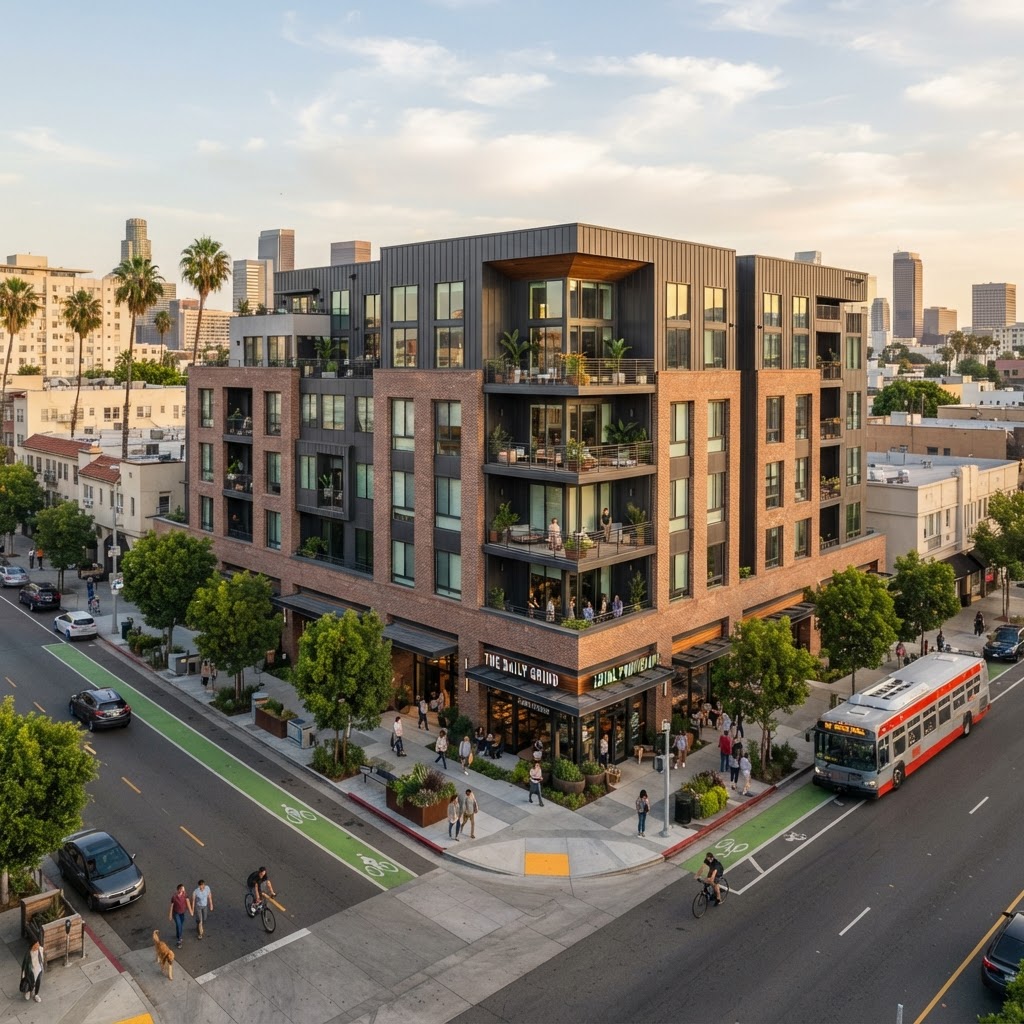
The 2026 Streamlining Surge: How Legislative Mandates are Reshaping Infill Value
As of July 2026, the California real estate landscape has moved beyond the 'Inventory Thaw' of the spring and into a more calculated phase of structural growth. The primary driver of this shift is the full-scale implementation of SB 423, which expanded the ministerial approval processes of the older SB 35. This legislative environment has created a unique 'Infill Infrastructure Alpha'—a premium for land and residential assets located in jurisdictions that have failed to meet their Regional Housing Needs Allocation (RHNA) goals.
The Data Behind the Shift
According to the California Department of Housing and Community Development (HCD) mid-year 2026 report, over 65% of coastal municipalities remain out of compliance with state housing mandates. For investors, this non-compliance is a green light. In these 'non-compliant' zones, SB 423 allows for streamlined, objective approval of multi-family projects that include an affordable component, effectively bypassing the CEQA hurdles and discretionary hearings that traditionally added 18 to 36 months to development timelines.
Data from the California Association of Realtors (CAR) indicates that land parcels zoned for multi-family use within half a mile of 'major transit stops' have seen a 14% year-over-year valuation increase, outpacing the general residential market’s 4.2% growth. This is not merely a coastal phenomenon; the 'Transit-Oriented Density' (TOD) trend is now accelerating in Tier 2 hubs like Sacramento, Riverside, and Fresno, where infrastructure projects are finally aligning with housing needs.
Investment Perspectives: The 'Pro-Housing' Designation Premium
Institutional capital is no longer just chasing yield in luxury coastal high-rises. The 2026 investment strategy focuses on 'Pro-Housing' designated cities. These are municipalities that have adopted local policies to further accelerate housing production, earning them preferential access to state infrastructure grants. For investors, this means lower infrastructure impact fees and more reliable public transit connectivity.
- Risk Mitigation: By focusing on SB 423-eligible sites, developers are significantly reducing 'entitlement risk'—the most volatile variable in California real estate.
- Yield Arbitrage: Secondary markets are offering cap rates 150-200 basis points higher than San Francisco or Los Angeles, while the 'streamlined' nature of new builds ensures a faster time-to-market.
Economic Trends: The Rise of the 'Middle-Income Multi-Family'
While previous years focused on the 'luxury vs. affordable' binary, the 2026 market is defined by 'Missing Middle' housing. Economic data from the Census Bureau suggests that California’s workforce is increasingly seeking professional-grade rentals that fall between subsidized housing and high-end luxury. This 'attainable' segment is seeing the lowest vacancy rates (sub-3%) in the Central Valley and Inland Empire corridors.
Practical Takeaways for 2026 Stakeholders
For those looking to capitalize on this current window, the following actions are recommended:
- Investors: Prioritize land assembly in 'non-compliant' RHNA jurisdictions. The ability to use state-mandated streamlining is most valuable where local resistance is highest.
- Sellers: If you own underutilized commercial or low-density residential assets near transit, market your property based on its 'as-of-right' density potential under SB 423 rather than its current use.
- Buyers: Look for 'path of progress' opportunities in cities like Roseville, Fontana, and Clovis, where local governments are leveraging state grants to upgrade utility infrastructure, supporting new high-density infill.
The 2026 market rewards those who understand the intersection of state law and local land use. As discretionary power continues to be stripped from local boards, the value of California real estate is increasingly found in the dirt that can be developed the fastest.