The Shift from Green to Essential
In the California real estate market of July 2026, the conversation around sustainability has shifted from 'environmental altruism' to 'economic survival.' With the California Public Utilities Commission (CPUC) overseeing a cumulative 40% increase in tiered electricity rates over the past three years, buyers are no longer just looking at square footage—they are scrutinizing kilowatt-hour independence. Selling a home today requires more than just mentioning solar panels; it requires a comprehensive narrative of energy autonomy.
The Battery-First Premium
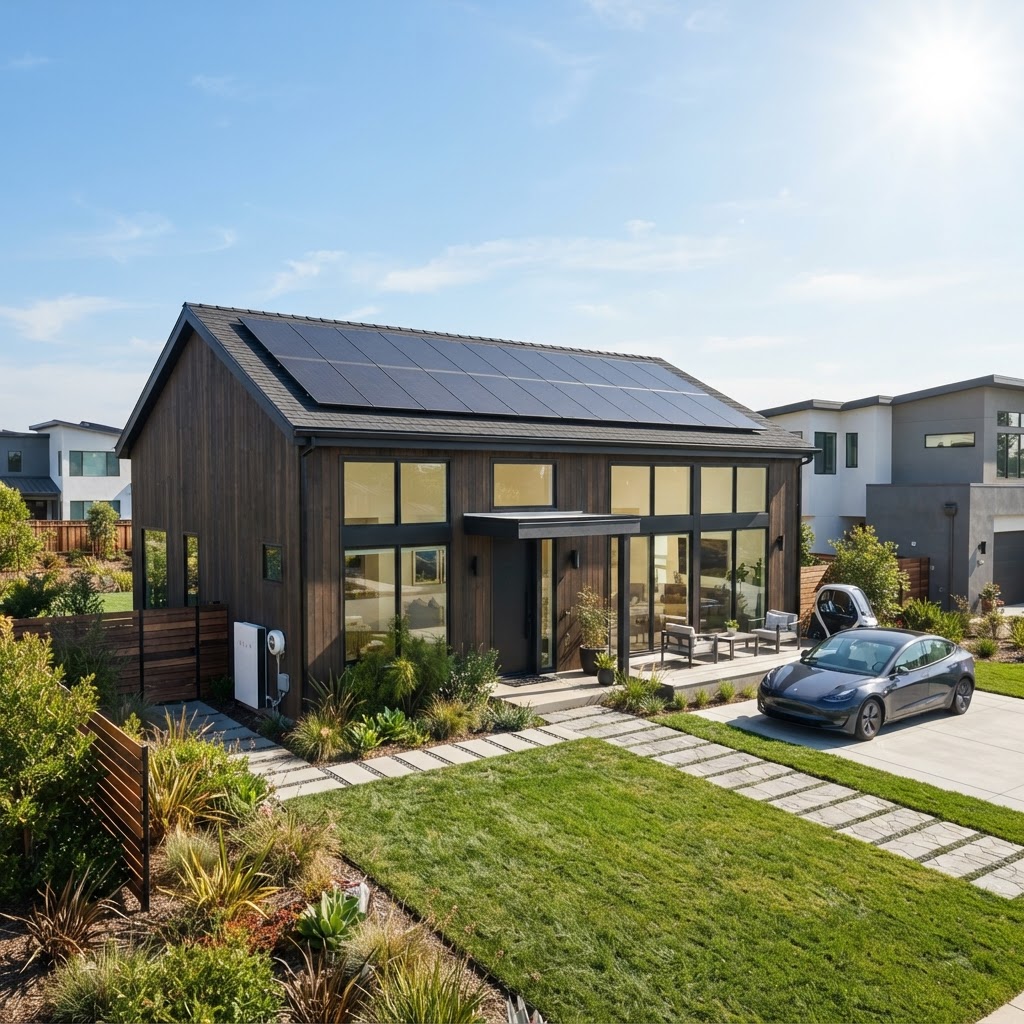
Since the full implementation of Net Billing (NEM 3.0), solar panels alone are no longer the asset they once were for California sellers. According to data from the California Solar & Storage Association (CALSSA), homes equipped with integrated battery storage systems (such as the Powerwall 3 or equivalent) are fetching a 4-6% premium compared to solar-only properties. In 2026, buyers prioritize the ability to 'load-shift'—using stored energy during the expensive 4:00 PM to 9:00 PM peak window.
Actionable Tip: If your home has storage, provide the last twelve months of utility bills alongside a 'performance certificate' showing how much of your home's energy was self-generated versus pulled from the grid.
Marketing the V2H Readiness
The 2026 California buyer likely owns or is shopping for an Electric Vehicle (EV). However, the trend has moved beyond simple Level 2 charging. The new standard is V2H (Vehicle-to-Home) bi-directional charging readiness. If your electrical panel has been upgraded to support bi-directional flow, this should be a headline feature in your MLS description. This allows the buyer to use their car as a backup generator for the house, a massive selling point in areas prone to Public Safety Power Shutoffs (PSPS).
The 'Net-Zero' Staging Strategy
Staging in 2026 isn't just about furniture; it’s about demonstrating efficiency. Sellers should consider the following practical upgrades before hitting the market:
- Smart Panel Integration: Highlighting a Span or Schneider smart panel allows buyers to see real-time circuit control via an app, a feature that tech-savvy coastal buyers now expect.
- Heat Pump Transition: As California moves toward building electrification, homes that have already transitioned from gas-fired furnaces to high-efficiency heat pumps are bypassing the 'future-proofing' costs that buyers often use to negotiate prices down.
- Energy Star 2026 Compliance: Ensure all appliances are labeled with their current energy efficiency ratings.
Data-Backed Valuation
Recent studies from the National Association of Realtors (NAR) indicate that 63% of California agents find that energy-efficient features are 'very important' or 'somewhat important' to their clients. To maximize your value, your appraiser must be provided with a 'Green Addendum' (AI-Resale Form 820.06). This document ensures that the high-capital improvements you’ve made to the home’s energy infrastructure are formally recognized in the appraisal, rather than being lumped into general 'renovations.'
Practical Takeaways for Sellers:
- Audit the Inverters: Ensure your solar inverters are under 10 years old or have a transferable warranty.
- Document the Offset: Create a 'Home Energy Portfolio' for prospective buyers that translates solar production into 'annual dollars saved' based on 2026 utility rates.
- Highlight Resilience: In fire-prone or grid-unstable regions, focus on the 'islanding' capability of your system—the ability to stay powered during a grid failure.