The 2026 California Curb Appeal Shift
In the California real estate market of mid-2026, the transition from "green lawn" to "high-design drought-resilience" is no longer just a trend—it is a value-defining requirement. As water rates in municipalities like Los Angeles and San Diego continue to outpace inflation, buyers are viewing traditional turf as a liability rather than an asset. Selling a home in today’s climate requires a shift in how we define curb appeal, moving away from high-maintenance foliage toward curated, sustainable luxury.
The ROI of Native Scaping
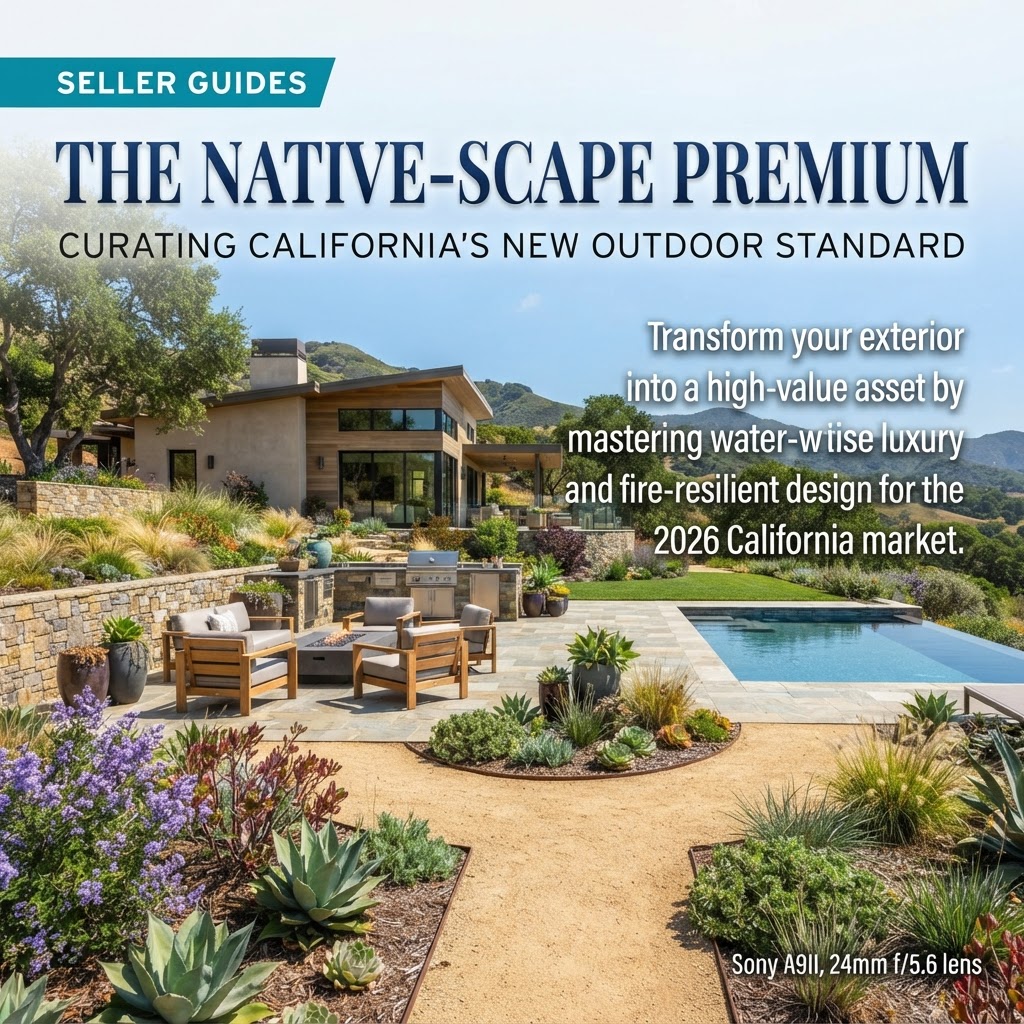
According to data from the 2026 California Association of Realtors (CAR) Exterior Value Report, homes featuring "Native-Scape" designs—landscaping that utilizes indigenous, drought-tolerant flora—sell for an average of 4.2% more than those with traditional lawns. This "Native-Scape Premium" reflects a buyer base that prioritizes sustainability and long-term cost-of-ownership. In the $1.5 million+ segment, this premium can translate to an additional $60,000 in equity purely through strategic plant selection and hardscape integration.
Strategic Hardscaping for Living Square Footage
To maximize value in the current market, sellers must treat the backyard as a functional extension of the home’s square footage. The American Society of Landscape Architects (ASLA) reports that professional outdoor kitchens and fire-resilient hardscaping yield an average ROI of 78% upon resale. When preparing your home, focus on three pillars: 1. Permeable Pavers: These reduce runoff and provide a modern, clean aesthetic that appeals to eco-conscious professionals. 2. Low-Voltage LED Lighting: This is essential for the "twilight" photography that drives 80% of initial engagement on listing portals. 3. Gas-Powered Fire Features: These are highly preferred over wood-burning alternatives due to increasingly strict regional air quality regulations and fire safety concerns.
The Smart Irrigation Advantage
Installing a smart irrigation system provides a documented "efficiency audit" for the buyer. In a state where water conservation is often mandated, providing a two-year history of low water usage via smart-tech logs acts as a powerful psychological closer during the due diligence period. Systems that integrate with local weather forecasts to prevent over-watering are now considered standard equipment for any competitive listing in the Silicon Valley or Orange County markets.
Practical Takeaways for Sellers
- Audit Your Exterior: Remove high-water-demand foliage and replace it with low-maintenance California native species like Sage, Manzanita, or Deer Grass to reduce buyer anxiety over future utility costs.
- Define Your Zones: Use staging furniture to define distinct outdoor "rooms"—such as a dedicated dining area, a lounge zone, and a secondary work-from-home space—to help buyers visualize the lifestyle.
- Ensure Fire Compliance: Ensure all hardscaping within five feet of the structure consists of non-combustible materials, satisfying both aesthetic desires and the stringent requirements of 2026 home insurance providers.