The Evolution of the 'Innovation Triangle'
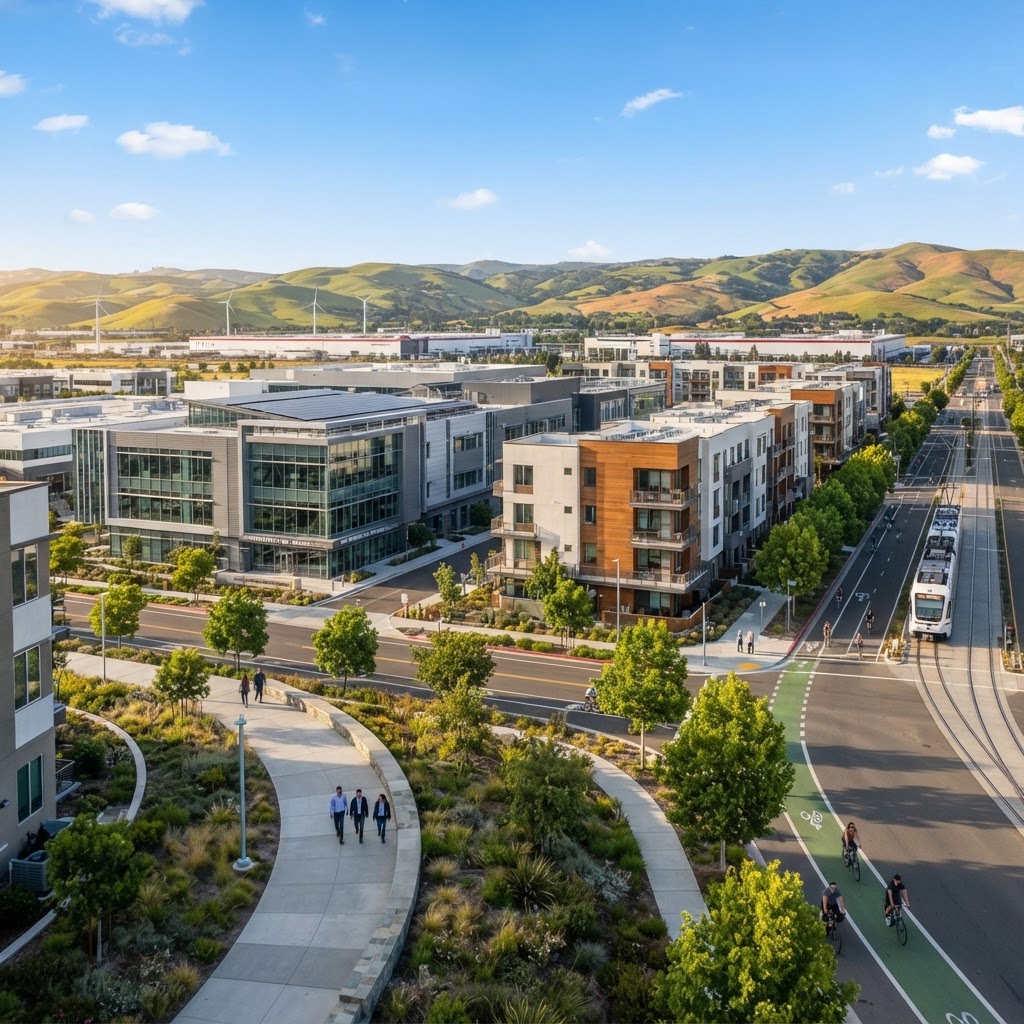
As of mid-2026, the transformation of Fremont’s Warm Springs District from a sprawling industrial zone into a high-density, transit-oriented 'Innovation Core' is officially complete. While neighboring Silicon Valley cities have struggled with office vacancies, Fremont has carved out a recession-resistant niche by becoming the primary hub for advanced manufacturing, robotics, and clean energy in the United States.
The Warm Springs Innovation District, anchored by the Warm Springs/South Fremont BART station, now represents the most successful example of 'Work-Live-Make' zoning in Northern California. According to 2026 CBRE market reports, industrial-flex space in this corridor maintains a sub-2% vacancy rate, driven by the expansion of Tesla, Lam Research, and a cluster of aerospace startups that have migrated from the Peninsula.
Infrastructure and Connectivity
The lynchpin of the neighborhood's success is its integration with the BART Silicon Valley Extension. In 2026, the district functions as a multimodal gateway. Residents can reach downtown San Jose in under 20 minutes or San Francisco in 45, making it a strategic location for dual-career households. The city’s investment in 'Innovation Way'—a tech-enabled arterial corridor—has streamlined autonomous shuttle loops that connect major employers to the residential clusters.
The Residential Shift: Urban Density in the Suburbs
The housing stock in Warm Springs has undergone a radical shift. Since 2024, over 4,000 new units have come online, primarily concentrated in mid-rise luxury developments like the Innovation Way lofts. These units cater to the 'Maker Class'—engineers and technicians who prioritize proximity to specialized labs over traditional suburban sprawl.
- Median Home Price: As of Q2 2026, the median price for a new-construction condo in Warm Springs sits at $1.15 million, representing a 14% year-over-year increase compared to 2025.
- School Performance: Warm Springs continues to benefit from the Fremont Unified School District, with local elementary and middle schools consistently ranking in the top 5% statewide, a primary driver for the neighborhood's high resale value.
Community Amenities and Modern Living
Gone are the days of the 'industrial desert.' The 2026 Warm Springs landscape features the 'Lila Bringhurst' community park, a 4-acre green space integrated with STEM-focused play areas and community Wi-Fi hubs. The retail mix has shifted toward 'experiential' dining and brewery concepts that cater to the post-shift tech crowd, moving away from the big-box retail of the past decade.
Investor and Buyer Takeaways
For those looking to enter the Warm Springs market in late 2026, the following strategic insights apply:
- For Investors: Focus on 'Transit-Adjacent' multi-family units. Rental demand remains insulated due to the 'sticky' nature of manufacturing jobs; unlike remote software roles, robotics and hardware engineering require a physical presence.
- For Buyers: Look for properties within the 'Innovation District' master plan boundaries to ensure long-term appreciation as the final phase of retail development completes in 2027.
- Market Outlook: Census data indicates a 3.5% population growth in this specific ZIP code over the last 18 months, significantly outpacing the broader Bay Area average.
Fremont’s Warm Springs has successfully decoupled itself from the volatility of the traditional 'office-centric' tech economy, proving that the future of California real estate lies in the intersection of heavy technology and high-density transit living.