The Evolution of the Second City Waterfront
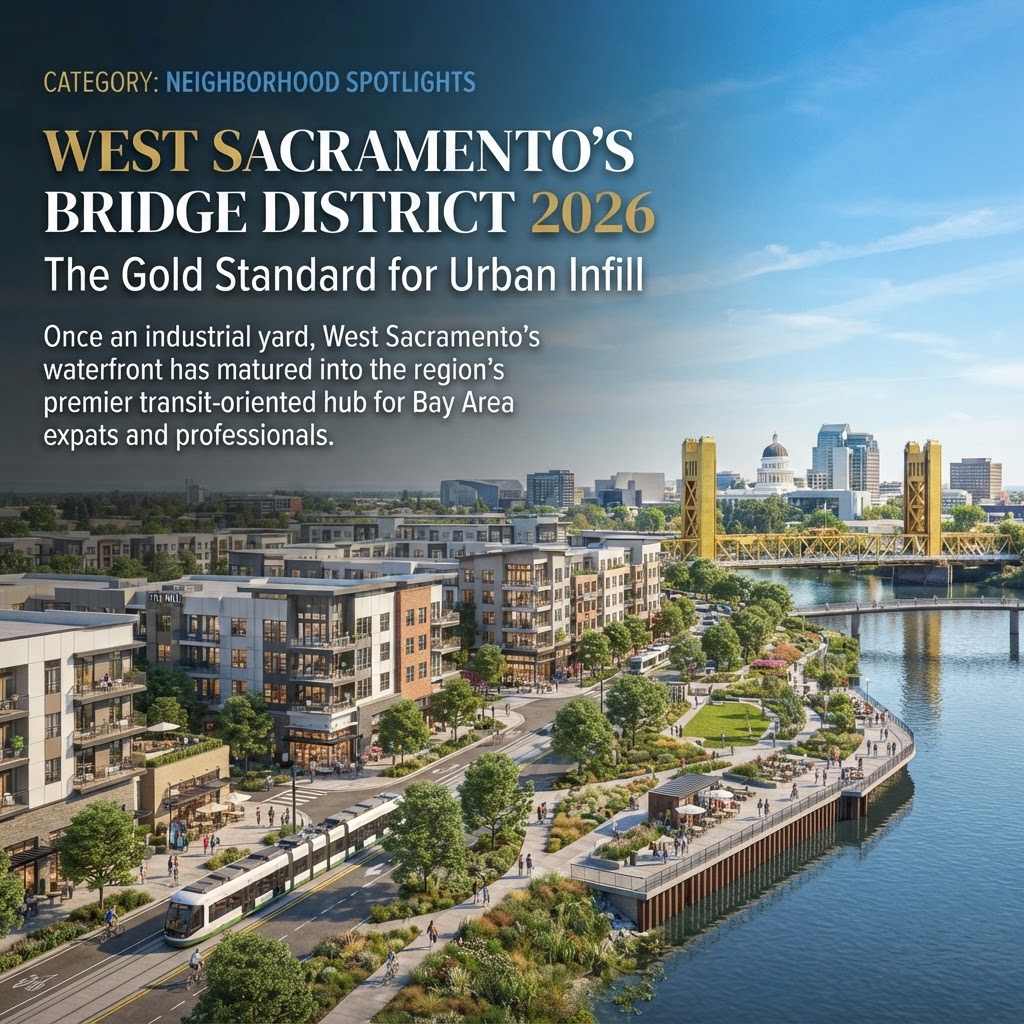
In the summer of 2026, the narrative of the Sacramento Valley has shifted. While the state capital’s downtown core has seen steady growth, it is the 188-acre Bridge District in West Sacramento that has emerged as the premier model for high-density, sustainable urban living. Formerly a landscape of warehouses and industrial relics, this neighborhood now serves as a vibrant gateway between Yolo County and the state’s political heart.
Infrastructure and Connectivity: The 2026 Connectivity Pivot
The defining milestone for the district this year is the full operational integration of the new I Street Bridge. Unlike its predecessor, this multi-modal crossing prioritizes wide pedestrian walkways and dedicated bike lanes, effectively merging West Sacramento with the Railyards and the central business district. According to 2026 SACOG (Sacramento Area Council of Governments) transit data, bicycle and pedestrian traffic between the two cities has increased by 140% since the bridge's completion. Furthermore, the expansion of the VIA on-demand rideshare program has made the district a 'car-optional' zone, a rarity in the Central Valley.
Economic Performance and Real Estate Data
For investors, the Bridge District represents a high-yield alternative to the cooling Bay Area markets. As of Q2 2026, MLS data indicates that median condo prices in the district have reached $695,000, a 22% increase over the last three years. Despite this appreciation, the area remains significantly more affordable than San Francisco or Oakland, continuing to attract 'equity-rich' migrants from the coast. Rental demand remains aggressive, with vacancy rates hovering at a tight 3.1% and average monthly rents for luxury one-bedroom units exceeding $2,800. The district’s inclusion in a federal Opportunity Zone during its early development phases has now paid dividends, as the first wave of commercial mixed-use projects reaches full occupancy.
Amenities: A Blend of Sport and Spirit
The neighborhood’s appeal is anchored by Sutter Health Park, which has evolved beyond baseball into a year-round community hub hosting outdoor concerts and tech summits. The 'River Walk' trail system has been extended north, connecting the Bridge District to the Washington District, featuring curated public art installations and 'The Barn'—an architectural landmark that now serves as a flagship for the region’s farm-to-fork movement. Educationally, the Washington Unified School District has capitalized on the area’s growth by opening the River City STEAM Academy, focusing on sustainable engineering and digital arts, catering to the growing demographic of young families.
Practical Takeaways for Market Participants
- For Buyers: Focus on the 'missing middle' townhome developments currently nearing completion. These units offer the best balance of square footage and appreciation potential as the neighborhood reaches total build-out.
- For Investors: Long-term rental demand is bolstered by the district’s proximity to both the State Capitol and the expanding UC Davis Aggie Square innovation hub. Multi-family assets here are currently outperforming the broader Sacramento metro in terms of internal rate of return (IRR).
- For Sellers: Highlight 'walkability' and 'smart home' integrations. In 2026, the Bridge District buyer is tech-savvy and values energy efficiency, with LEED-certified homes commanding a 7% premium.
West Sacramento’s Bridge District is no longer just a 'neighborhood of the future'; it is a realized vision of California’s new urban reality—one that balances density with livability and industrial history with high-tech connectivity.