The Inflection Point of Adaptive Reuse
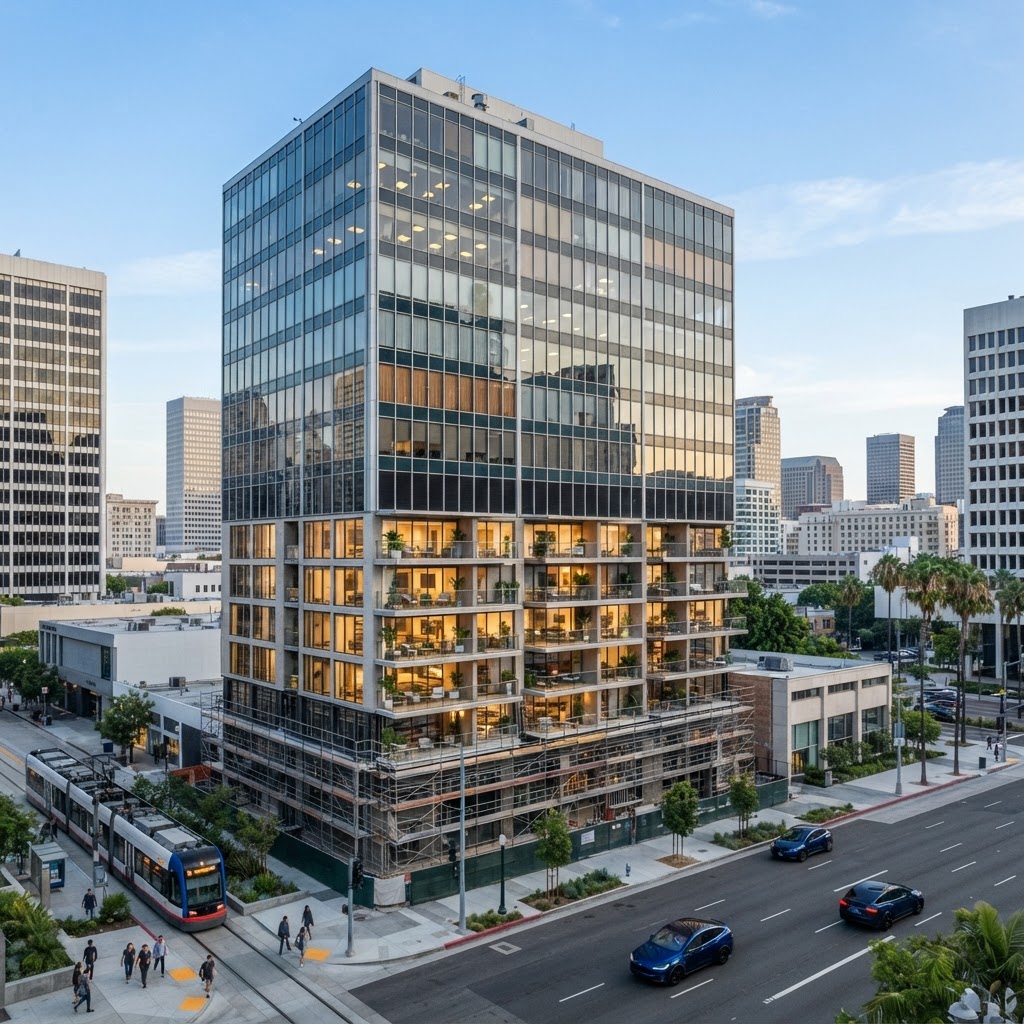
By mid-2026, the California real estate landscape has reached a definitive turning point in the adaptive reuse cycle. While the 2023-2025 period was characterized by cautious feasibility studies and regulatory hurdles, the current fiscal year has seen a 14% increase in successful office-to-residential conversions across the state’s major metropolitan hubs. This shift is driven by a unique convergence of declining construction material costs and the full implementation of the California Building Standards Commission’s 2025 streamlined adaptive reuse codes.
The Math Behind the 2026 Conversion Wave
According to recent CBRE data, Class B and C office vacancies in San Francisco and Los Angeles remain elevated at 28.4% and 22.1%, respectively. However, the 'Conversion Cap Rate'—the yield realized after repurposing these assets—has stabilized at a competitive 5.8%, up from 4.2% two years ago. The catalyst has been the state’s $400 million Adaptive Reuse Grant Program, which effectively offsets 15-20% of the soft costs associated with seismic retrofitting and plumbing overhauls. For institutional investors, the cost-per-door for a conversion in 2026 is now averaging $340,000, compared to $510,000 for ground-up construction in the same high-density zip codes.
San Francisco vs. Los Angeles: A Tale of Two Strategies
While both cities are leading the charge, their approaches differ significantly. San Francisco’s 2026 market is dominated by 'micro-unit' conversions targeting the tech workforce in the SoMa district. These projects prioritize amenity-rich communal spaces over individual square footage to maximize density. In contrast, the Los Angeles market, particularly in the Historic Core, is leaning toward luxury loft conversions. Data from the California Association of Realtors (CAR) indicates that these high-end conversions are seeing a 12% price-per-square-foot premium over traditional 1990s-era condos due to their architectural uniqueness and 'live-work' zoning flexibility.
Practical Takeaways for 2026 Stakeholders
- For Investors: Focus on Class B office assets with floor plates smaller than 15,000 square feet. These boutique footprints allow for better natural light penetration, significantly reducing the cost of mechanical venting and window placement during conversion.
- For Buyers: Conversion units often offer superior soundproofing and ceiling heights compared to new builds. In the current market, look for projects that have secured 15-year property tax abatements under the Mills Act or local residential conversion incentives.
- For Sellers: Owners of underutilized commercial assets should seek 'as-is' valuations based on residential residual land value rather than current commercial rent rolls, as the latter often underestimates the asset's liquidity in the 2026 housing-starved climate.