The Multi-Modal Revolution
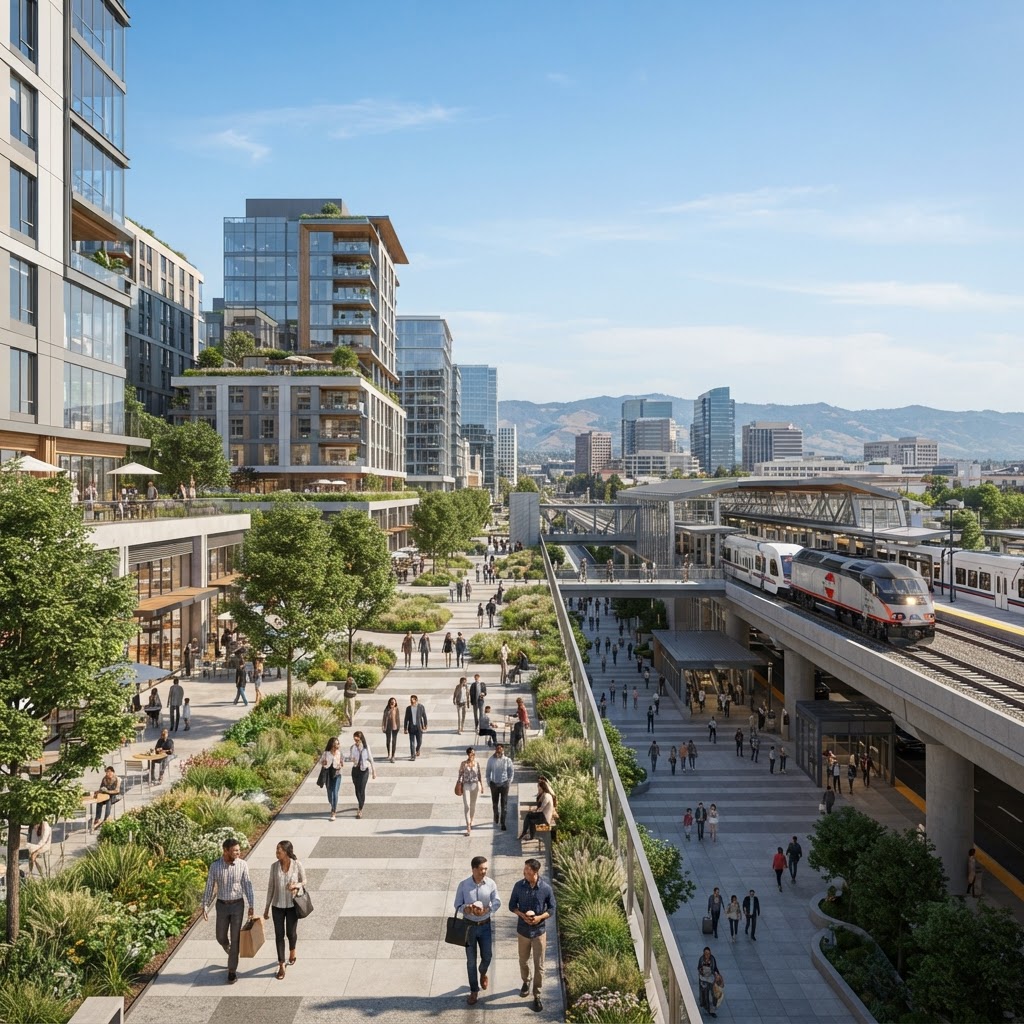
As of July 2026, San Jose’s Downtown West—the expansive district surrounding Diridon Station—has emerged as California’s premier example of transit-oriented development (TOD). Often called the 'Grand Central of the West,' Diridon has successfully integrated Caltrain, VTA, and the preliminary stages of the BART Silicon Valley Phase II. According to 2026 CBRE market reports, the area has outperformed the broader Santa Clara County market, with a 14% higher retention rate for commercial tenants in mixed-use buildings compared to traditional office parks.
The 'Campus-as-a-Neighborhood' Model
The 2026 landscape is defined by the maturation of Google’s Downtown West master plan. Rather than a closed corporate campus, the district features 15 acres of public parks and 4,000 new residential units, 25% of which are designated as affordable housing under the 2040 San Jose General Plan. The Los Gatos Creek Trail extension has become a central artery for the community, seeing a 30% increase in bicycle commuting over the past 24 months. This shift from car-centricity to walkability has pushed the local Walk Score to an unprecedented 96.
Real Estate Dynamics and Education
MLS data from Q2 2026 indicates that median home prices in the Diridon footprint have reached $1.45 million, a 9% year-over-year increase that defies national cooling trends. The neighborhood's appeal is bolstered by its proximity to San Jose State University and the specialized 'Innovation Hub' public schools, which received high ratings in the 2025 California School Dashboard. For investors, the rental market remains tight, with vacancy rates hovering at a historic low of 3.2%.
Strategic Investment Takeaways
- For Buyers: Focus on the 'BART-adjacent' corridor where property values are expected to see a secondary surge upon the 2030 station opening.
- For Investors: High-density residential assets in this district now command a 15% rent premium over North San Jose alternatives.
- For Sellers: Market conditions favor sellers who can highlight updated 'work-from-hub' amenities, as hybrid workers prioritize transit proximity.