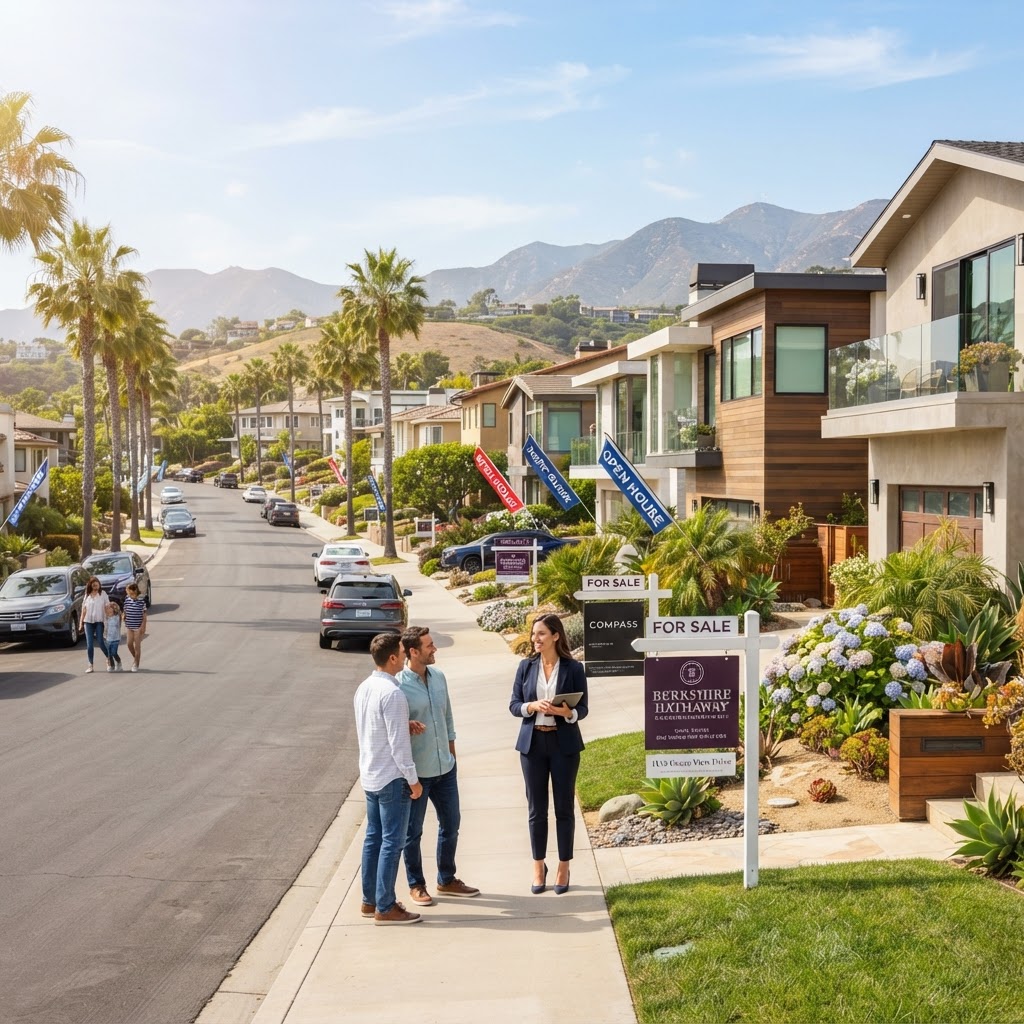
The End of the Golden Handcuffs
For nearly four years, the California real estate market was defined by the 'lock-in effect'—a phenomenon where homeowners with 3% mortgage rates refused to sell, creating a chronic inventory drought. However, as of July 18, 2026, data from the California Association of Realtors (CAR) reveals a significant pivot. Active listings across the state have climbed 14.8% year-over-year, marking the strongest inventory growth since the pre-pandemic era. This 'Great Mobility Thaw' is reshaping the landscape for buyers and investors alike.
The Convergence of Three Economic Forces
Several factors have converged to break the stalemate that paralyzed the market between 2023 and 2025:
- Rate Convergence: With the Federal Reserve stabilizing the benchmark rate and average 30-year fixed mortgages hovering around 5.2% in mid-2026, the delta between current rates and 'legacy' rates has narrowed. The psychological barrier to trading up has finally eroded.
- The Equity Plateau: California homeowners currently hold over $2.8 trillion in tappable equity. As price appreciation slows to a sustainable 3.2% annually, many owners are choosing to cash out now rather than risk a cyclical downturn, particularly in cooling sectors like tech-heavy Silicon Valley.
- Prop 19 Maturity: The full legislative impact of Proposition 19 has finally hit its stride. Older homeowners are increasingly utilizing the ability to transfer their tax base up to three times, fueling a surge in downsizing activity in coastal markets like Newport Beach and Santa Barbara.
Regional Analysis: Where the Thaw is Warmest
According to recent MLS data, the inventory surge is not uniform. The 'Inland Empire' and the 'Central Coast' are seeing the highest influx of new listings, up 21% and 19% respectively. In contrast, the San Francisco Peninsula remains relatively tight, with inventory growth lagging at 6.5%. For investors, this creates a 'Buy-Side Arbitrage' opportunity in secondary markets where supply is finally outstripping immediate demand, allowing for more aggressive price negotiations and contingency inclusions that were unthinkable two years ago.
Investment Perspectives: The 2026 Playbook
The transition from a seller's market to a balanced market requires a shift in strategy. Institutional buyers are moving away from the 'fix-and-flip' model, which has been squeezed by high labor costs, and toward 'Value-Add Rentals' in high-supply pockets.
Key Takeaways for Market Participants:
- For Buyers: The increase in 'Days on Market' (now averaging 28 days statewide) means you have more leverage. Focus on properties that have been listed for 45+ days, where sellers are increasingly open to interest rate buy-downs.
- For Sellers: The days of 'as-is' bidding wars are over. With more competition on the block, professional staging and updated kitchens are yielding a 4:1 ROI in the current 2026 climate.
- For Investors: Look to the 'Silver Tsunami' pockets. Areas with high concentrations of retirees—such as Palm Springs and parts of Marin County—are seeing the highest turnover as seniors transition to assisted living or out-of-state compounds.
The Road Ahead
While the increase in inventory is a welcome relief for a supply-starved state, it does not signal a crash. Low unemployment rates in California's diversified green-energy and aerospace sectors continue to support demand. We are entering a period of 'Rational Real Estate,' where fundamentals like school district quality and commute times are once again the primary drivers of value, rather than speculative frenzy.