The Evolution of San Francisco’s Innovation Waterfront
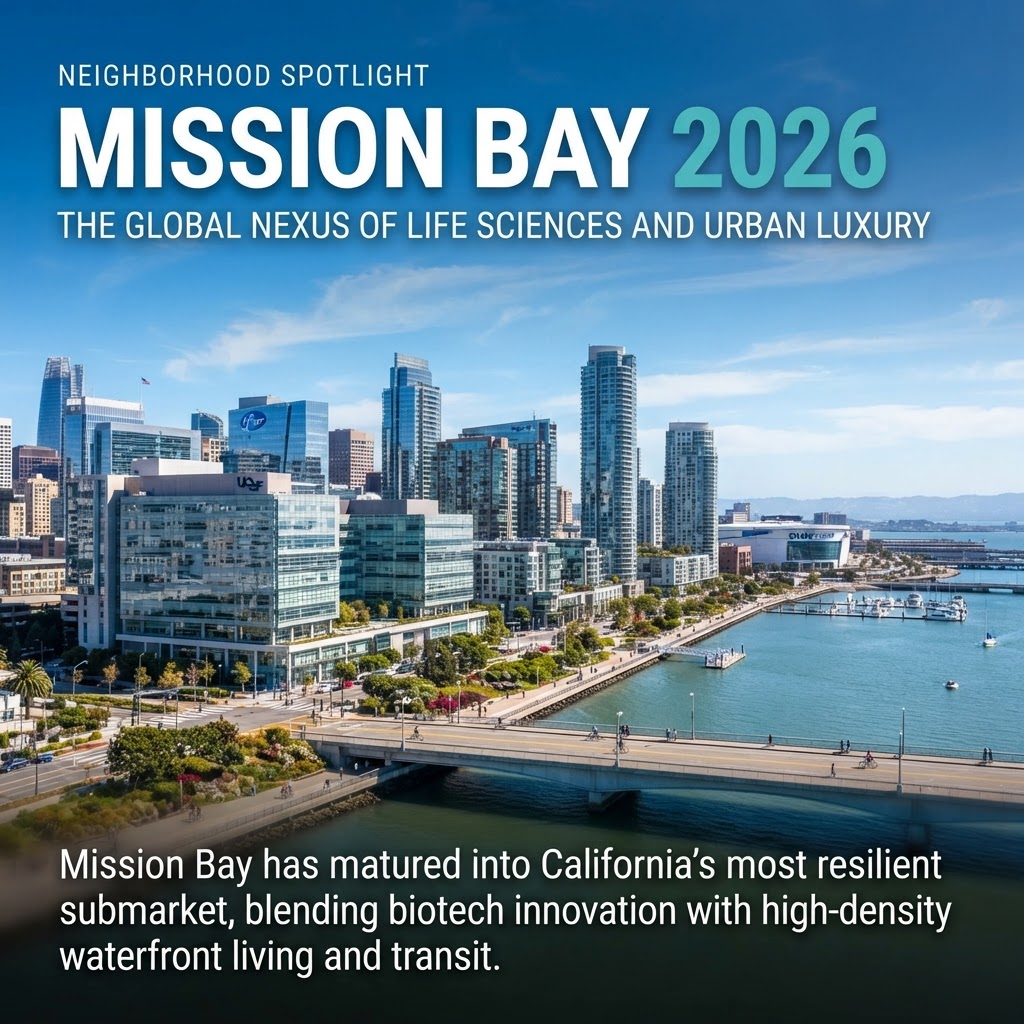
In 2026, Mission Bay stands as the definitive model for the 'live-work-play-investigate' urban ecosystem. Once a 303-acre expanse of derelict railyards and brownfields, the neighborhood has successfully transitioned from a construction zone into a fully realized global hub for life sciences. According to 2025 CBRE reports, Mission Bay maintains one of the lowest life-science vacancy rates in the country at under 4%, even as other office sectors face headwinds. This resilience is anchored by the University of California, San Francisco (UCSF) Mission Bay campus and the adjacent Gladstone Institutes, which continue to draw billions in venture capital and NIH funding.
Infrastructure and Connectivity: The Central Subway Effect
A primary driver of the neighborhood's 2026 valuation is the matured utility of the Central Subway (T-Third Line). This transit artery has effectively bridged the gap between the high-density residential towers of Mission Bay and the financial core of Market Street and Union Square. For residents, this means a commute time of less than 15 minutes to the city’s primary transit hubs. Furthermore, the neighborhood’s proximity to I-280 and the Caltrain terminus at 4th and King provides a critical link for the 'reverse commute' to Silicon Valley, a feature that has kept residential demand high among dual-career households.
A Rare High-Density Residential Stronghold
Unlike many San Francisco neighborhoods constrained by legacy zoning, Mission Bay was master-planned for density. Data from the San Francisco Association of Realtors (SFAR) indicates that luxury condos in the district have seen a 12% year-over-year appreciation in 2025, outperforming the citywide average. The appeal lies in the inventory: modern, amenitized buildings like One Mission Bay and MIRA (nearby) offer floor-to-ceiling glass, 24-hour doormen, and seismic engineering that older Victorian neighborhoods cannot match. Schools such as the Mission Bay School, integrated into the community’s fabric, serve the growing population of families who have opted for urban density over suburban sprawl.
Recreation and Amenities: More Than Just Lab Space
The completion of Crane Cove Park and the ongoing activation of the Mission Rock development have introduced acres of public green space and waterfront access. The neighborhood’s retail landscape has shifted from utilitarian to artisanal, with high-end dining and fitness studios catering to a workforce with high disposable income. The presence of the Chase Center continues to drive a robust short-term rental and hospitality market, providing a constant influx of foot traffic that supports local businesses even outside of traditional working hours.
Practical Takeaways for Stakeholders
- For Buyers: Focus on units with protected water views or proximity to the UCSF campus, as these assets show the highest rent-to-price stability in fluctuating markets.
- For Investors: The demand for workforce housing remains acute. Properties that qualify for corporate housing programs catering to visiting researchers and medical professionals offer lucrative yield opportunities.
- For Sellers: Highlight the 'Transit Score' and the neighborhood’s unique status as a flat, walkable, and modern district—rare attributes in the San Francisco market that appeal strongly to international buyers.