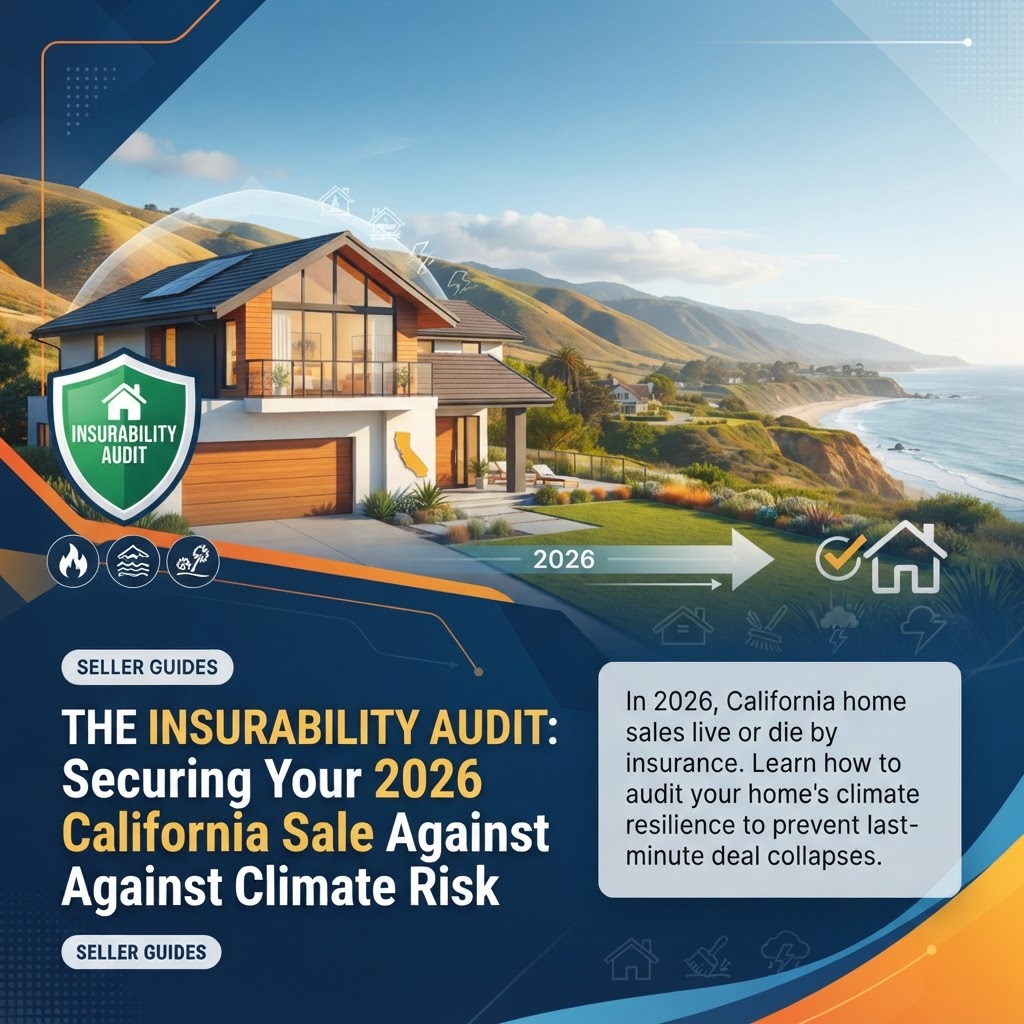
The New Barrier to Closing: The Insurability Gap
In the California real estate landscape of 2026, the traditional hurdle of the home inspection has been eclipsed by a more formidable obstacle: the insurance binder. As private insurers continue to recalibrate their risk profiles following years of volatile wildfire seasons, the ability for a buyer to secure an affordable HO-3 policy has become the ultimate contingency. Data from the California Department of Insurance (CDI) suggests that in high-risk interfaces, insurance premiums now account for nearly 15% of a homeowner's total monthly carrying costs, up from 8% in 2022.
For sellers, this means that maximizing home value is no longer just about quartz countertops; it is about proving the home is insurable and resilient. A property that fails to meet modern defensible space or ember-resistance standards risks being relegated to the California FAIR Plan, which can significantly dampen buyer enthusiasm and lower the ultimate sale price.
The IBHS Standard: Hardening as the New Staging
The Insurance Institute for Business & Home Safety (IBHS) has established the 'Wildfire Prepared Home™' designation, which has become a gold standard for California underwriters in 2026. Sellers should prioritize these high-ROI hardening measures before hitting the market:
- Vulnerability Reduction: Replacing standard 1/4-inch mesh vents with 1/16-inch flame-and-ember-resistant vents. This is a low-cost upgrade that prevents embers from entering the attic.
- The Five-Foot Rule: Creating a 'non-combustible zone' within the first five feet of the home. This involves replacing wood mulch with gravel or river rock and removing any woody vegetation touching the structure.
- Class A Roofing: Ensuring the roof has a Class A fire rating. If your roof is nearing the end of its life, replacing it with fire-rated materials is currently yielding a 105% cost-recovery rate in the California market, according to recent MLS data.
The 'Resilience Binder': Documentation for the Modern Buyer
Transparency is no longer just a legal requirement; it is a marketing strategy. To facilitate a smooth close, sellers should compile a 'Resilience Binder' to be presented alongside the preliminary title report. This binder should include:
- Proof of Retrofitting: Receipts for ember-resistant vents, fire-rated garage doors, or specialized siding.
- Defensible Space Inspection (DSI): A recent compliance report from CAL FIRE or the local fire department.
- Insurance Quotes: Proactive 'pre-quotes' from at least two carriers showing the property’s current eligibility for private market coverage.
Market Strategy: Positioning Resilience as a Premium
In 2026, savvy listing agents are highlighting 'Insurability Scores' in the MLS remarks. A home that qualifies for the 'Safer from Wildfires' discount—a regulatory framework mandated by the CDI—is significantly more attractive to buyers sensitive to interest rates and monthly cash flow. By investing $5,000 to $10,000 in hardening measures, sellers can often avoid price reductions of $50,000 or more that occur when a buyer discovers an astronomical insurance quote during the 17-day contingency period.
Practical Takeaways for the 2026 Seller
- Conduct a Professional Fire Risk Assessment: Before listing, hire a specialist to identify 'low-hanging fruit' upgrades that meet IBHS standards.
- Clear the Zero-to-Five Foot Zone: This is the most scrutinized area during an insurance company’s drone inspection. Ensure it is entirely clear of combustible materials.
- Pre-Verify Coverage: Work with an insurance broker to confirm the home is not on a 'non-renewal' list, providing peace of mind to prospective lenders and buyers alike.


