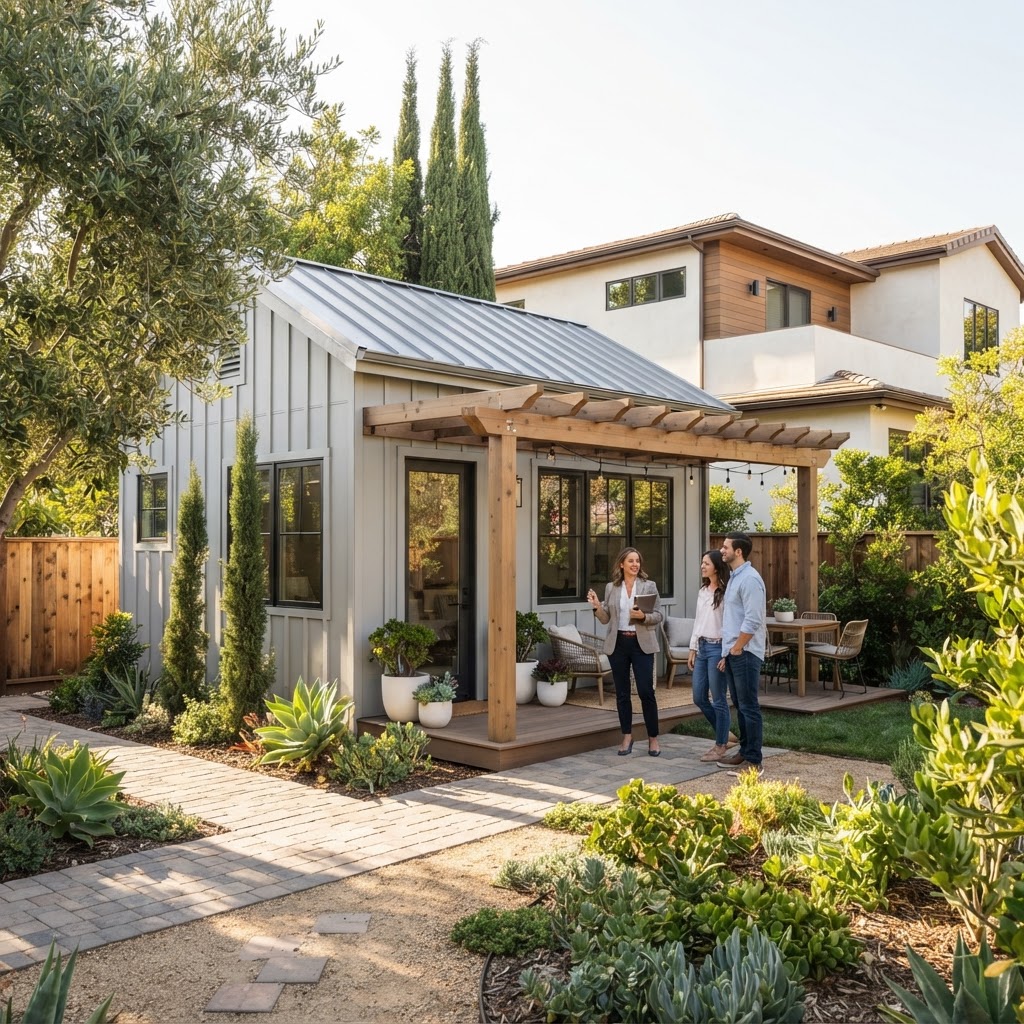
The Paradigm Shift: From Square Footage to Lot Potential
As of mid-2026, the California real estate landscape has moved beyond the traditional metrics of curb appeal and bedroom counts. With the California Association of Realtors (C.A.R.) reporting a persistent 15% inventory gap in suburban hubs, the most successful sellers are no longer just selling a home; they are selling 'density potential.' The strategic implementation of California’s Accessory Dwelling Unit (ADU) laws—specifically the maturation of AB 1033 and SB 9—has created a new tier of property valuation that savvy sellers must exploit to maximize their ROI.
The AB 1033 Multiplier: Selling Units as Condominiums
The most significant shift in 2026 is the local adoption of AB 1033 across major metropolitan areas like San Jose, San Diego, and parts of Los Angeles. This legislation allows homeowners to sell their ADUs separately as condominiums. For a seller, this translates to a potential 'sum of the parts' valuation that can exceed a single-family residential (SFR) price point by 25% to 40%.
Data from the UC Berkeley Terner Center suggests that properties marketed with 'condo-conversion ready' ADUs see a 12% higher engagement rate on the MLS compared to those marketed as traditional rentals. To capitalize on this, sellers should provide a 'Density Disclosure Packet' including a preliminary feasibility study or a certified plot plan that identifies the utility separation potential required for an AB 1033 conversion.
Preparation: The 'Permit-Ready' Advantage
Not every seller has the capital to build an ADU before listing. However, in 2026, 'shovels in the ground' are less important than 'stamps on the paper.' To maximize value without a full construction project, sellers should consider the following:
- The RTI (Ready to Issue) Bonus: Properties sold with RTI plans for an ADU or a junior ADU (JADU) often command a premium that covers the architectural costs fourfold. According to 2025 MLS data, RTI status reduced average days-on-market by 18 days.
- Utility Transparency: California’s 2026 building codes are stringent regarding electrical panels and sewer capacity. Upgrading your main panel to 200 or 400 amps to support a future ADU and EV charging is a high-yield preparation step that appeals to the modern buyer's 'future-proofing' checklist.
- Zoning Certifications: Use SB 9 (The California Housing Opportunity and More Efficiency Act) to your advantage. Even if you don't intend to split your lot, providing a certificate of compliance that confirms the lot is eligible for a split can attract institutional 'buy-and-hold' investors who are currently outbidding traditional families for high-density lots.
Strategic Marketing for the 'Missing Middle'
Your marketing narrative should target the 'Missing Middle'—buyers who are looking for multi-generational living solutions or mortgage-hacking opportunities. In your listing description, move the ADU potential to the first paragraph. Use 3D renderings to show how an ADU would fit on the lot without sacrificing privacy for the main house.
National Association of Realtors (NAR) research indicates that 2026 buyers are increasingly prioritizing income-producing potential to offset 6%+ mortgage rates. Highlighting a 'Projected Annual Rental Income' or 'Projected Condo Sale Value' in your marketing collateral transforms the property from a liability into a high-yield asset.
Practical Takeaways for 2026 Sellers
- Verify Local Opt-Ins: Check if your municipality has opted into AB 1033. If so, your property may be worth significantly more to a developer than to a family.
- Conduct a Density Audit: Hire a specialist to determine if your lot qualifies for an SB 9 lot split. A $500 feasibility report can add $50,000 to your asking price.
- Address the 'Power Gap': Ensure your home’s electrical infrastructure can support the density you are advertising. This is the most common point of friction in 2026 California inspections.
- Standardize Disclosures: California’s 2026 disclosure environment is litigious regarding unpermitted units. If you have an existing ADU, ensure it is fully legalized or clearly marketed as 'bonus space' to avoid post-escrow clawbacks.


