The 2026 'Speed-to-Close' Metric
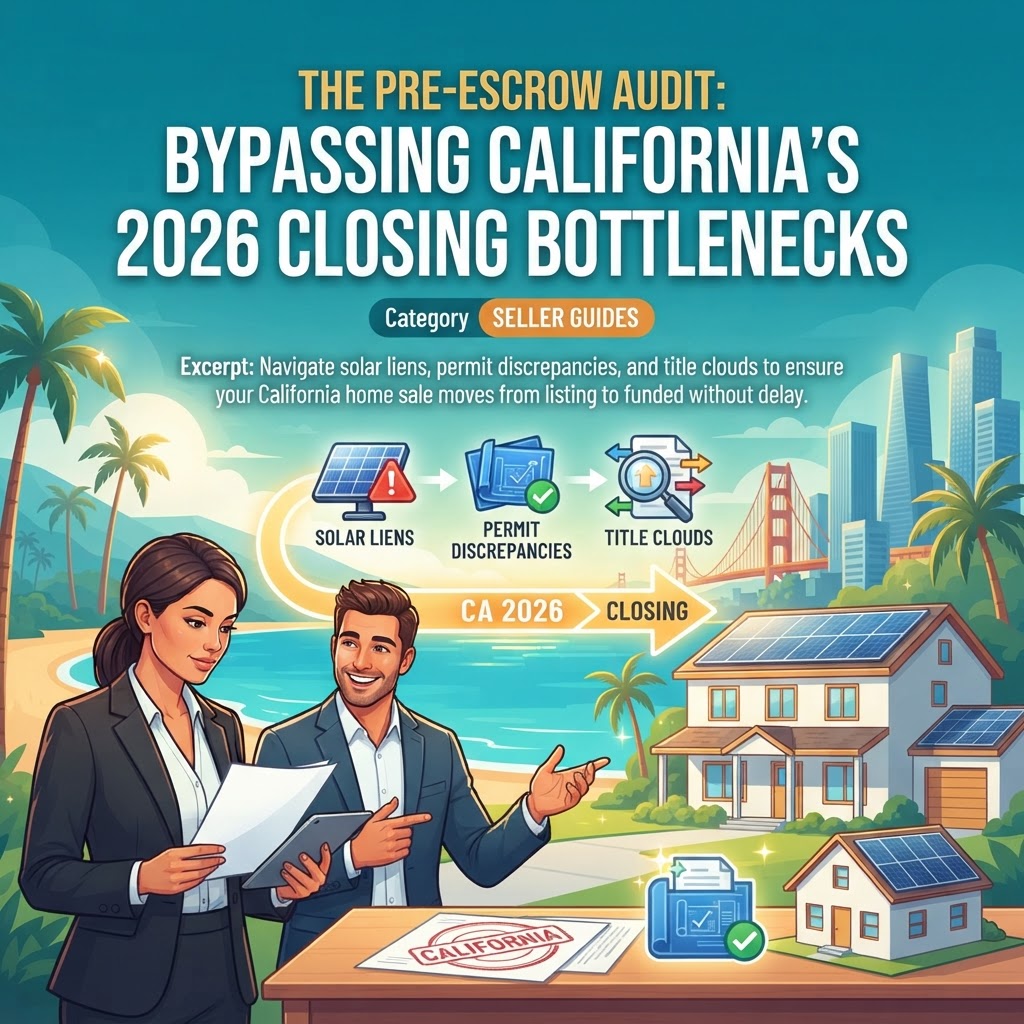
In the California real estate market of July 2026, the primary threat to a seller’s bottom line is no longer just the initial offer price; it is the 'escrow erosion' that occurs during the investigation period. According to 2026 data from the California Association of Realtors (CAR), nearly 18% of residential contracts in the state faced significant price renegotiations or cancellations due to title and permit discrepancies discovered mid-escrow. To maximize value, sellers must shift from a reactive stance to a proactive 'Pre-Escrow Audit' strategy.
The Title Pre-Check: Beyond the Preliminary Report
While most sellers wait for an offer to open escrow, high-value sellers in 2026 are initiating 'pre-title' searches. This involves identifying unrecorded liens or 'zombie' encumbrances that often plague older California properties. Data from the 2025 MLS Year-End Review showed that properties with a 'Certified Title Ready' status closed on average 9 days faster than those without. Sellers should specifically look for outdated mechanic’s liens or unresolved utility easements that can spook institutional buyers or fintech-backed lenders.
The Solar Lien Resolution Protocol
With California’s Title 24 mandates now firmly established, solar panels are ubiquitous, but their financing remains a major hurdle. In 2026, the transition of Power Purchase Agreements (PPAs) or HERO/PACE loans is the leading cause of delayed closings. A practical guide for sellers includes:
- Documenting the Buyout: Obtain a formal payoff quote from the solar provider before the home hits the market.
- UCC-1 Clearing: Ensure that any Uniform Commercial Code (UCC-1) filings on the panels are ready to be subordinated or released, a process that can take 14-21 days.
Permit Reconciliation and SB 9 Compliance
As California continues to push for higher density, many sellers have added Accessory Dwelling Units (ADUs) or converted garages under SB 9. However, 'finalized' permits are often missing from municipal records. A 2026 audit by the California Department of Real Estate (DRE) suggests that 'unpermitted' square footage can lead to appraisal gaps of up to 12% in coastal markets. Sellers must pull their own 'Building Permit History' from the city or county to ensure the MLS listing matches the legal record exactly, preventing last-minute lender rejections.
Practical Takeaways for 2026 Sellers
- Pre-Listing Title Search: Spend the $250-$500 for a comprehensive title search before listing to identify 'clouds' early.
- The 'Permit Packet': Create a digital folder containing the 'Certificate of Occupancy' for all major renovations to provide to the appraiser on day one.
- Lien Disclosure: If you have a PACE/HERO loan for energy upgrades, disclose the exact transfer terms in the private agent remarks to filter out buyers who cannot assume the debt.
By conducting a Pre-Escrow Audit, California sellers transition from a position of uncertainty to a position of strength, ensuring that the high prices of 2026 are not just offered, but actually funded.