The Evolution of the Island City’s Western Edge
In mid-2026, Alameda Point has transitioned from a visionary master plan into a tangible model for California’s adaptive reuse future. Formerly the Alameda Naval Air Station, this 870-acre site is no longer just a collection of historic hangars and runways; it is now a thriving mixed-use district that serves as the East Bay’s primary answer to the housing crunch in San Francisco and Oakland. With the completion of the Site A Phase 2 developments, the neighborhood has reached a critical mass of residential density and commercial vitality.
Connectivity: The Ferry-First Lifestyle
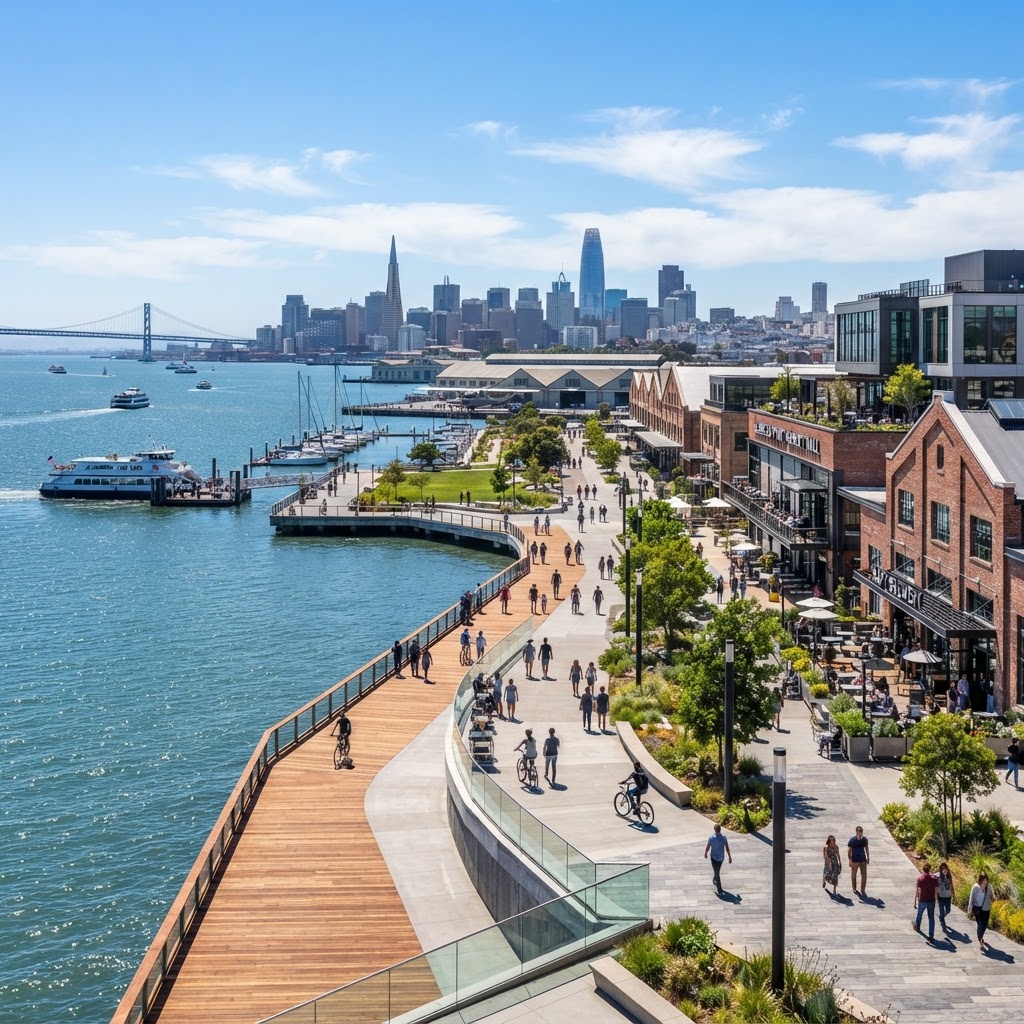
The defining feature of Alameda Point’s 2026 appeal is its seamless integration into the regional transit web. The Seaplane Lagoon Ferry Terminal has become the neighborhood’s heartbeat, offering a 20-minute commute to San Francisco’s Ferry Building. According to recent 2026 transit data, over 45% of Alameda Point residents utilize the ferry as their primary commute mode, significantly higher than the regional average for transit usage.
Complementing the water transit is the ‘Big Leap’ cycling infrastructure, which connects the Point to the rest of Alameda via protected lanes. For those commuting to the Silicon Valley corridor, the expansion of the AC Transit Line 96 provides a direct link to the BART system, ensuring that while the Point feels like a secluded island retreat, it remains economically tethered to the broader Bay Area.
Community Amenities and 'Spirits Alley'
The neighborhood’s cultural identity is anchored by "Spirits Alley," a cluster of artisanal distilleries, breweries, and wineries housed in refurbished naval hangars. By 2026, this district has expanded beyond tasting rooms to include the Waterfront Park, a 15-acre green space featuring unobstructed views of the San Francisco skyline. The park serves as a regional draw, hosting seasonal markets and outdoor performances that bolster local retail revenues.
Education and Sustainability
Families are increasingly drawn to the Point due to the Alameda Unified School District’s (AUSD) investment in the neighborhood. The Maya Lin School, an innovative magnet program focused on integrated arts and academics, has seen a 15% increase in enrollment applications over the last two years. Furthermore, the neighborhood is a leader in sustainable urbanism; every new residential building since 2024 has achieved LEED Gold certification or higher, and the district utilizes a localized microgrid to enhance energy resiliency—a significant selling point given California’s fluctuating energy landscape.
Market Analysis and Investor Takeaways
Data from the Alameda County MLS and recent CBRE reports highlight a distinct "ferry premium" in the local real estate market. As of July 2026, the median sales price for a three-bedroom townhome in Alameda Point has reached $1.25 million, representing a 6.8% year-over-year appreciation. This outpaces the broader East Bay average of 4.2%.
Practical Takeaways for Stakeholders:
- For Buyers: Focus on the West End’s new-construction condos. While Mello-Roos assessments apply to support infrastructure, the long-term value is buoyed by the permanent views and proximity to the ferry terminal.
- For Investors: The rental market is robust, particularly for units featuring flexible "work-from-home" layouts. Vacancy rates in the Point remain below 3.5%, driven by tech workers who value the maritime atmosphere over traditional urban density.
- For Sellers: Highlight energy-efficiency upgrades and proximity to the Seaplane Lagoon. Properties within a 10-minute walk of the ferry landing command a 12% price premium over those further inland.
As the Bay Area continues to prioritize transit-oriented development, Alameda Point stands as a testament to how historic military assets can be repurposed into high-value, sustainable residential hubs.