The Urban Renaissance of Sonoma County
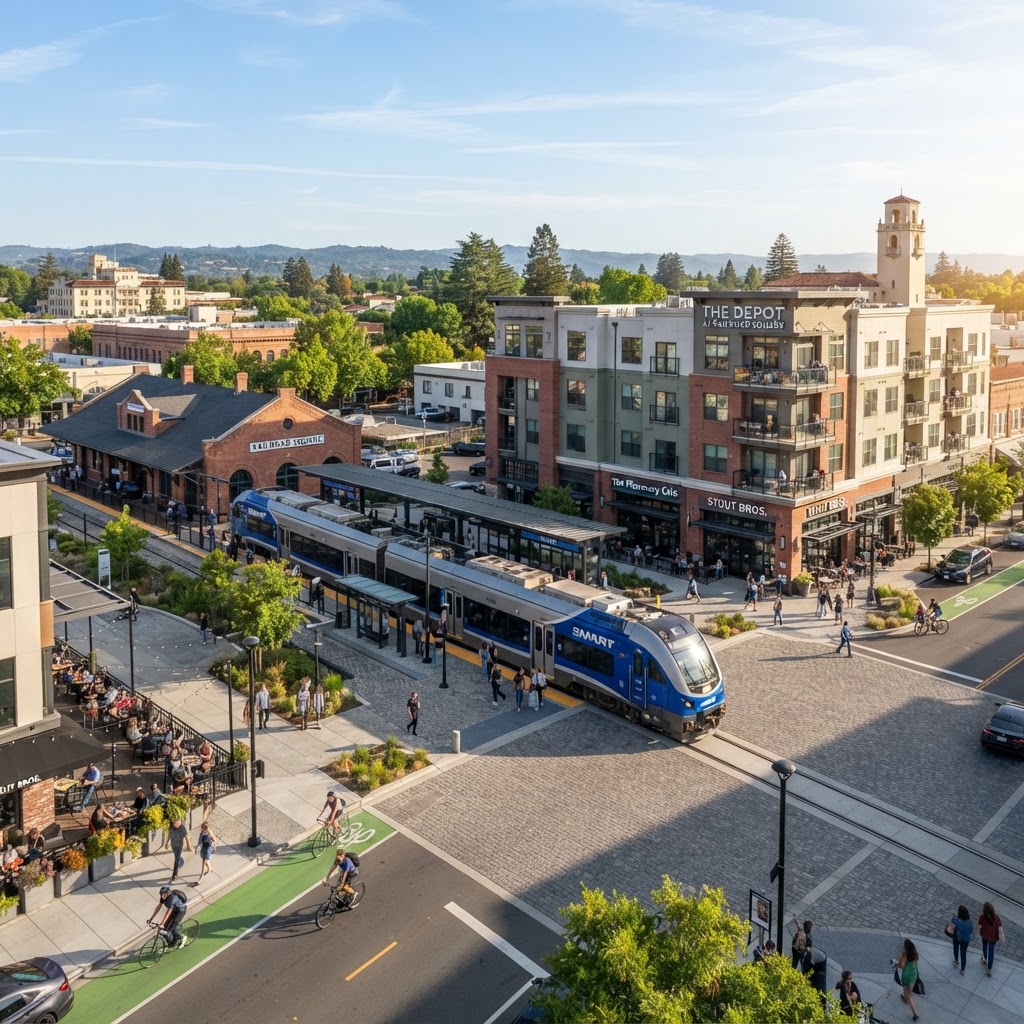
As of July 2026, Santa Rosa’s Railroad Square and the adjacent Downtown core have completed a decade-long transformation from a quaint historic district into the North Bay’s most significant transit-oriented development (TOD) hub. While much of California’s residential focus has historically landed on coastal suburbs, the 2026 market reflects a decisive shift toward inland urban centers that offer a blend of fire-hardened infrastructure, walkable amenities, and high-speed connectivity to the San Francisco Bay Area.
A Data-Driven Shift in Demographics
According to recent MLS data and Census Bureau estimates from Q1 2026, Santa Rosa has seen a 14% increase in the 25-44 demographic over the last three years. This influx is largely driven by 'equity migrants' from San Francisco and Oakland who are seeking lower price-per-square-foot metrics without sacrificing urban vibrancy. In Railroad Square, the median price for a two-bedroom modern loft currently sits at $845,000—a sharp contrast to the $1.3 million average for comparable units in the East Bay.
The SMART Connectivity Factor
The linchpin of this neighborhood’s 2026 appeal is the Sonoma-Marin Area Rail Transit (SMART). With the latest expansion connecting directly to the Larkspur Ferry terminal and the northern reaches of Cloverdale, Railroad Square has become a true 'living-room station.' CBRE reports that commercial vacancies within a half-mile radius of the Santa Rosa Downtown station have plummeted to 4.2%, as hybrid-work firms establish satellite offices to capture the local talent pool. For residents, the 'Bikes on Rails' culture allows for a car-free lifestyle that was previously unimaginable in Sonoma County.
Climate Resilience and Infrastructure
The 2026 development landscape in Santa Rosa is defined by the 'Resilient City' zoning codes established in the wake of previous wildfires. New residential projects in the core, such as the recently completed Pullman Lofts, utilize LEED Platinum standards, micro-grid energy backups, and non-combustible exterior materials. This focus on durability has not only attracted environmentally conscious buyers but has also stabilized insurance premiums in an otherwise volatile California market.
Amenities and Education
Railroad Square remains the cultural heartbeat of the city. The 2026 scene is anchored by the expansion of the 'Brewery Loop,' featuring world-renowned names like Russian River Brewing Company, and the revitalization of Old Courthouse Square into a year-round event space. Education remains a primary draw; the Santa Rosa City Schools district, particularly Santa Rosa High School with its acclaimed ArtQuest program, continues to see high rankings. Furthermore, the proximity to Santa Rosa Junior College (SRJC) provides a pipeline of workforce development in the local ag-tech and healthcare sectors.
Investor and Buyer Takeaways
- For Buyers: Focus on the 'Missing Middle' housing—townhomes and condos located between 4th and 5th Streets offer the best balance of appreciation potential and lifestyle proximity.
- For Sellers: The market currently favors properties with documented energy-efficiency upgrades and 'smart home' integration, as 2026 buyers prioritize lower utility overhead.
- For Investors: Multi-family zoning near the SMART station continues to yield the highest cap rates in the North Bay, fueled by a permanent shortage of high-density rental stock.
Santa Rosa’s Railroad Square is no longer just a stop on the way to the vineyards; it is a destination for a generation that values resilience, mobility, and the enduring charm of a modernized historic core.