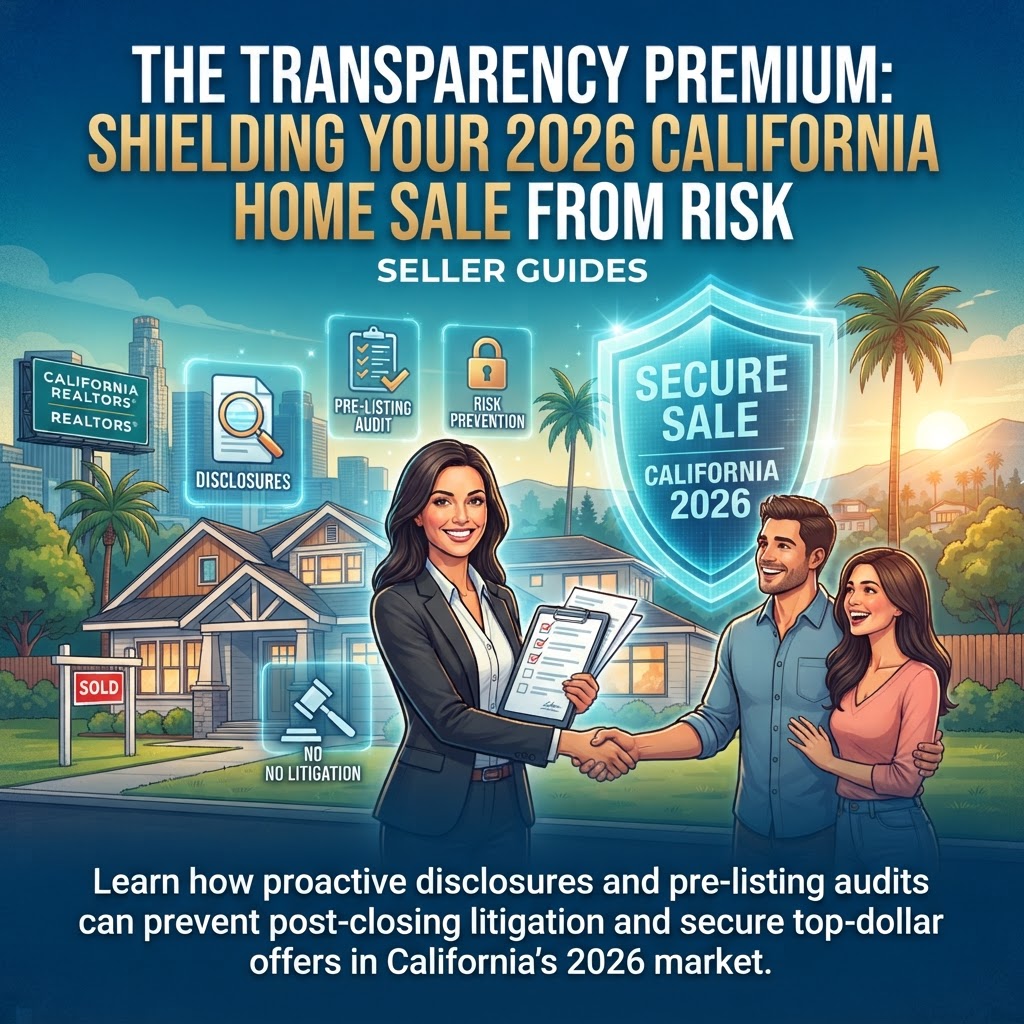
The Shift Toward Radical Transparency
In the California real estate landscape of July 2026, the traditional 'as-is' sale has evolved. With the average California home price hovering near record highs and buyer scrutiny at an all-time peak, the 'cleanliness' of a property's history is now as valuable as its square footage. Data from the California Association of Realtors (CAR) indicates that nearly 15% of transactions in the first half of 2026 faced significant delays or cancellations during the contingency period due to 'disclosure shocks.' To maximize value and minimize risk, sellers must shift from a defensive posture to one of radical transparency.
1. The Pre-Listing Inspection Power Play
Waiting for a buyer’s inspector to discover a fault is a tactical error in today's market. Savvy sellers are now commissioning their own 'Big Three' inspections—General Home, Wood Destroying Pests, and Roof—prior to listing the property. Providing these reports upfront in the digital disclosure package removes the 'fear of the unknown' that often leads to aggressive requests for credits or eleventh-hour price reductions. According to 2025 MLS regional data, listings that provided full independent inspections at the time of entry sold an average of 8 days faster and for 2.4% closer to the asking price than those that waited for the buyer's discovery phase.
2. Mastering the TDS and SPQ with Precision
The Transfer Disclosure Statement (TDS) and Seller Property Questionnaire (SPQ) remain the most critical documents in a California sale. In 2026, legal precedents in the state have reinforced that 'over-disclosure' is the only reliable protection against post-closing litigation. Sellers should document every repair made over the last five years, regardless of the scale. If a window leaked during the 2024 atmospheric rivers and was subsequently repaired, it must be disclosed. This level of honesty builds immediate buyer trust and prevents the most common cause of real estate mediation: the 'undisclosed prior defect' discovered by a buyer months after the close of escrow.
3. The CLUE Report: Your Insurance Resume
In the current market, the ability to insure a property is as vital as its curb appeal. Sellers should proactively provide a Comprehensive Loss Underwriting Exchange (CLUE) report. This five-year history of insurance claims on the property proves to the buyer’s insurance carrier that the home is a manageable risk. In regions where insurance availability remains tight, this transparency is often the deciding factor between a successful close and a failed contract. It allows the buyer to secure a preliminary insurance binder before they even submit an offer.
Practical Takeaways for 2026 Sellers
- Audit Your Permit History: Ensure all past renovations match the municipal records. Discrepancies between 'permitted' and 'actual' square footage can tank an appraisal in a high-interest environment.
- Disclose the 'Invisible': Mention neighborhood nuisances, such as planned municipal construction or recurring local noise, to satisfy the broad disclosure requirements of the SPQ.
- The 48-Hour Lead Time: Aim to have your digital disclosure link ready 48 hours before the first public showing. This encourages 'cleaner' offers with shorter or waived inspection contingencies.