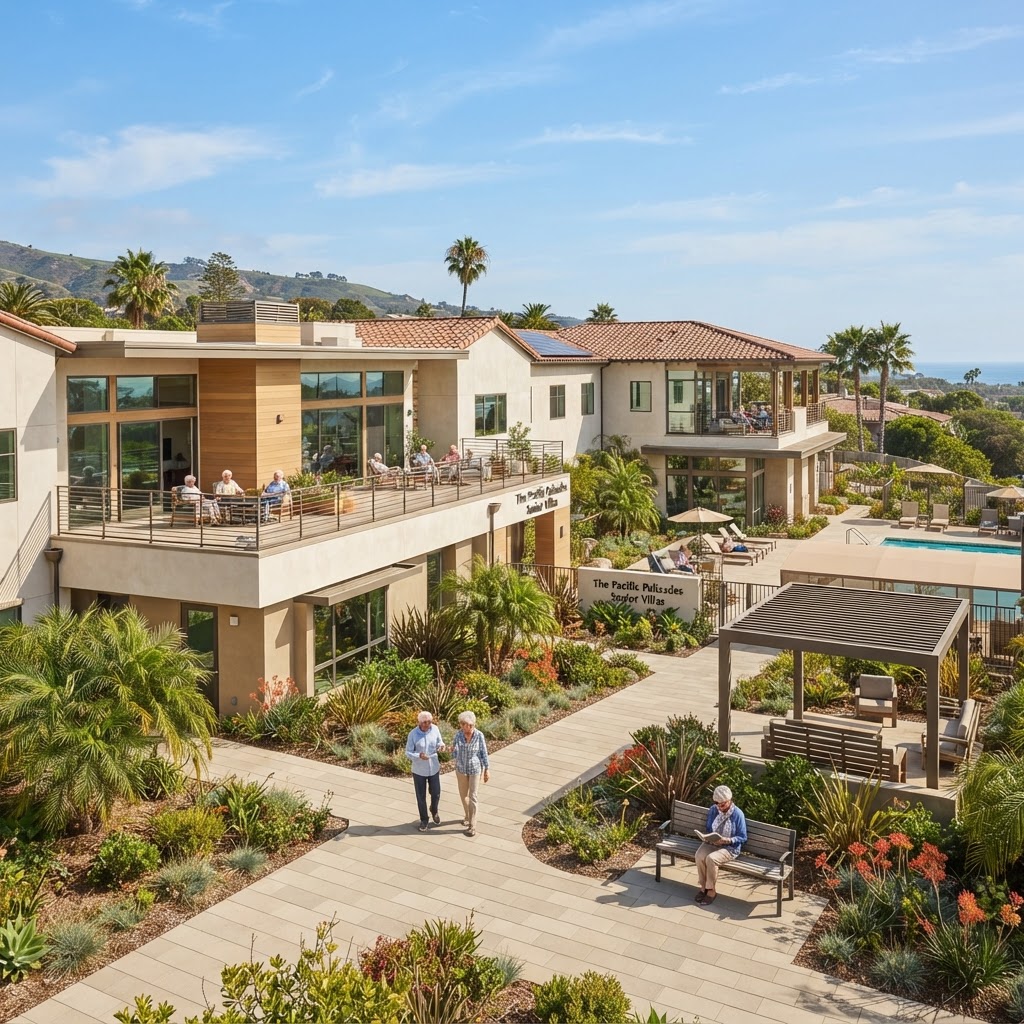
The Demographic Inevitability
As of July 2026, California’s demographic landscape has reached a critical inflection point. Data from the California Department of Finance indicates that residents aged 65 and older now constitute nearly 19.8% of the state’s population, a significant jump from 15% in the early 2020s. This shift is no longer a distant projection; it is a present-day real estate catalyst. While previous investment cycles focused on general multifamily density and 'missing middle' housing, the current market is witnessing the emergence of the 'Longevity Alpha'—a premium valuation for purpose-built senior infrastructure that integrates high-acuity medical care with wellness-focused residential design.
Market Dynamics: Supply-Demand Imbalance
According to recent reports from NIC Map Vision, senior housing occupancy across California’s major metros—including Los Angeles, San Diego, and the Bay Area—has climbed to 88.4% in Q2 2026, the highest level in nearly a decade. Despite the interest rate volatility of previous years, the demand for specialized memory care and assisted living facilities has outpaced new construction starts by a ratio of 3-to-1. This supply-demand imbalance is creating a fertile ground for institutional investors who are pivoting away from traditional office assets into 'Med-Surg' residential hybrids.
The Longevity Lab: A New Asset Sub-Class
The 2026 investment perspective has moved beyond basic 'retirement homes.' The new 'Longevity Alpha' assets are characterized by several key features:
- Biophilic and Preventive Design: Buildings designed to mitigate cognitive decline through circadian lighting and integrated green space.
- AI-Driven Health Monitoring: Real estate integrated with passive sensor technology that tracks resident gait, sleep patterns, and vitals, providing a 'data-as-a-service' revenue stream for operators.
- Hyper-Local Clinical Integration: Partnerships with major healthcare systems like Kaiser Permanente or Cedars-Sinai to provide on-site diagnostic suites.
Economic Trends and Cap Rate Compression
While the broader multifamily sector is seeing cap rates hover around 5.2% in coastal California, high-performing senior housing assets in submarkets like Orange County and the Tri-Valley are seeing compression into the 4.6% to 4.8% range. Investors are willing to pay a premium for the 'recession-proof' nature of acuity-based demand. Unlike discretionary rental markets, the need for specialized senior care is driven by biological necessity rather than economic sentiment, providing a stabilized cash flow that is highly attractive in the current 2026 fiscal environment.
Practical Takeaways for Investors
For those looking to capitalize on the longevity trend, the following strategies are currently yielding the highest risk-adjusted returns:
- Adaptive Reuse of Secondary Office: Mid-tier office buildings in close proximity to hospitals are prime candidates for conversion into assisted living facilities, benefiting from existing zoning and structural robustness.
- Targeting 'Aging-in-Place' Hubs: Markets like Santa Barbara, Roseville, and Palm Springs are seeing accelerated demand as the first wave of Boomers seeks high-amenity care without leaving their established communities.
- Operational Partnership: Real estate success in this sector is 80% operational. Investors should prioritize 'OpCo-PropCo' structures with established healthcare providers rather than attempting to manage these complex assets independently.
As we navigate the second half of 2026, the Longevity Alpha represents more than just a niche play; it is becoming a cornerstone of the California institutional core. Investors who recognize that healthcare and housing are now inextricably linked will be best positioned to capture the value of the state’s aging, yet affluent, population.