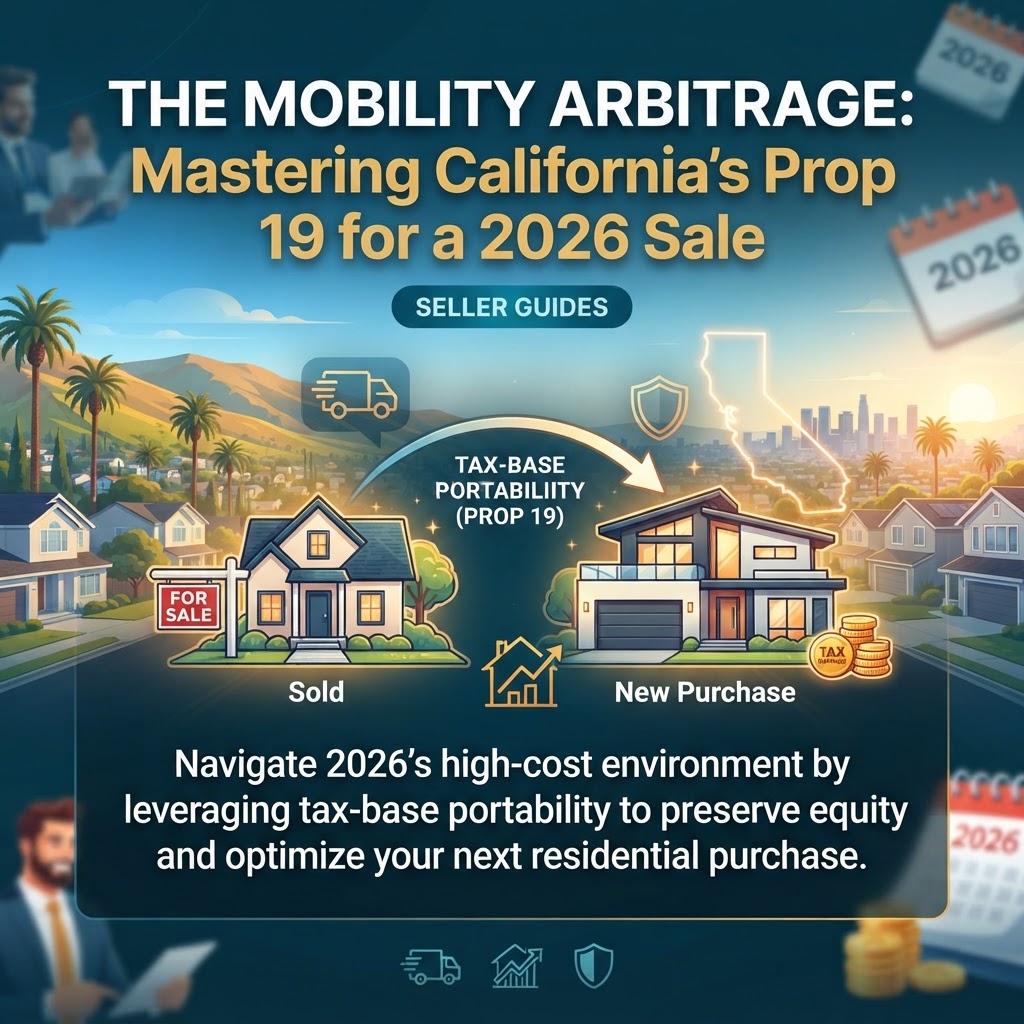
Unlocking the Financial Engine of the 2026 California Market
In the summer of 2026, California home sellers face a unique set of variables: stabilized but elevated interest rates and a persistent inventory squeeze. While previous strategies focused on physical renovations or disclosure management, the most significant lever for a successful sale today is The Mobility Arbitrage. This strategy centers on Proposition 19, allowing eligible sellers to transplant their current property tax basis to a new primary residence anywhere in the state.
The Prop 19 Advantage in a High-Rate Environment
According to the California Association of Realtors (C.A.R.) 2026 Mid-Year Forecast, nearly 35% of active sellers are aged 55 or older. For these homeowners, the primary barrier to selling isn't finding a buyer—it's the fear of a tax spike in their next home. Proposition 19 effectively decouples the tax basis from the physical asset, allowing for a seamless transition that preserves monthly cash flow.
Key Mechanics of Tax-Base Portability
- Eligibility: Sellers must be 55+, severely disabled, or victims of wildfires/natural disasters.
- Value Flexibility: Sellers can purchase a more expensive replacement home, though the tax base is adjusted upward by the difference in market value.
- Frequency: Eligible sellers can utilize this benefit up to three times in their lifetime.
Data-Backed Market Strategies
Recent 2026 data from the National Association of Realtors (NAR) indicates that homes marketed with clear 'tax portability' potential see a 12% higher engagement rate from seasoned buyers. By identifying that your sale is part of a Prop 19 exchange, you signal to the market that you are a motivated, financially savvy seller ready to close.
Maximizing Value Through Strategic Timing
With the median home price in California hovering around $890,000 as of July 2026, the delta between a legacy tax basis (often based on 1990s or early 2000s valuations) and current rates can exceed $10,000 annually. This 'hidden equity' is the strongest motivator for the 2026 seller to move now rather than waiting for a rate drop that may not materialize.
Practical Takeaways for the 2026 Seller
To maximize your exit under current conditions, follow these three tactical steps:
- Consult a Tax Professional Early: Before listing, verify your eligibility for the tax-base transfer with a professional familiar with the 2026 revisions to California tax code.
- Execute a 'Simultaneous Close' Strategy: Work with your agent to coordinate the sale of your current home and the purchase of your replacement within a 12-month window to ensure the Board of Equalization (BOE) processes the transfer smoothly.
- Highlight the Replacement Value: In your marketing materials, emphasize the benefit of the Prop 19 transfer for potential buyers who might also be looking to downsize or relocate within California, creating a chain of mobility.
Conclusion
Selling in California in 2026 is no longer just about the property; it is about the portability of the financial benefits associated with that property. By leveraging the Mobility Arbitrage, sellers can protect their long-term wealth while facilitating a move that would otherwise be cost-prohibitive in today’s economic climate.