The End of the Retail Fortress
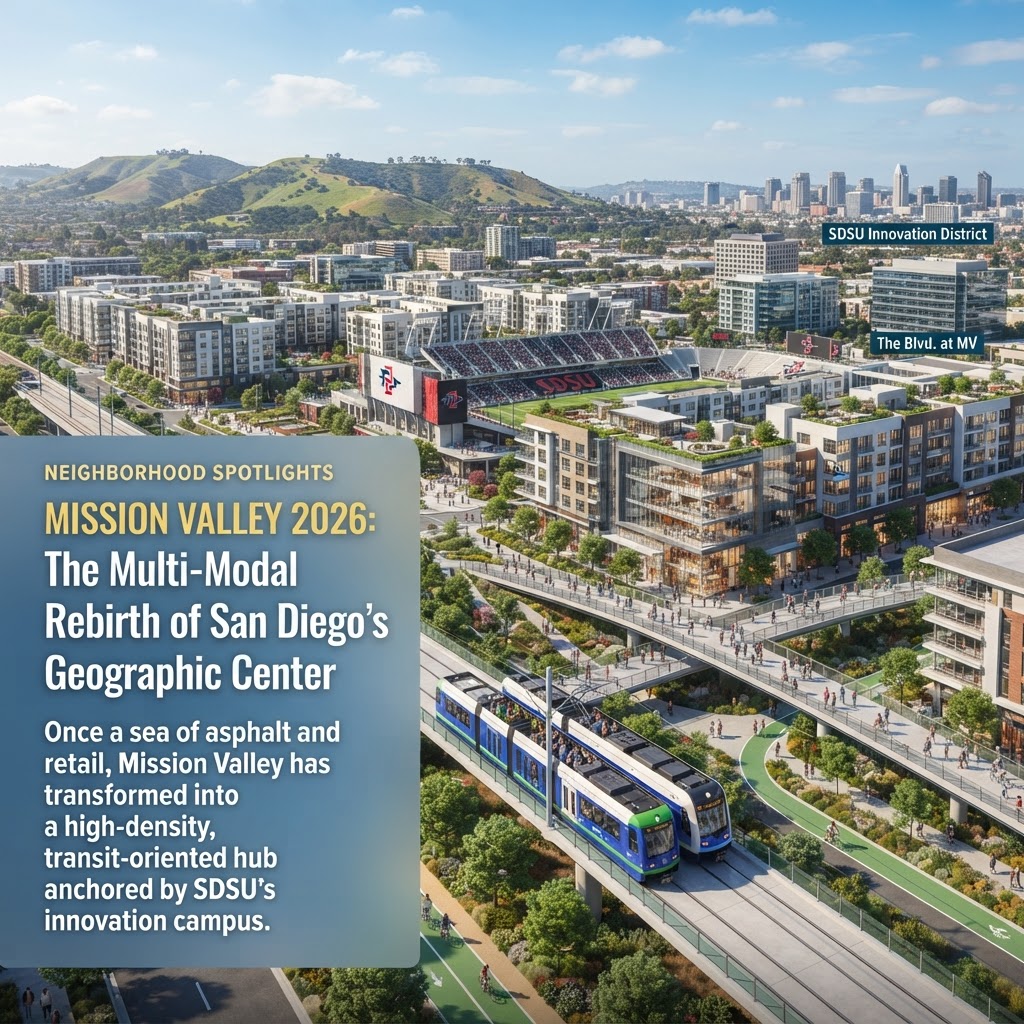
For decades, Mission Valley was defined by its sprawling shopping malls and vast parking lots—a suburban bypass between San Diego’s coastal enclaves and its inland suburbs. However, by mid-2026, the neighborhood has completed a radical metamorphosis. The catalyst for this change was the 2024-2025 completion of the primary phases of the SDSU Mission Valley campus and the adjacent 34-acre River Park. Today, the valley serves as a model for 'vertical infill,' shifting from a retail-centric corridor to a high-density residential and innovation hub.
Data-Driven Growth: The New Urban Density
The transformation is reflected in the market data. According to 2026 MLS reports, the median price for condominiums in Mission Valley has risen by 14% year-over-year, outpacing the broader San Diego County average of 6.2%. This surge is driven by a 'flight to walkability' among younger professionals who are priced out of coastal markets like La Jolla but seek the same level of urban amenity.
Key metrics highlighting the shift include:
- Inventory Turnover: Average days on market (DOM) for properties within 0.5 miles of the Green Line Trolley stations have dropped to just 11 days.
- Commercial Reclassification: Per CBRE’s Q2 2026 report, over 1.2 million square feet of former retail space in the valley has been rezoned or redeveloped into mixed-use life science and residential units since 2022.
- Rental Premium: New luxury builds in the 'Civita' master-planned community are commanding a 22% rental premium over older stock, stabilized by a vacancy rate of just 3.1%.
The SDSU Innovation Catalyst
The centerpiece of this renaissance is the San Diego State University (SDSU) Mission Valley campus. Moving beyond its role as a stadium site, the campus now houses over 150,000 square feet of operational 'Discovery District' space. This has attracted tech incubators and satellite offices for San Diego’s robust biotech sector, providing a secondary hub to the saturated Torrey Pines and University City corridors. For investors, this represents a shift in tenant demographics from transient students to long-term professional staff and researchers.
Connectivity and the Biophilic Pivot
Perhaps the most significant amenity addition is the San Diego River Park. By July 2026, the park system provides a continuous hike-and-bike trail connecting the valley directly to Ocean Beach. This biophilic integration has neutralized the historical 'concrete jungle' reputation of the area. Coupled with the San Diego Trolley’s Green Line, which offers a 15-minute car-free commute to Downtown or San Diego State’s main campus, Mission Valley has become the city’s premier multi-modal transit hub.
Strategic Takeaways for Stakeholders
For Buyers and Residents
Focus on properties within the 160-acre Civita development or the newer 'West End' projects. The integration of high-end grocery (Whole Foods/Amazon Fresh) and localized dining has reduced the need for car dependency, which will protect property values as San Diego moves toward stricter climate action mandates in 2030.
For Investors
The opportunity lies in mid-century 'value-add' condo conversions. As the new SDSU campus reaches full capacity by 2027, the demand for workforce housing will intensify. Properties along the Friars Road corridor that offer renovated interiors and proximity to transit are seeing the highest internal rates of return (IRR) in the current high-interest environment.
For Sellers
Market your property’s 'Transit Score' and 'Green Space Access.' In 2026, these are the primary drivers for buyers moving from the suburbs. Highlighting proximity to the newly expanded River Trail can justify a premium over inland comparables that lack recreational connectivity.