The Transition from Rental to Ownership
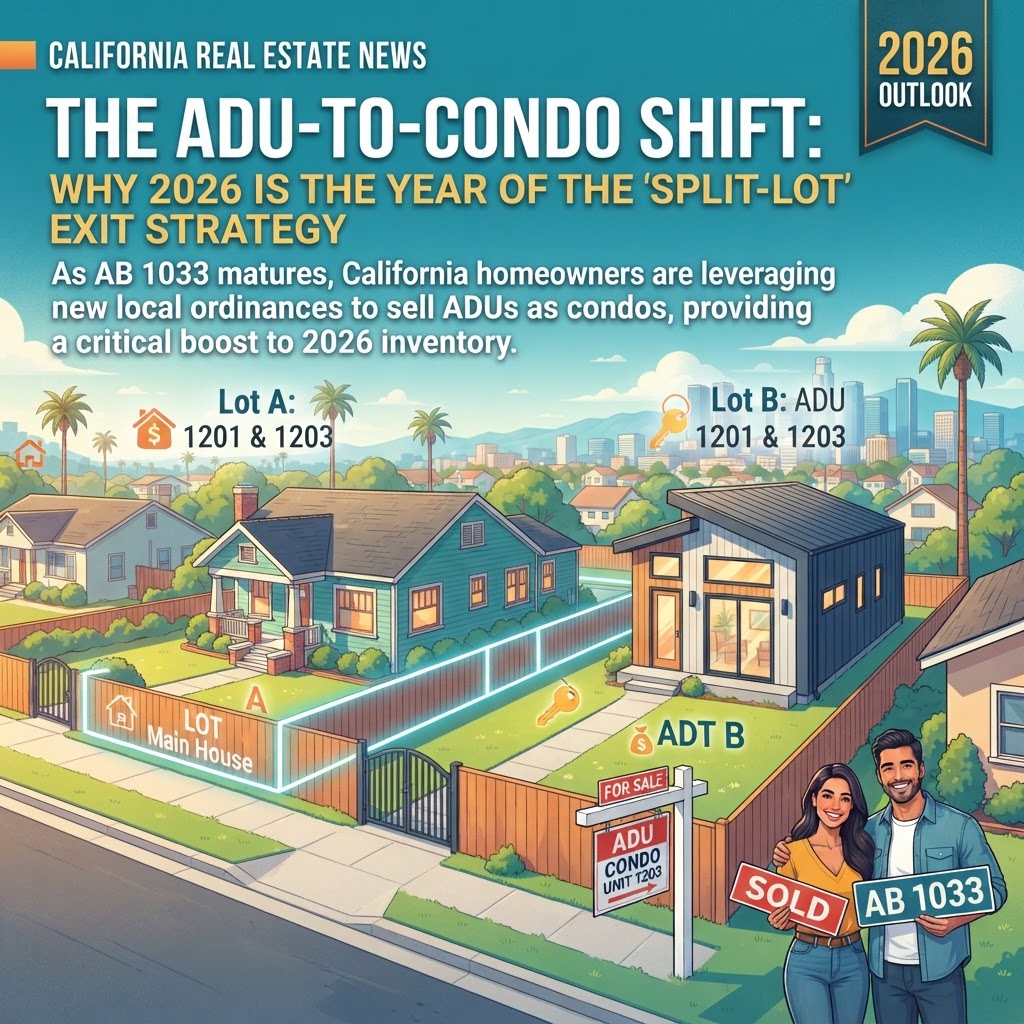
For years, California’s Accessory Dwelling Unit (ADU) boom was defined by rental income. However, as of July 6, 2026, the market has pivoted toward the "split-lot" exit strategy. With more municipalities adopting local ordinances under the framework of Assembly Bill 1033, homeowners are no longer just landlords; they are becoming mini-developers, selling their backyard cottages as fee-simple condos.
The 2026 Inventory Injection
According to recent data from the California Association of Realtors (CAR), the sale of ADUs as individual condominiums has accounted for 6.5% of all entry-level inventory in the second quarter of 2026. In high-density hubs like San Diego and San Jose, this figure jumps to 12%. This shift is providing a vital release valve for a market still constrained by high interest rates and low turnover in traditional single-family homes.
Data-Driven Market Movements
The California Department of Housing and Community Development (HCD) reports a 22% year-over-year increase in ADU condo conversions. The median price for these "starter condos" currently sits at $545,000—nearly 35% lower than the median price of a detached single-family home in the same ZIP code. For first-time buyers, these units represent the only viable path to ownership in tier-one coastal markets.
Investor and Homeowner Takeaways
- For Sellers: Converting an ADU into a condo requires the formation of a Homeowners Association (HOA), which involves legal fees ranging from $10,000 to $25,000. However, the capital gain from a sale often exceeds five years of projected rental income.
- For Buyers: Financing is becoming easier as Fannie Mae and Freddie Mac updated their 2026 guidelines to better evaluate "backyard condos" in high-value California markets.
- For Investors: Focus on "unbundled" lots where the primary residence can be sold separately from the ADU, maximizing the total yield of the parcel.
Looking Ahead
As the "Split-Lot" model proves successful in Southern California, industry experts anticipate a statewide push to mandate local compliance with ADU-to-condo laws by 2027. For now, the 2026 market belongs to the creative homeowner willing to navigate the complexities of subdivision for a significant equity payout.