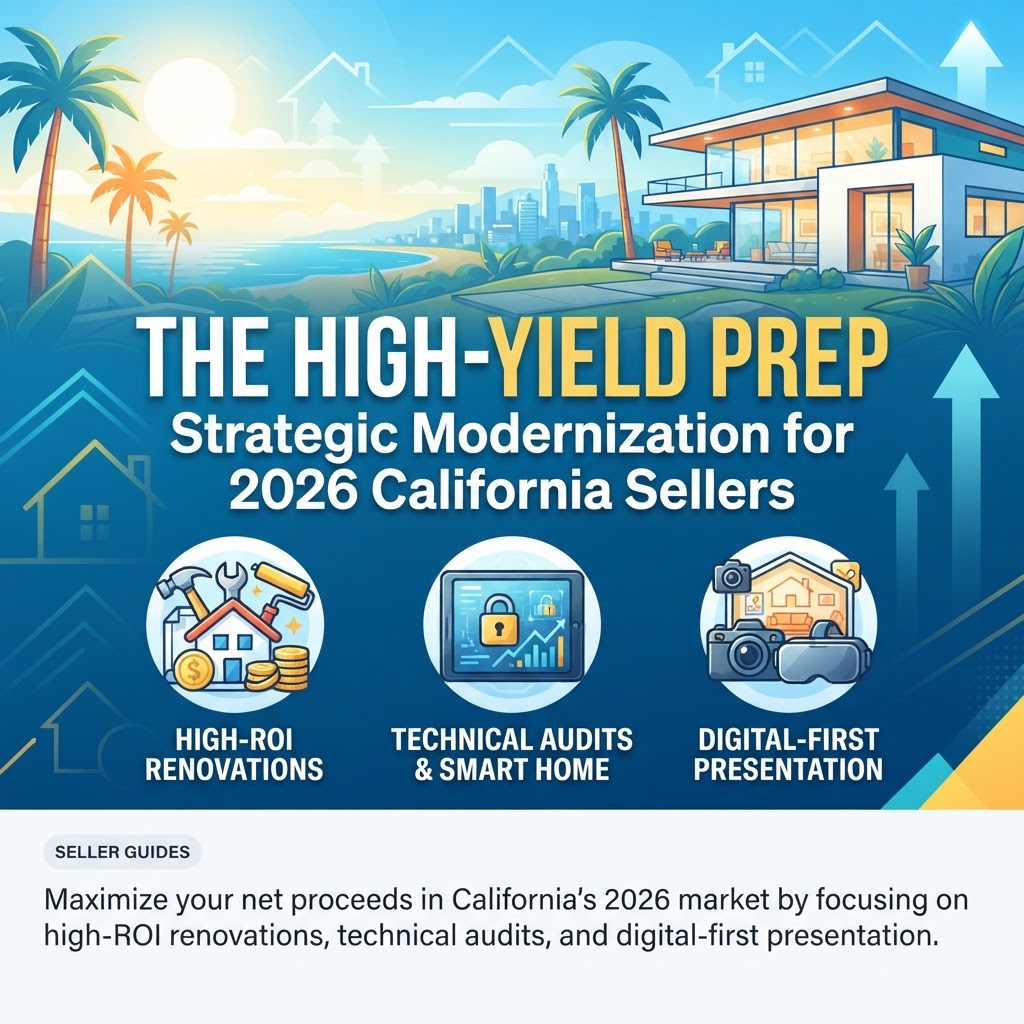
The High-Yield Prep: Strategic Modernization for 2026 California Sellers
As of July 2026, the California real estate market has reached a point of 'sophisticated stabilization.' While the hyper-volatility of the early 2020s has receded, the barrier to entry for buyers remains high due to sustained interest rates and elevated pricing. In this environment, the 'Move-In Ready' premium has never been higher. According to recent data from the California Association of Realtors (CAR), homes requiring no immediate repairs are currently selling 22% faster and for an average of 14% more than their 'fixer-upper' counterparts.
The Shift to the Technical Audit
In 2026, preparation goes beyond fresh paint. Savvy sellers are now commissioning 'Pre-Listing Technical Audits.' Unlike a standard home inspection, these audits focus on the systems most scrutinized by modern CA buyers: electrical capacity (crucial for EV charging and heat pumps), roof lifespan, and seismic retrofitting status. By providing a 'certified clean' report from the outset, sellers reduce the likelihood of mid-escrow price renegotiations, which the MLS reports affected nearly 30% of failed transactions in the first half of the year.
High-ROI Renovations: Where to Spend
Data from the 2026 Remodeling Cost vs. Value Report suggests that California sellers should prioritize 'invisible' and 'functional' luxury over purely aesthetic upgrades. The highest ROI projects in the current West Coast market include:
- HVAC Electrification: Transitioning to high-efficiency heat pumps can yield an ROI of 105% when factoring in current state and federal tax credits under the Inflation Reduction Act.
- Smart-Integrated Kitchen Refresh: Replacing dated appliances with energy-star rated, smart-connected units and refinishing cabinets yields an estimated 88% return.
- ADU Readiness: Even if you don't build an Accessory Dwelling Unit, providing architectural plans and 'pre-plumbed' utility connections for a potential ADU adds significant perceived value for multi-generational buyers.
The 'Digital Curb Appeal' Mandate
By July 2026, the first showing almost always happens on a mobile device. High-definition 3D tours (such as Matterport) and 4K drone videography are no longer optional extras; they are baseline requirements. Statistics from Zillow and Redfin indicate that listings with interactive floor plans receive 60% more views than those with static photography alone. For sellers of properties with significant outdoor space, emphasize 'drought-tolerant luxury'—landscaping that utilizes native flora and smart irrigation, which appeals to the eco-conscious California demographic.
Practical Takeaways for Sellers
- Secure the Permit History: Before listing, ensure all previous work is permitted. In 2026, title companies and buyers are increasingly aggressive about unpermitted square footage, often excluding it from appraised value.
- Leverage Energy Credits: Highlight any solar, battery storage (e.g., Tesla Powerwall), or insulation upgrades. These 'efficiency assets' are now major selling points as utility rates in California continue to outpace the national average.
- Stage for the 'Third Space': With hybrid work firmly established, stage a dedicated, sound-insulated home office rather than a fourth bedroom. Buyers are currently valuing high-quality workspace over guest accommodations.
- Address the 'Final 5%': Small details like matching hardware, updated LED lighting temperatures (3000K), and smart thermostats signal a well-maintained home, reducing buyer friction.
Success in the 2026 California market requires a shift from 'listing' a property to 'productizing' it. By addressing technical hurdles upfront and investing in high-yield modernization, sellers can protect their equity and ensure a swift, high-value exit.


