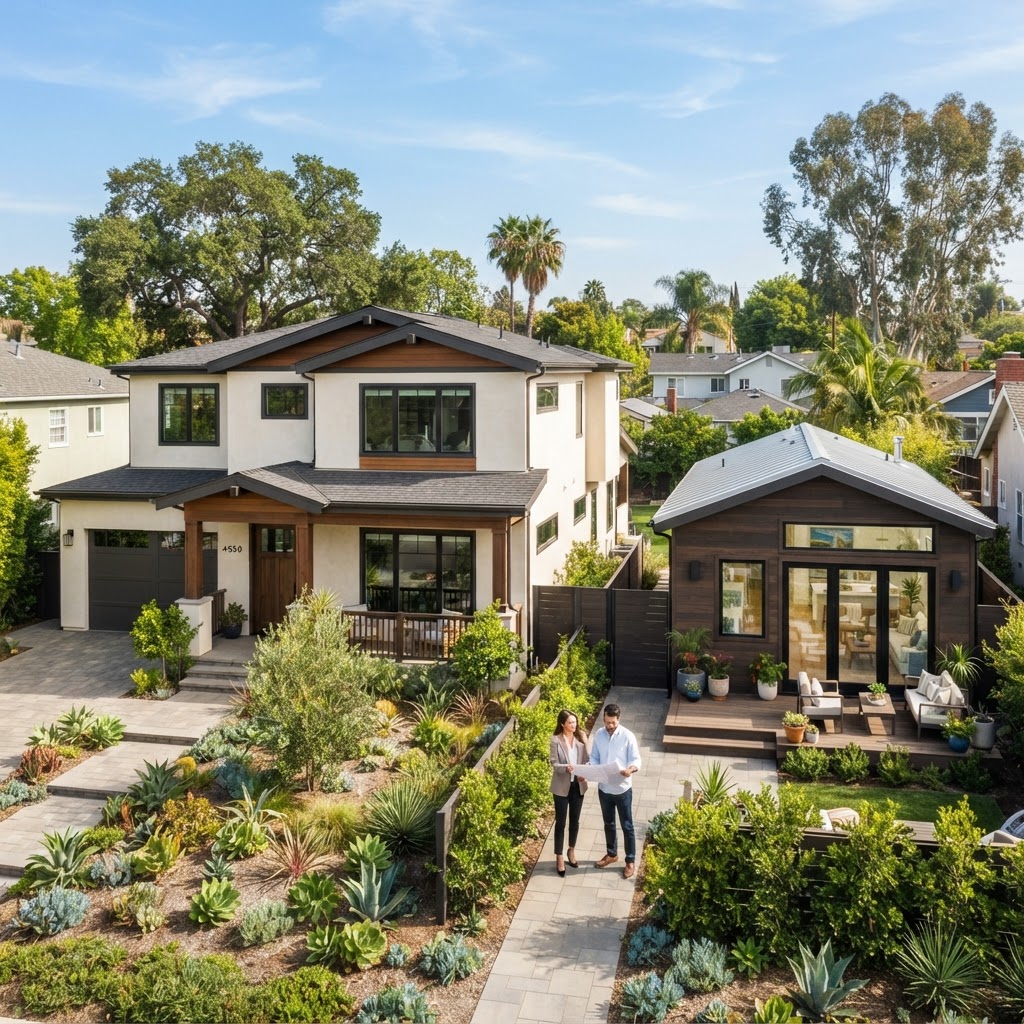
Beyond the Mortgage: The Rise of the Cash-Flow Purchase
As of mid-2026, California’s median home price remains a formidable barrier for many, hovering near $865,000 according to recent California Association of Realtors (CAR) data. However, the most successful buyers in the current market are no longer looking at homes as single-family liabilities. Instead, they are leveraging the state’s aggressive Accessory Dwelling Unit (ADU) legislation—specifically the refinements made in the 2024-2025 legislative sessions—to transform residential purchases into income-generating assets.
The ADU-Ready Property Search
In the 2026 market, a 'move-in ready' home is often less valuable than an 'ADU-ready' one. When evaluating California listings, look beyond the primary structure for specific indicators of development ease:
- Power and Panel Capacity: Modern California building codes (Title 24) now require specific solar offsets. Search for homes with 200-amp service or properties where the main panel is situated to easily allow a sub-panel for a secondary unit.
- Setback Compliance: While state law has capped rear and side setbacks at 4 feet for most ADUs, properties with 'clear-path' access (at least 10 feet of side clearance) significantly reduce construction costs by allowing heavy machinery access.
- JADU Potential: Look for footprints with attached garages or oversized master suites. Junior ADUs (under 500 sq. ft.) are significantly cheaper to permit in jurisdictions like Los Angeles and San Diego because they often utilize existing HVAC and plumbing envelopes.
Financing the Future: Using Pro Forma Rents
A critical shift in 2026 is the widespread adoption of FHA and conventional guidelines that allow buyers to use 75% of the projected rental income from a yet-to-be-built ADU to qualify for a higher loan amount. This 'Home + ADU' financing model is a game-changer for middle-income buyers in high-cost areas like the Bay Area or Orange County.
Data Point: The Affordability Bridge
According to 2025 HCD reports, California properties with a permitted ADU command a 15% to 22% valuation premium over comparable single-unit homes. More importantly, an ADU generating $2,200 in monthly rent can effectively offset nearly $300,000 of a mortgage at current 6% interest rates.
Navigating SB 9 and SB 10 in 2026
While ADUs are the most common route, savvy buyers are also eyeing SB 9 (The California Housing Opportunity and More Efficiency Act) lot splits. In 2026, the administrative hurdles for urban lot splits have been streamlined by several key court rulings, making it easier to buy a large lot, split it, and sell the vacant portion to recoup a significant portion of the initial down payment.
Practical Takeaways for the 2026 Buyer
- Check the Sewer Lateral: Before closing, conduct a scope of the sewer line. Many older California bungalows require a full line replacement ($10k-$15k) before the city will allow an ADU tie-in.
- Consult a 'Feasibility Architect': Spend $500 during your contingency period for a feasibility report. This confirms if the local utility (like PG&E or SCE) has sufficient transformer capacity for an additional unit, a common 'hidden' bottleneck in 2026.
- Prioritize Pre-Approved Plans: Many CA cities (e.g., Sacramento, San Jose) now offer 'pre-approved' ADU plans. Buying a home compatible with these plans can save 6 months in the permitting queue and $5,000 in architectural fees.
By shifting the focus from square footage to 'unit density potential,' California buyers can navigate high prices not by stretching their budgets, but by expanding their property’s utility.


