The Industrial Transformation is Complete
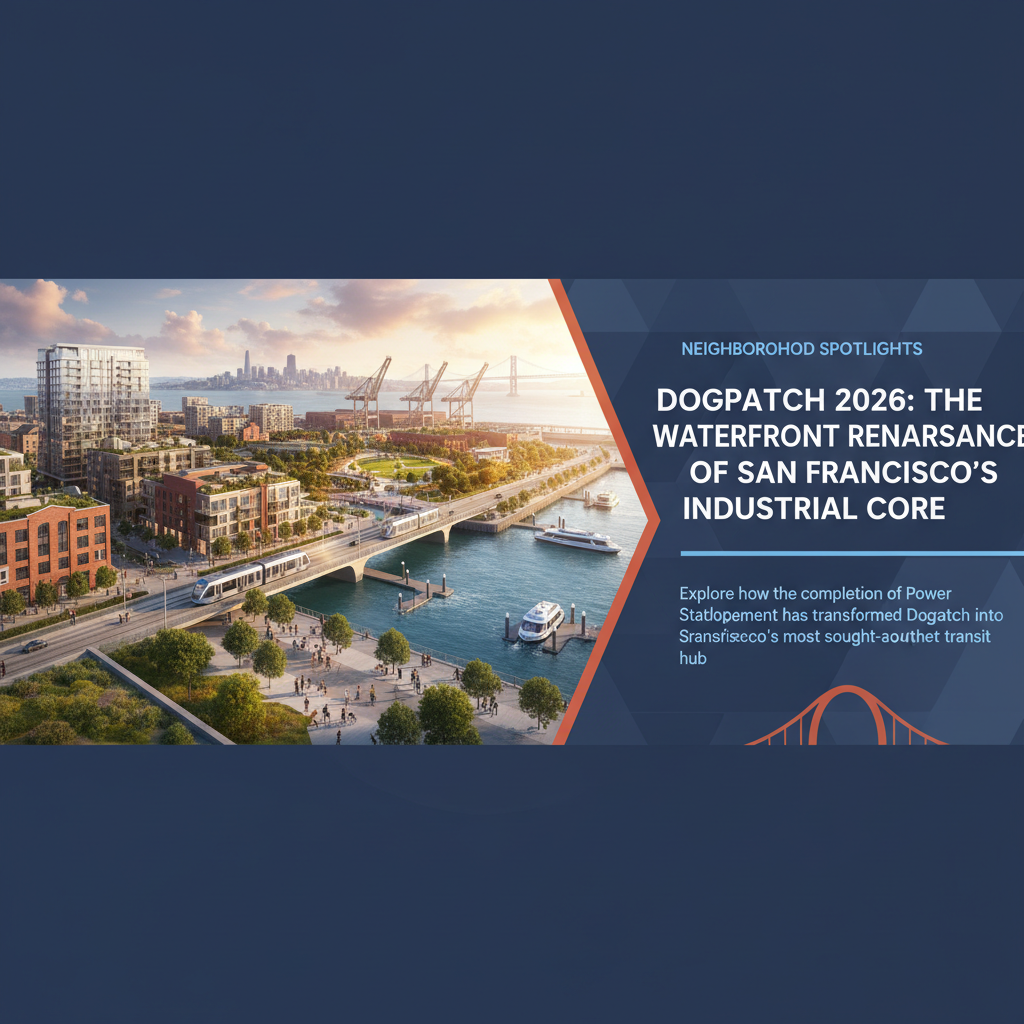
As of July 2026, the Dogpatch neighborhood has officially shed its reputation as San Francisco's 'hidden' industrial corner, emerging instead as a global blueprint for adaptive reuse and waterfront density. The catalyst for this shift has been the phased completion of the Power Station redevelopment, a project that has successfully integrated the historic 300-foot-tall Station A stack into a thriving residential and commercial ecosystem. According to the San Francisco Planning Department, the district now supports over 3,000 new housing units, with nearly 40% designated as affordable or middle-income housing, balancing the neighborhood's socioeconomic fabric.
The Transit and Biotech Nexus
Strategic positioning is the primary driver of Dogpatch's 2026 valuation. The neighborhood sits at the intersection of the UCSF Mission Bay life sciences cluster and the newly electrified Caltrain corridor. Data from the San Francisco County Transportation Authority indicates a 22% increase in regional ridership at the 22nd Street Station since full electrification was realized in late 2024. This connectivity allows residents to reach Palo Alto in under 40 minutes, making the neighborhood a primary choice for 'hybrid commuters' who split time between SF startups and Silicon Valley campuses. Furthermore, the T-Third Street light rail provides a direct, zero-emission link to the Central Subway, connecting Dogpatch to Union Square and Chinatown in less than 15 minutes.
Community Amenities and Education
Unlike the high-rise density of neighboring SoMa, Dogpatch maintains a human-scale feel. The Crane Cove Park expansion, completed in early 2025, now offers seven acres of continuous waterfront access, including a dedicated human-powered watercraft launch. Educational needs are met by the nearby UCSF ecosystem and the expansion of specialized vocational training centers that occupy the lower floors of new mixed-use builds. The neighborhood's amenity base has shifted from gritty warehouses to high-concept retail; the 'Minnesota Street Project' remains the cultural anchor, housing over 30 art galleries and studios that ensure the area retains its creative soul despite rising land values.
Market Data and Investment Outlook
Recent MLS data for Q2 2026 shows the median sales price for a two-bedroom condo in Dogpatch at $1.38 million, representing a 6.5% year-over-year increase, significantly outpacing the citywide average of 2.1%. For investors, the rental market is particularly robust. Proximity to UCSF—which now employs over 28,000 personnel—creates a permanent floor for rental demand. Professional property managers in the area report that 'Class A' units are currently commanding rents 12% higher than similar units in the Inner Mission, largely due to the 'new construction' premium and superior transit access.
Practical Takeaways
- For Buyers: Focus on the 'North Dogpatch' corridor near 18th Street. These properties benefit from the immediate proximity to Mission Bay’s retail expansion while maintaining the historic character of the district.
- For Investors: Look for multi-family conversions of older industrial warehouses. The city’s 2025 zoning updates have streamlined the process for converting underutilized commercial space into live-work lofts.
- For Sellers: Highlight 'commute versatility.' In a 2026 market, the ability to access the Peninsula via Caltrain and Downtown via the T-Third is the neighborhood’s strongest selling point.