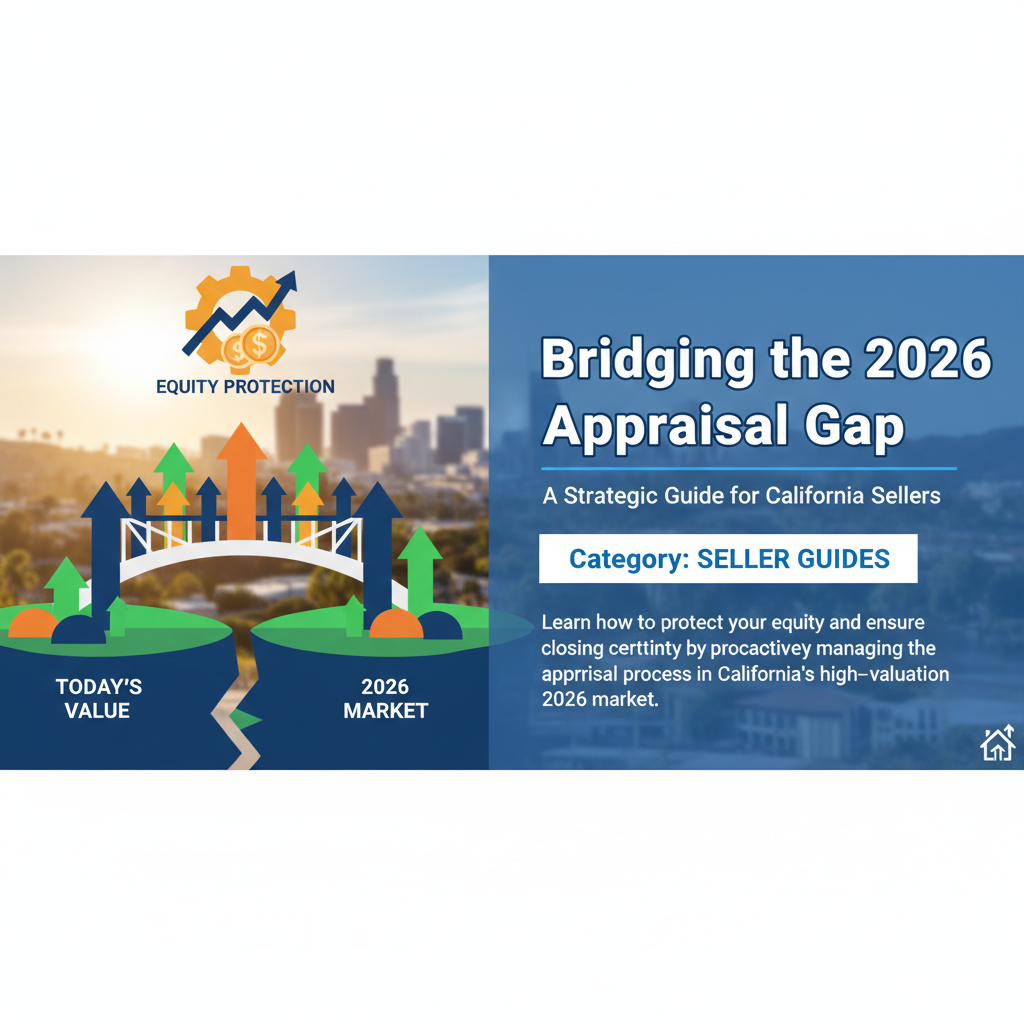
Navigating the Valuation Bottleneck in a High-Equity Market
As we enter the second half of 2026, the California real estate market continues to be defined by a persistent tension: record-high median prices and cautious institutional lending. While buyer demand remains robust across coastal hubs and inland corridors alike, the 2026 seller faces a unique hurdle—the appraisal gap. With the California Association of Realtors (C.A.R.) reporting a projected 5.2% year-over-year increase in median home prices, the challenge isn't just finding a buyer; it is ensuring the bank agrees with the price tag.
The 2026 Appraisal Environment
Data from recent MLS filings suggests that approximately 22% of residential transactions in Southern California and the Bay Area encountered 'valuation friction' in the first half of the year. This occurs when a buyer’s offer exceeds the appraiser’s determined fair market value, potentially jeopardizing the loan-to-value (LTV) ratios required for financing. For sellers, this means that a 'record-breaking' offer is only as strong as the data supporting it.
Phase 1: Proactive Value Documentation
To maximize your home’s value and minimize the risk of a low appraisal, you must provide the appraiser with a comprehensive 'Value Narrative.' In 2026, standard comps may not capture the full picture of localized appreciation.
- The Digital Infrastructure Audit: In a market where 40% of the workforce remains in hybrid or remote roles, high-speed fiber connectivity and dedicated, sound-dampened office spaces carry a measurable premium. Document your home's networking capabilities and any acoustic upgrades.
- The Green Addendum: California’s Title 24 requirements have evolved. If your property features Level 2 EV charging, high-capacity battery storage (such as a Powerwall), or high-efficiency heat pumps, use the AI-Ready Green Addendum to ensure these systems are valued as capital improvements rather than mere appliances.
- Detailed Capital Improvement List: Don't assume the appraiser will notice the new HVAC or the $50,000 foundation reinforcement. Provide an itemized list of all permitted upgrades from the last five years, including permit numbers.
Phase 2: Strategic Contractual Safeguards
When reviewing offers, the highest price is not always the best price. In 2026, the 'certainty of close' is the primary metric for successful sellers. Analyze the following components of your incoming offers:
- Appraisal Gap Coverage: Prioritize offers that include a specific 'Appraisal Gap Guarantee' clause, where the buyer commits to covering a set dollar amount (e.g., $10,000 to $50,000) out of pocket if the bank valuation falls short.
- Proof of Liquidity: Require 'Proof of Funds' that specifically accounts for both the down payment and the potential appraisal gap coverage. In the 2026 environment, liquid reserves are more valuable than a marginally higher purchase price.
- The 'Subject to Appraisal' Timeline: Shorten the appraisal contingency period to 10–14 days. This forces the lender to move quickly and gives you the opportunity to pivot back to the market if the valuation is insurmountable.
Phase 3: Managing the Appraisal Visit
The appraisal is a high-stakes interview for your property. While you should not hover, providing an 'Appraisal Packet' is standard best practice for 2026. This packet should include:
- A list of the most recent, relevant 'sold' comps—specifically focusing on properties within a 1-mile radius that sold in the last 90 days.
- A summary of 'pending' sales that your agent knows are at or above your price point (this provides the appraiser with real-time market sentiment).
- A map of neighborhood amenities that may not be obvious, such as proximity to new transit hubs or private school corridors.
Practical Takeaways for the 2026 Seller
- Hire an Agent with a Valuation Specialist Designation: Ensure your listing agent is experienced in challenging low appraisals through the Reconsideration of Value (ROV) process.
- Pre-Appraisal Strategy: If you are selling a unique or high-value luxury property, consider ordering a 'pre-listing appraisal' to set a realistic baseline and identify potential red flags before you go under contract.
- Focus on Functionality: In 2026, buyers and appraisers are prioritizing functional square footage over purely aesthetic upgrades. Ensure all square footage—especially ADUs—is legally permitted and correctly categorized.