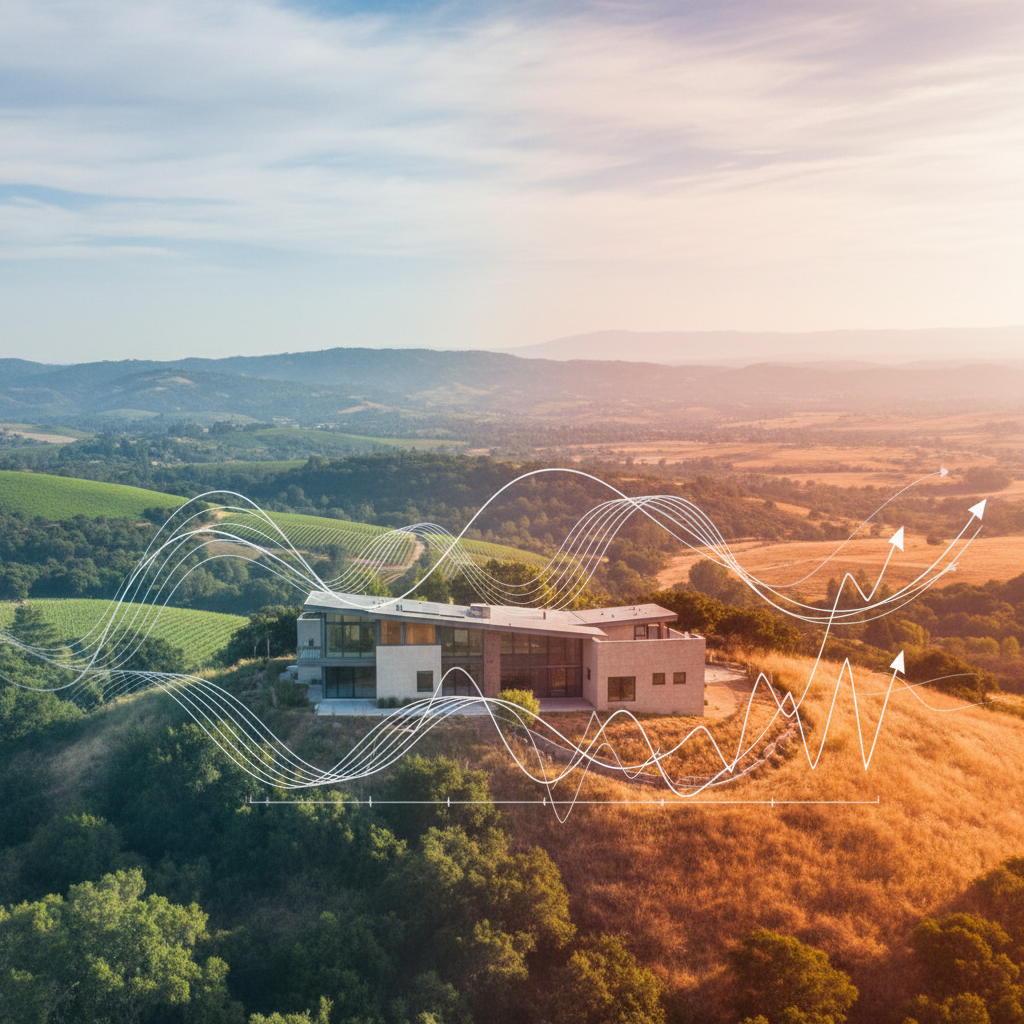
The Thermal Arbitrage: California’s New Climate-Driven Real Estate Value
As we enter the third quarter of 2026, a fundamental shift has occurred in the California residential and commercial landscape. While previous years focused on proximity to job hubs or transit corridors, the primary value driver this summer is thermal resilience. With 2025 recording the highest average summer temperatures in state history, the real estate market is now pricing in a 'Micro-Climate Premium' for properties situated in naturally cooler zones.
The Data Behind the Pivot: Utility Costs and Livability
According to data from the 2026 California Energy Commission (CEC) report, electricity rates for residential cooling have surged 18% year-over-year. This has created a bifurcated market. Analysis from the California Association of Realtors (CAR) shows that homes in 'Cooling Degree Day' (CDD) favorable zones—specifically those with elevation gains above 1,200 feet or within seven miles of the coast—are commanding a 6.4% price premium over comparable inland properties.
In the Central Valley and Inland Empire, where triple-digit streaks now often exceed 30 consecutive days, the 'Heat Discount' is becoming a standard appraisal adjustment. Buyers are no longer just looking at square footage; they are looking at 'thermal load' and the efficiency of the building envelope.
The Rise of the 'Temperate Corridor'
Investment capital is migrating toward what analysts call the 'Temperate Corridors.' These are regions like the Santa Cruz Mountains, the coastal foothills of San Luis Obispo, and the higher-elevation pockets of the Sierra Nevada foothills. These areas offer a natural hedge against the rising costs of mechanical cooling and the physiological stress of extreme heat.
Commercial real estate is following suit. CBRE’s mid-2026 outlook indicates that Class A office and retail spaces with advanced passive cooling architecture are seeing 12% higher retention rates. Tenants are increasingly unwilling to occupy 'glass box' structures that lack modern thermal shielding, as HVAC overhead eats into operational margins.
Investment Strategy: Identifying Micro-Climate Alpha
For the savvy investor, the opportunity lies in identifying undervalued properties in 'transition zones'—areas currently perceived as inland but benefiting from specific topographical features like coastal gaps or wind funnels. These 'Breeze Zones' offer the livability of the coast at a fraction of the entry price.
- Analyze Topography: Use LIDAR and thermal mapping to identify properties that benefit from natural nocturnal cooling.
- Energy Retrofit ROI: Properties with high thermal mass (stone, concrete, or rammed earth) are seeing higher appreciation than traditional stick-frame builds in heat-stressed zip codes.
- Water Security: In 2026, micro-climates with stable localized groundwater or superior desalination infrastructure are seeing the most aggressive institutional interest.
Practical Takeaways for 2026 Investors
To capitalize on the thermal arbitrage, market participants should consider the following actions:
- Audit Thermal Efficiency: Before purchasing, perform a professional thermal imaging audit to identify heat leaks. In the 2026 market, a poorly insulated home is a liability, regardless of its aesthetic appeal.
- Target High-Altitude Infill: Look for opportunities in established high-altitude communities that were previously overlooked. As temperatures rise, these 'Cooling Islands' will see sustained demand.
- Leverage HVAC Data: Request 24 months of utility data. If cooling costs exceed 15% of the total monthly carry, the asset is likely overvalued at current market rates.
The California market of 2026 is no longer just about location; it is about the climate within that location. As the 'Thermal Arbitrage' continues to play out, those who prioritize environmental comfort and energy efficiency will find themselves on the right side of the value curve.