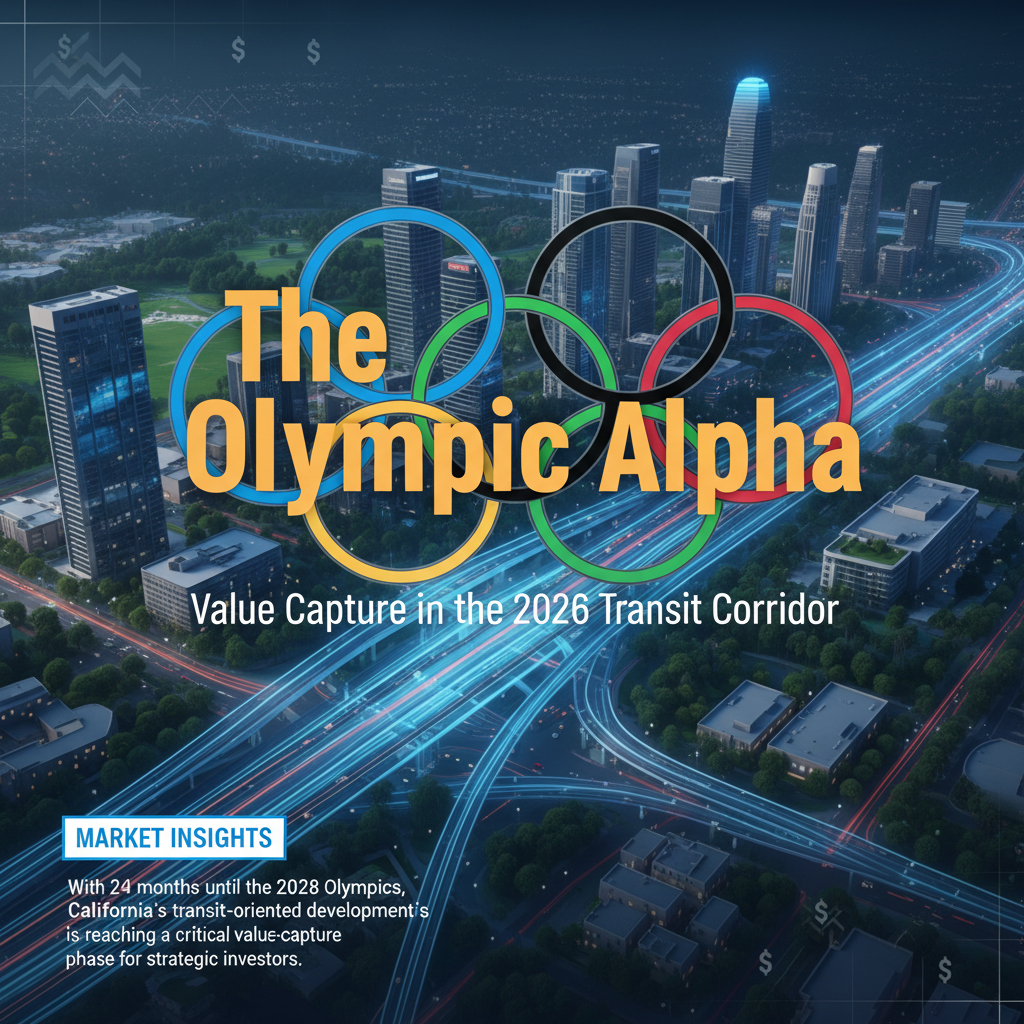
The Infrastructure Catalyst of 2026
As of June 2026, the California real estate landscape has shifted from the rate-volatility concerns of previous years toward a focus on long-term infrastructure-led appreciation. The most significant driver in the current market is the "Olympic Alpha"—a specific value premium associated with the completion of major transit nodes ahead of the 2028 Summer Games. Unlike the broad market trends of 2025, the 2026 trend is surgical, favoring assets within a half-mile radius of the newly expanded Metro D Line (Purple Line) and the Brightline West terminals.
Data-Backed Transit Premiums
Recent data from the UCLA Anderson Forecast and CBRE’s 2026 Mid-Year Outlook indicates that residential and commercial properties located within Transit Priority Areas (TPAs) are currently commanding a 14% valuation premium over comparable assets in non-transit-adjacent neighborhoods. This is a marked increase from the 6% premium observed in 2022.
The "28 by '28" initiative has reached a critical milestone this quarter, with 70% of planned projects now entering the final stages of construction. According to MLS data for Q2 2026, inventory turnover in the Inglewood and Corridor-adjacent zones has slowed by 18%, signaling that owners are holding for the peak liquidity event expected in late 2027.
Investment Perspectives: Beyond Residential
The investment narrative has matured beyond simple residential rentals. We are seeing a surge in Institutional Quality Mixed-Use (IQMU). Sophisticated capital is moving away from generic suburban sprawl and toward high-density zoning authorized under California’s latest housing element mandates. These developments are specifically targeting the "Experience Economy"—retail and hospitality footprints that will serve the massive influx of international visitors while providing permanent housing for the expanded transit workforce.
Economic Trends: The 24-Month Horizon
Historically, host cities for global events see the sharpest appreciation in the 24 months leading up to the opening ceremony. California is currently at the inception of this curve. The 2026 economic environment, characterized by stabilized 5.25% mortgage rates and a robust labor market in the logistics and tech sectors, provides a fertile ground for this specialized growth. Real estate in the "Transit Core" is effectively decoupled from the broader regional cooling seen in remote, car-dependent exurbs.
Practical Takeaways for the 2026 Market
- Identify Transit Priority Areas (TPAs): Investors should utilize state GIS maps to identify parcels within a half-mile of major transit stops. These areas benefit from reduced parking requirements and increased density allowances under current state law, drastically improving IRR.
- Target the 'Last-Mile' Commercial: There is a growing demand for small-scale logistics and hospitality hubs near Metro stations. Adaptive reuse of older C-class retail into boutique transit-connected offices or short-term housing is showing the highest yield potential.
- Monitor the 2027 'Hold' Signal: For sellers, the data suggests waiting. With the infrastructure completion nearing 90% by mid-2027, the peak 'scarcity premium' has yet to be fully realized.
- Risk Mitigation: While transit-adjacent properties are resilient, ensure any 2026 acquisition accounts for the 'post-event' occupancy plan. The most successful assets will be those that transition from tourist hubs to permanent workforce housing after the Games conclude.