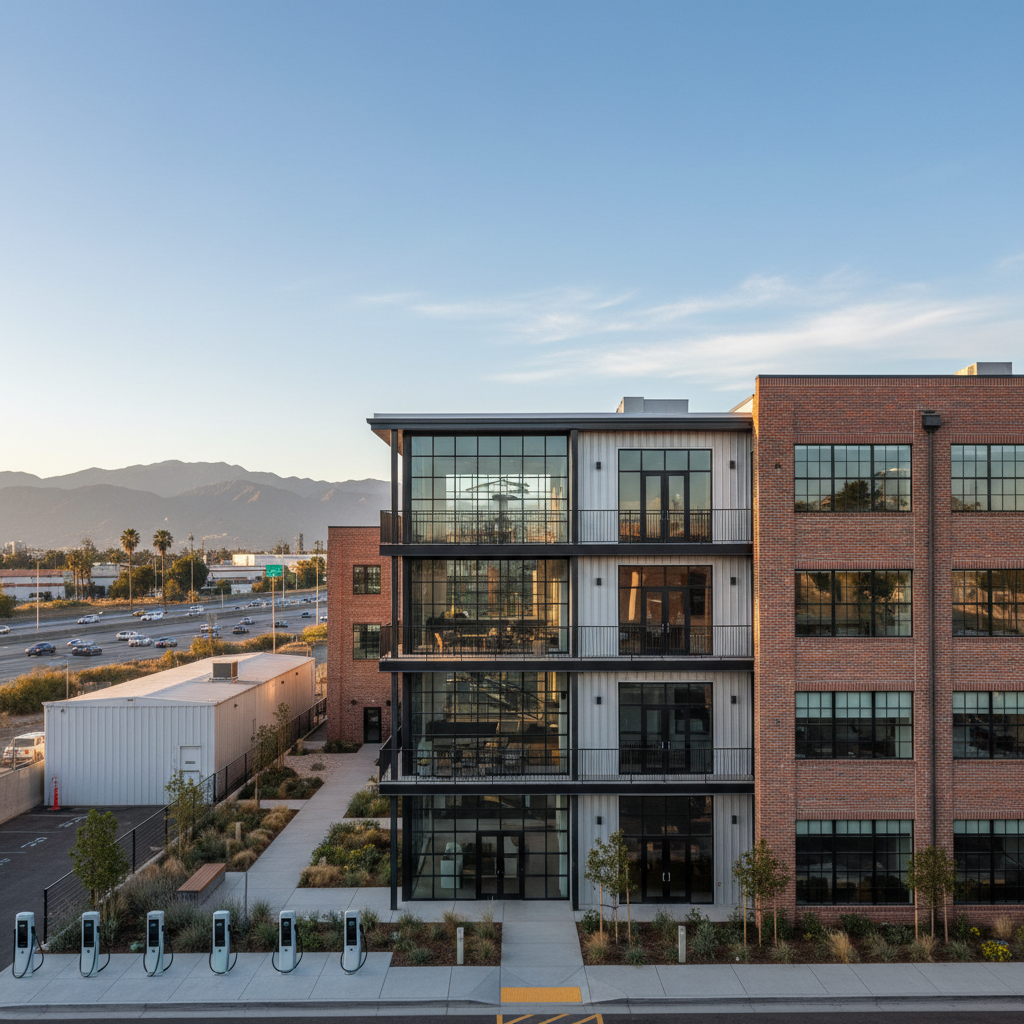
From Logistics Hub to Living Space: The IE’s Post-E-Commerce Transformation
For the better part of a decade, the Inland Empire served as the heartbeat of global logistics, with millions of square feet of warehouse space blanketing San Bernardino and Riverside counties. However, as of June 2026, the tide has turned. According to new data from CBRE, industrial vacancy rates in the Inland Empire have climbed to a ten-year high of 8.4%, a stark contrast to the sub-1% levels seen during the post-pandemic boom. This surplus is now fueling California’s most ambitious housing experiment yet: the mass conversion of ‘last-mile’ logistics centers into residential loft communities.
The 2025 Adaptive Industrial Housing Act
The catalyst for this movement is the 2025 Adaptive Industrial Housing Act (SB-942), which effectively bypassed local exclusionary zoning for industrial sites that have sat vacant for more than 18 months. The law provides developers with a streamlined environmental review process under CEQA, provided that at least 20% of the resulting units are designated as workforce housing. The California Association of Realtors (CAR) reports that these conversions have already added 12,000 units to the Inland Empire pipeline in the first half of 2026 alone, providing a much-needed relief valve for the region’s inventory crunch.
Market Data: Lower Costs, Higher Density
The economics of these conversions are proving more favorable than traditional ground-up residential builds. Industry analysts at the Terner Center for Housing Innovation note that repurposing existing steel-frame structures reduces construction timelines by approximately 35% and lowers hard costs by $90 per square foot compared to new wood-frame apartment complexes. This efficiency is translating to the consumer: the median list price for these ‘industrial lofts’ currently sits at $515,000, roughly 15% lower than the median price for a detached single-family home in Riverside County.
Practical Takeaways for Market Participants
- For Investors: Look for ‘Class B’ and ‘Class C’ industrial properties in transit-adjacent zones. The state’s density bonuses for these sites often allow for up to 60 units per acre, significantly increasing the potential Internal Rate of Return (IRR).
- For Buyers: These developments often feature ‘live-work’ zoning, allowing for home-based businesses that traditional HOA-governed suburbs might restrict. This makes them ideal for the growing freelance and independent contractor workforce.
- For Local Municipalities: While the loss of industrial tax base is a concern, the influx of high-density residents is driving a secondary boom in retail and service-sector tax revenue in previously desolate industrial corridors.
The Aesthetic of the New Inland Empire
Beyond the numbers, this shift is altering the cultural fabric of Southern California. These projects are not typical suburban sprawl; they are high-ceilinged, open-concept spaces that appeal to a demographic previously priced out of Los Angeles and Orange County. As the ‘Logistics Capital’ rebrands itself as a residential frontier, the Inland Empire is proving that California’s housing solution might just lie within the four walls of its abandoned industrial past.


